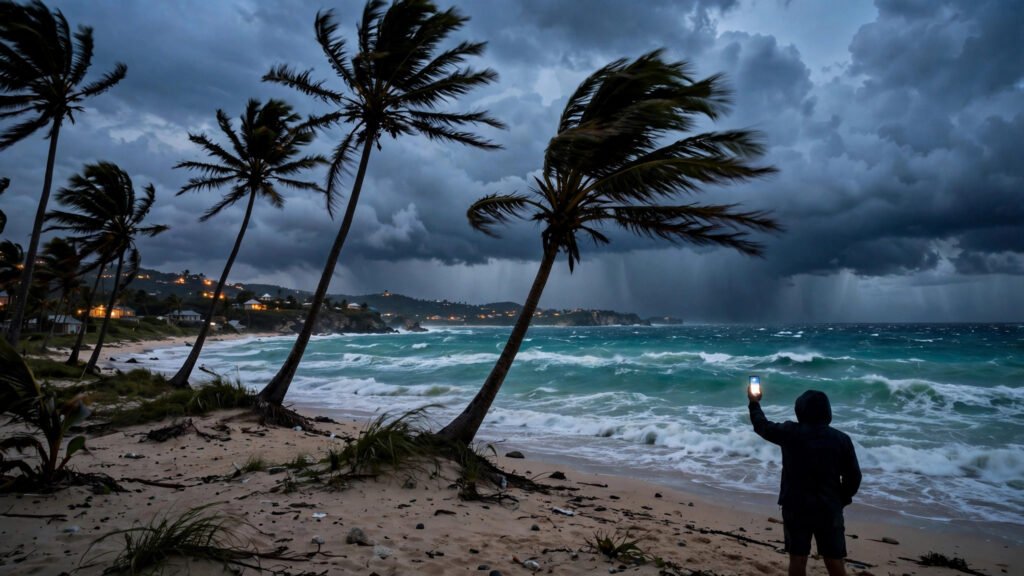
Barbados is a small island in the eastern Caribbean, surrounded on every side by the Atlantic Ocean. That geography shapes daily life in quiet ways, but it becomes impossible to ignore when a tropical storm or hurricane approaches. There is no neighbouring town to drive to for a quick update, and no second island a short walk away. For many households, the phone in a pocket or on a kitchen table becomes the fastest link to the outside world.
This is why, during hurricane season, phones in Barbados are treated less like entertainment devices and more like household tools. People check them in the morning, keep them charged through the day, and return to them whenever the sky changes. The habit is not about being glued to a screen. It is about staying close to the next piece of useful information when conditions can change quickly.
Key Takeaways
- Barbados is a small island, so a phone is often the fastest way to reach weather updates, family and official advice during a storm.
- People use phones to follow storm tracks, check closures and power updates, and stay in touch with relatives nearby and abroad.
- Charging early, saving battery and keeping the phone dry matter as much as any app, because power and signal can both become unreliable.
Why the Phone Becomes the Main Lifeline
When a storm is approaching, information itself becomes a form of preparation. A family needs to know whether the storm is moving closer, whether schools and workplaces are closing, and whether it is time to stay indoors. A phone can carry all of those answers in one place, and it can update them as the situation changes.
That matters even more on an island. Weather can arrive from the sea with little warning between updates, and a road that was open in the morning may not be safe later in the day. A phone lets a household follow the storm without travelling to check conditions in person, which is safer and faster than going out to look.
Phones also connect Barbadians with family in other parts of the island and overseas. A short message can confirm that a relative is safe, that an elderly neighbour has what they need, or that a family member abroad has heard the latest update. In a storm, the most valuable thing a phone can do is keep one household connected to the next decision.
In a storm, the most valuable thing a phone can do is keep one household connected to the next decision.
What Barbadians Check First on Their Phones
The first checks are usually practical rather than dramatic. People look for the latest storm track and weather warnings, because those decide the rest of the day. Then they look for announcements about closures, transport and public services, which tell them whether to stay home, delay travel or prepare for a longer wait indoors.
Family chats come next, and often run in parallel. Relatives share updates, ask after one another and pass on anything useful they have heard, such as a shop closing early or a road becoming difficult to use. Community groups can be useful too, but experienced phone users treat them with care, checking anything important against an official update before acting on it.
- Official weather warnings and storm tracks, checked again whenever the forecast changes
- School, workplace and transport closures that decide whether travel is needed at all
- Power and water updates, so households can plan charging, cooking and storage
- Messages from family and neighbours, confirming who is safe and who needs help
- Shelter and safety advice from official sources, rather than rumours passed along in chats
That order matters. A storm can produce a flood of messages, and not every message is accurate. The households that cope best tend to be the ones that start with official information, use family chats for reassurance and practical help, and ignore dramatic claims that cannot be checked.
Power, Signal and Charging: The Practical Side
A phone is only useful during a storm if it still has battery and signal, so preparation starts before the weather arrives. Many people charge phones, power banks and torches early, while power is still steady, rather than waiting until a warning turns serious. Lowering screen brightness, closing unused apps and switching on a low-power mode can stretch a battery through a long evening indoors.
Signal can also become patchy when a storm damages infrastructure or when many people try to use the network at once. That is another reason short messages work better than long video calls during a storm. A brief text uses less data, is easier to resend if it fails, and still tells family everything they need to know.
Keeping the phone dry and in one known place sounds obvious, yet it is easy to forget when a household is busy securing windows, moving items indoors or preparing food. A waterproof pouch, a sealed bag or simply keeping the phone away from doors and windows can save a household from losing its main source of updates at the worst moment.
Phones help island communities in other kinds of severe weather too. In Iceland, for example, winter storms make the phone a vital tool in a very different climate, as explained in why Icelanders rely on their phones during winter storms. Island life also shapes phone habits in Malta, where Maltese phones default to English for reasons tied to language and daily use, and in Fiji, where Fijians pay with M-PAiSA instead of cash because mobile services fit island life so well.
Why This Habit Is Unlikely to Change
Hurricane season returns every year, and the Atlantic hurricane season runs from June through November. That long season means storm preparation is not a one-off event in Barbados. It is a routine that households repeat, refine and pass on, and the phone has become a fixed part of that routine.
Newer phones, better weather apps and faster messages may change how updates arrive, but they are unlikely to change the underlying reason people reach for their phones. The island is small, the sea is close, and the weather can change fast. Until that changes, a charged phone will remain one of the simplest and most reliable ways for a household to stay informed, stay in touch and stay safe.
One safety point deserves emphasis: relying on a phone does not mean going outside to watch a storm or to get a better signal. The safest place to follow updates is indoors, away from windows and rising water. The phone is valuable precisely because it lets people stay inside while still knowing what is happening outside.
What to Watch Next
As each storm season unfolds, the same pattern is likely to repeat: early charging, frequent checks of official weather updates, short messages to family, and careful attention to power and signal. Households will keep treating the phone as a preparation tool, not just a communication device. The next storm will test that routine again, and the households that charge early, check official sources first and stay indoors while following updates will be the ones best placed to get through it safely.