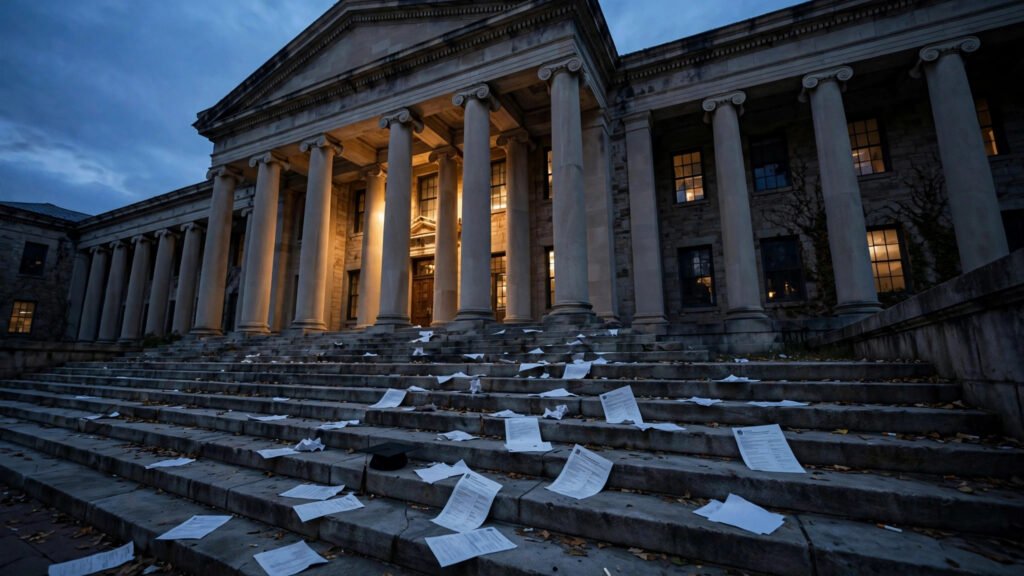
The United States Justice Department has unveiled the first charges in Operation Ghostbusters, a nationwide investigation into alleged fraud built on stolen identities and fictitious college students. Five defendants have been charged in Virginia, New Jersey and Nebraska, in cases prosecutors say involve about $2.9 million in federal student aid. The announcement, made on Thursday, October 29, 2026, marks only the opening stage of an investigation that officials say could be far larger.
At the centre of the alleged scheme are so-called “ghost students”: people who never applied to or attended college, but whose identities were used to enrol in courses, file federal aid applications and collect refunds. Prosecutors say the money left over after tuition and fees were deducted was then routed through bank accounts in the United States and abroad, including to associates in Kenya.
Key Takeaways
- The Justice Department has charged five defendants in Virginia, New Jersey and Nebraska in the first cases from Operation Ghostbusters.
- Prosecutors allege stolen identities were used to create fictitious “ghost students” and divert about $2.9 million in federal student aid.
- Investigators have flagged 830,840 potentially fraudulent federal student aid IDs linked to nearly $130 million, and estimate total losses since 2021 at well over $200 million.
How the Alleged Scheme Worked
According to the Justice Department, the alleged scheme began with stolen personal information belonging to Americans who had never applied to or attended college. False applications for federal student aid, known as FAFSA applications, were then filed in those names, enrolling the fictitious students in educational institutions. Once aid was paid, the institutions deducted tuition and fees, and the remaining refund money was captured by the alleged fraudsters.
Assistant Attorney General Colin McDonald, of the Justice Department’s National Fraud Enforcement Division, said artificial intelligence helped some perpetrators maintain the illusion of an active student. The investigation began with a referral from the Education Department’s inspector general to the FBI’s Richmond office, and has since grown into a nationwide effort.
Officials stressed that the people named so far are defendants facing charges, and that the allegations describe what prosecutors say happened, not findings already proved in court. That distinction matters for the victims as well: the real people whose identities were allegedly stolen may have had aid taken in their names without ever knowing a college application had been filed.
The first charges are only the opening stage of a much wider investigation.
The Cases in Virginia, Nebraska and New Jersey
In the Eastern District of Virginia, prosecutors allege that a Kenyan national acting as a United States-based money mule received more than 700 fraudulent student aid refunds totalling about $1.44 million, and moved at least $1.3 million through accounts in the United States and Kenya. The indictment in that case was sealed on October 21.
In Nebraska, Francis Smith Mogambi, a Kenyan citizen, was indicted on October 19 on ten counts: five counts of theft of government money and five counts of aggravated identity theft. Prosecutors allege he worked with associates in Kenya between November 2025 and May 2026 to steal the identities of American citizens, enrol them in educational institutions without their knowledge, and redirect federal financial aid to himself. The Justice Department said Mogambi had been arrested and detained pending trial.
In New Jersey, three defendants — Mabed Patricia Utate-Alberto, Patricia Arisleydi Perez and George Arturo Alfau Mendez — are charged with conspiracy to commit wire fraud. Prosecutors allege the trio acted as money mules from March 2021 through at least January 2026, moving more than $1 million in fraudulently obtained federal student aid, with an intended loss of about $1.5 million, to co-conspirators in Kenya associated with a safari business. Two additional individuals in Kenya are expected to be charged, according to reports of the announcement.
How Big the Investigation Has Become
The five charged defendants are only part of the picture. Working with Kenyan law enforcement partners, investigators seized more than $750,000 in cryptocurrency from an account linked to a Kenyan national, which the Justice Department described as the first international cryptocurrency seizure of its kind in the Fraud Division’s history. Kenyan authorities involved included the Directorate of Criminal Investigations, the Asset Recovery Agency and the Office of the Director of Public Prosecutions.
In September and October 2026, investigators identified 830,840 potentially fraudulent federal student aid IDs linked to nearly $130 million, and recommended that the Department of Education disable them. The Justice Department estimates losses well over $200 million since 2021, with more than 40 open cases across 26 FBI field offices and more than 20 United States Attorneys’ Offices engaged. About 50 referrals have already been sent to FBI field offices across the country.
Fraud cases can leave victims chasing compensation for a long time, as seen in a separate ruling on banks compensating digital fraud victims. The crackdown is also part of a wider enforcement pattern, with authorities in Thailand targeting more than $1 billion in scam-linked money-laundering assets this week. The first charges are only the opening stage of a much wider investigation, and officials said more cases are expected as the referrals are worked through.
- Five defendants charged in Virginia, New Jersey and Nebraska in the first Operation Ghostbusters cases.
- About $2.9 million in federal student aid alleged in those first cases.
- More than $750,000 in cryptocurrency seized with help from Kenyan law enforcement partners.
- 830,840 potentially fraudulent aid IDs flagged, linked to nearly $130 million.
- More than 40 open cases across 26 FBI field offices, with total losses estimated well over $200 million since 2021.
What to Watch Next
What to watch next is whether further indictments follow in the districts already named, whether the two additional individuals expected to be charged in Kenya are brought before a court, and whether the Department of Education disables the flagged aid IDs. The other test is how colleges and aid administrators tighten their checks on enrolment and identity, so that a student who never existed cannot keep drawing aid in the future. Until those steps play out, the verified picture remains the one set out by the Justice Department: five defendants charged, about $2.9 million alleged in the first cases, and an investigation that officials say reaches far beyond them.