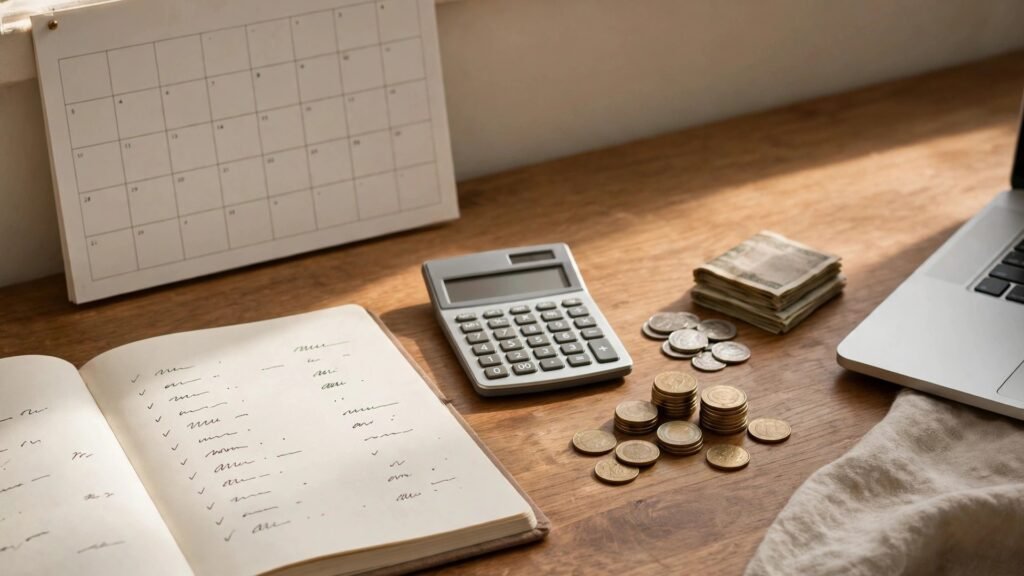
Payday feels good for about a day, and then the money starts quietly disappearing. A coffee here, a delivery order there, a subscription renewal you forgot about, and suddenly the last week of the month feels much longer than the first. Learning how to budget on payday changes that pattern, because you make the important decisions while the money is still in your account, not after it is gone.
A payday budget is not about living on rice and willpower. It is a short routine you repeat every time you get paid: check what arrived, cover what must be paid, set something aside for yourself, and then decide what the rest is for. Done well, it takes about thirty minutes, and it removes the guesswork from the rest of the month.
Key Takeaways
- Budget on payday itself, while the full amount is still in your account, so spending decisions are planned instead of accidental.
- Cover essentials, savings, and planned spending in that order, before discretionary money gets a chance to drift away.
- A short, repeatable payday routine beats a complicated budget you only follow for one week.
How to Budget on Payday in 30 Minutes
The routine below works whether you are paid weekly, every two weeks, or monthly. The steps stay the same; only the amounts and the dates change. Keep a notebook or a simple notes app open, and work through the steps in order. Skipping ahead to the fun spending first is exactly how a budget falls apart.
Step 1: Check What Actually Landed
Start by looking at the real number, not the number you expected. Overtime, deductions, tax changes, and bank fees can all shift your pay slightly from month to month. Write down the exact amount that arrived, and note the date of your next payday. Knowing how many days this money has to last is the single most useful fact in your whole budget.
If your income varies, budget from the lowest recent pay you received rather than the highest. Planning around a smaller number feels cautious in week one, but it is what keeps you from running short in week three.
Step 2: Cover the Essentials First
List the bills and costs that must be paid before anything else: rent or housing, utilities, groceries, transport to work, phone, and any minimum debt payments. Match each one to its due date, and pay or set aside the money for the ones due before your next payday. This is the part of the routine that protects you from late fees and stressful surprises.
A simple habit that helps here is to track your spending for a few weeks, even roughly. Most people discover one or two regular costs they had completely forgotten, such as a yearly subscription billed monthly or a delivery habit that adds up fast. Once you can see those costs, they become much easier to plan for.
Step 3: Pay Yourself Before You Spend
Once essentials are covered, move money to savings before you start spending on anything optional. This is the oldest budgeting advice there is, and it survives because it works: money that is already in a savings account is far less likely to be spent by accident than money sitting in your everyday account.
The amount does not have to be large. A small, regular transfer you can actually sustain beats a big transfer you cancel after two weeks. If your bank allows it, set up an automatic transfer on payday itself, so saving happens without a weekly decision. Our guide on how to automate your savings walks through setting this up in a way that still leaves room for everyday life.
It also helps to keep a separate cushion for true emergencies, apart from general savings. A guide on building an emergency fund on a low income shows how to start small and build it up over time, so one broken appliance or unexpected bill does not undo months of progress.
Money that is already in a savings account is far less likely to be spent by accident than money sitting in your everyday account.
Step 4: Plan the Rest, Including the Fun
After essentials and savings, divide what is left into simple groups: food beyond the basics, transport extras, personal care, entertainment, and a small amount for things you cannot predict. Give each group a rough limit for the period until your next payday. The point is not to be perfect; it is to decide in advance, when you are calm, rather than in the moment, when you are tempted.
Importantly, include fun money on purpose. A budget with no room for enjoyment is a budget you will abandon. A small, planned amount for eating out, a film, or a hobby makes the whole plan sustainable, because you are not constantly fighting it.
Common Payday Mistakes to Avoid
- Treating the whole paycheque as spending money and figuring out bills later.
- Paying for subscriptions and extras before rent, utilities, and groceries are covered.
- Skipping savings because the amount feels too small to matter.
- Shopping on payday itself, when the balance looks its biggest.
- Having no plan for the gap between this payday and the next one.
Make It a Routine, Not a One-Time Effort
The first time you budget on payday, it may take closer to an hour. The second time will be faster, because your bills, categories, and limits are already written down. By the third payday, it becomes a habit: check, cover, save, plan, and then relax for the rest of the month knowing the important things are handled.
If a month goes wrong, do not throw the routine away. Look at what actually happened, adjust one category, and try again next payday. Budgeting is a skill that improves with repetition, and every payday is a fresh chance to get a little better at it.
What to Watch Next
The payday routine is simple: check what arrived, cover essentials first, move money to savings before spending, and plan the rest including fun money. Repeat it every payday, keep the amounts realistic, and adjust one category at a time when a month does not go as planned. Over time, that short routine is what turns payday from a spending spree into a steady, calm start to the month.