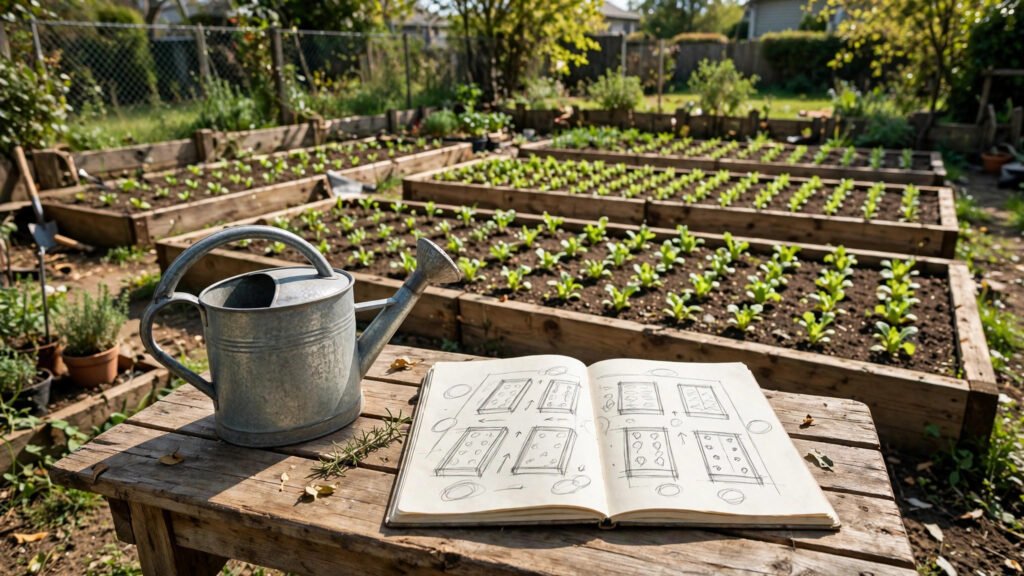
Starting a garden sounds simple until you stand in an empty patch of soil and wonder where anything should go. If you want to use AI to plan a home garden, you can turn that blank space into a clear, beginner-friendly plan before you buy a single seed packet. An AI chatbot can help you sketch a layout, shortlist plants for your space, and build a care routine you can actually keep up with.
The trick is to treat the AI as a planning helper, not a gardener. You still make the decisions, check the advice against your own conditions, and start small. Used that way, it saves beginners the most common early mistake: planting too much, too close together, with no plan for watering or sunlight.
Key Takeaways
- To use AI to plan a home garden, start with your sunlight, space, and available time, not with a plant list.
- A simple layout with paths and a few easy plants beats a crowded bed that is hard to look after.
- Check every AI suggestion against your local conditions before you plant anything.
Start With Your Space, Not a Seed Catalogue
Before you ask an AI tool anything, gather a few facts about your space. Note how many hours of direct sunlight each spot gets, whether the soil drains well or stays soggy after rain, and how much time you can realistically spend on the garden each week. A plan built on guesses will disappoint you; a plan built on real conditions has a much better chance.
Take a photo of the area and measure the beds or containers you have. Even rough measurements help, because spacing is where beginners go wrong most often. A plant that looks small in a pot can grow wide, shade its neighbours, and crowd out everything around it.
Use AI to Plan a Home Garden Layout
Now describe your space to the AI tool in plain language: the size of the bed, the hours of sunlight, and what you would like to grow, such as herbs, salad leaves, or a few vegetables. Ask it to suggest a simple layout with walking paths, so you can reach every plant without stepping on the soil.
Ask for a small number of plants to start with, and ask why each one suits your conditions. A good answer explains the reasoning, such as which plants like full sun and which prefer a little shade. If the answer is just a long list with no explanation, ask follow-up questions until the plan makes sense to you.
Planning a garden this way is similar to other everyday AI planning tasks: you give the tool your limits first, then shape its suggestions into a plan you can follow. If you already use AI to plan weekly meals, the same habit applies here, because a garden plan, like a meal plan, only works when it fits your real week.
Choose Plants That Match Your Time and Skill
Beginners do best with forgiving plants that tolerate a missed watering or a late start. Ask the AI tool to sort its suggestions by how much care each plant needs, and be honest about your time. A garden that needs daily attention will fail if you only have weekends free, no matter how good the layout looks on paper.
Start with a short list. A few herbs in pots, one bed of salad leaves, and one or two vegetables give you something to learn from without overwhelming you. You can always add more beds next season, once you know how much work the first ones really take.
A garden that needs daily attention will fail if you only have weekends free, no matter how good the layout looks on paper.
Turn the Plan Into a Simple Care Routine
A garden plan is only half the job. The other half is a routine: when to water, when to check for weeds, and when to feed or prune. Ask the AI tool to turn your layout into a weekly checklist, and keep it short enough to fit on one page.
Watering deserves special care. Too much water is just as harmful as too little, and the right amount depends on your soil, your containers, and the weather. Check the soil with your finger before watering: if the top layer is still damp, most plants can wait. Let the AI draft the routine, then adjust it after your first two weeks of watching how the soil actually behaves.
- Measure your space and note sunlight, drainage, and weekly time before asking for a plan.
- Ask for a layout with paths so every plant stays reachable.
- Start with a few forgiving plants instead of a crowded bed.
- Turn the plan into a one-page weekly care checklist.
- Check soil dampness before watering rather than watering on a fixed schedule alone.
Check AI Advice Before You Trust It
AI tools can mix up plant varieties, suggest plants that do not suit your climate, or give watering advice that fits a different soil type. That is why every suggestion needs a quick sanity check. Compare the advice with a local gardening guide or a nearby nursery, and watch how your plants respond in the first few weeks.
Be cautious with anything that sounds too certain, such as exact harvest dates or guaranteed results. Gardens depend on weather, soil, and pests, so a sensible plan talks about ranges and what to watch for, not promises. If a suggestion contradicts what local gardeners do, trust local experience first.
The same check-first habit matters in every AI-assisted plan. Just as you would double-check a holiday itinerary before booking, it helps to use AI to plan a trip with verification in mind, and a garden plan deserves the same care, because plants, once planted, cannot be easily rearranged.
Keep Notes and Improve Next Season
Keep a short garden notebook, on paper or on your phone, and note what grew well, what struggled, and what you would change. A few lines each week are enough. Over one season, those notes become far more valuable than any generic plan, because they describe your soil, your sunlight, and your habits.
When the season ends, ask the AI tool to help you review those notes and plan the next one: which beds to repeat, which plants to swap, and what to simplify. That review loop is where the real learning happens. Planning tools get better when you feed them better information, and your notes are that information.
If you enjoy turning notes into plans, you may also like to use AI to create a content calendar, which uses the same idea of turning scattered notes into a simple, repeatable schedule.
What to Watch Next
To use AI to plan a home garden, start with your sunlight, space, and time, ask for a simple layout with reachable paths and a few forgiving plants, turn it into a short weekly care routine, and check every suggestion against your local conditions. Keep notes through the season, and use them to plan a better garden next time.