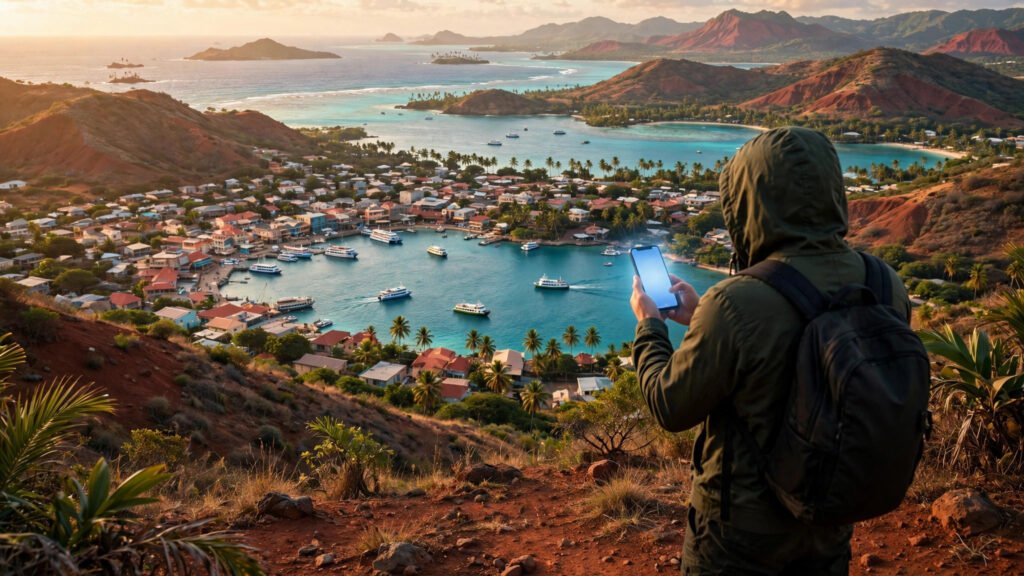
New Caledonia is a place where distance shapes daily life. The main island, Grande Terre, stretches long and narrow through the South Pacific, while the Loyalty Islands, the Isle of Pines and smaller islands sit separated by open sea. The capital, Nouméa, sits at the southern end of Grande Terre, far from many northern towns and island communities. In a place built like this, the phone is not a luxury. It is the thread that holds everyday life together.
That is why so many New Caledonians reach for their phones first, whether they are checking on family, planning a crossing between islands, following a weather warning or sorting out something that would otherwise mean a long trip. The phone shortens distances that boats and roads cannot.
Key Takeaways
- New Caledonia’s islands and towns are spread far apart, so the phone bridges distances that travel cannot close quickly.
- Phones keep families in touch across Grande Terre, the Loyalty Islands and the Isle of Pines, and carry weather warnings when storms approach.
- From Nouméa’s services to outer-island daily life, the phone has become the practical centre of travel, shopping and staying informed.
Distance Comes First
To understand phone life in New Caledonia, start with a map. Grande Terre alone is long enough that a trip from one end to the other takes real planning, and the Loyalty Islands lie across the water to the east. A visit to family on another island can mean a ferry or a flight, not a short drive. When travel takes that much time, people naturally lean on the fastest alternative, and that alternative is the phone.
Calls and messages fill the gap between visits. A parent in Nouméa can check on children studying or working elsewhere. Relatives on Lifou or Maré can share news without waiting for the next boat. In small island communities, where everyone knows each other, a single message can travel fast and reach the people who need it.
The phone also changes how people plan. Instead of travelling to ask a question, residents can ask first and travel only when they must. That matters when fuel, ferry timetables and weather all have to line up before a journey makes sense.
In a place built like this, the phone is not a luxury. It is the thread that holds everyday life together.
Family Across the Water
Family is at the heart of why phones matter so much here. Many New Caledonian families are spread across more than one island, with some members in Nouméa for work or study and others at home in island villages. The phone keeps those bonds alive day to day, not just on holidays or special occasions.
Video calls let grandparents see grandchildren growing up far away. Group chats carry birthday wishes, photos of a catch of fish, news of a wedding or word of someone who is unwell. For young people who leave home for school or a first job, the phone is the link back to the village, the language and the familiar voices of home.
This is a pattern island people know well around the Pacific. In Vanuatu, phones bridge scattered islands in much the same way, and Solomon Islanders rely on phones across scattered islands for family contact and daily news.
Weather Warnings and Safety
The South Pacific cyclone season gives phones a serious job. When a storm is forming or moving toward the islands, official warnings, weather updates and advice about what to do next reach people through their phones. A warning that arrives early can change plans: a ferry crossing postponed, a fishing trip cancelled, shutters checked before the wind rises.
Phones also matter after a storm passes. Families check on each other, neighbours share news about roads and power, and communities organise help. In places where a single road may be the only way in or out, a phone message can be the quickest way to learn what is open and what is not.
Island life elsewhere faces the same test. Guamanians rely on phones during typhoons, travel and island life, and the reason is familiar: when weather can cut a community off, the phone is often the first line of information.
Nouméa and the Outer Islands
Nouméa holds many of the services that island residents need from time to time: government offices, hospitals, larger shops and transport links. But not everyone lives near the capital, and a trip to Nouméa can be a major undertaking for someone on an outer island. Phones reduce the number of trips that are truly necessary.
Appointments can be confirmed, documents can be checked and questions can be asked before anyone boards a boat or a plane. Shopping works the same way: people compare what is available, ask a shop whether an item is in stock and plan a single well-organised visit instead of several wasted ones. For small businesses, the phone is a shopfront as well, letting owners in island towns reach customers in Nouméa and beyond without opening a second premises.
Work follows a similar pattern. In mining towns and rural areas, phones coordinate shifts, deliveries and repairs. In tourism, hosts and guides use phones to answer visitors, arrange pick-ups and adjust plans when weather changes. The phone does not replace face-to-face work, but it makes that work possible across long distances.
- Island geography makes travel slow, so phones carry the everyday conversations that travel cannot.
- Family contact, weather warnings and ferry or flight planning all run through the phone.
- Nouméa’s services feel closer when appointments and questions can be handled before a trip.
- Small businesses and workers use phones to reach customers and coordinate across the archipelago.
Keeping Culture Close
Phones also carry culture. Kanak languages, music and stories travel through calls, recordings and messages, reaching young people who live far from their home villages. A song recorded at a family gathering can be shared the same evening. Photos of a traditional ceremony, shared with respect for the occasion, keep relatives who could not attend feeling part of it.
For a territory where French is the official language but many other languages are spoken at home, the phone is a flexible tool. People switch between languages easily in a message thread, in a way that formal letters and official forms do not allow. That everyday flexibility helps languages stay alive in daily use, not only in classrooms.
The Practical Side of Phone Life
None of this means phone life is effortless. Coverage can vary between a busy Nouméa street and a remote stretch of coast, and islanders learn where the signal is strongest, just as they learn which roads flood after heavy rain. Charging matters too, especially during power cuts after storms, and people plan around it: a charged phone is part of storm preparation, alongside water, food and secure windows.
Cost is another everyday consideration. Data and calls have to fit household budgets, so people choose carefully how they stay in touch, favouring messages and calls that give the most value. Free Wi-Fi in town centres, libraries and public places helps, and shared family habits, like one person relaying news to others, stretch a connection further.
Even with these limits, the balance is clear. The phone saves trips, saves time and keeps people close in a place where geography constantly pulls them apart. It is practical before it is fashionable, and that is exactly why it is so central.
What to Watch Next
New Caledonia’s phone habits will keep following its geography. As connections improve and more services become reachable from a handset, islanders will likely handle even more of daily life, from appointments to shopping and family news, without travelling first. Weather warnings will remain one of the phone’s most important jobs, especially when storms threaten island communities. And through it all, the phone will keep doing what it already does best in New Caledonia: shortening the distance between islands, towns and Nouméa, and keeping families close across the water.