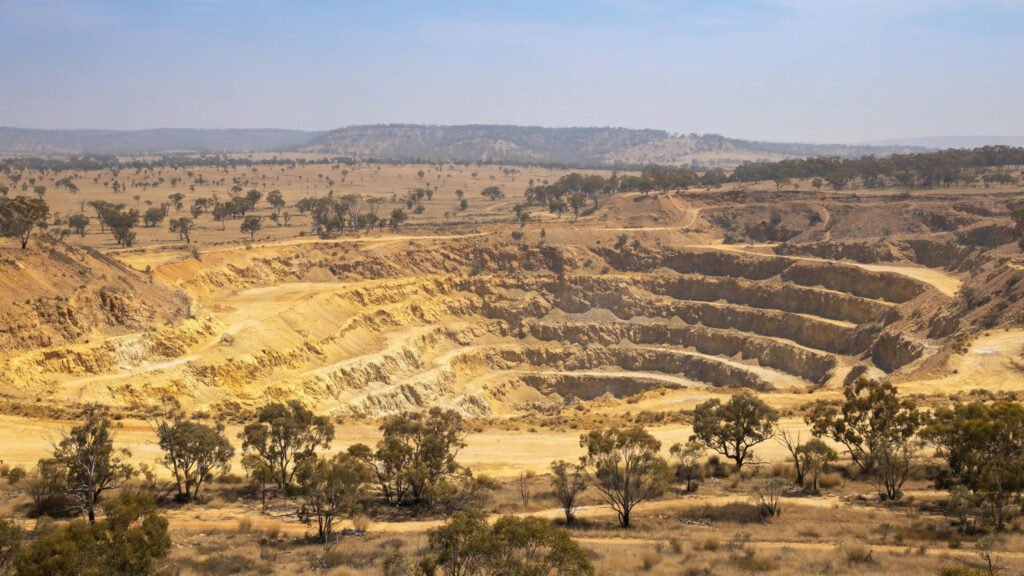
Australia’s federal government says it will not appeal the Federal Court decision that overturned a heritage protection order over the McPhillamys gold project near Blayney in central-west New South Wales, ending the latest court chapter in a dispute that has run for years. Environment Minister Murray Watt confirmed the decision on Sunday, saying the government would instead focus on redetermining the issue and on reforming the country’s cultural heritage laws.
The move gives the project, backed by Regis Resources and valued at about $1.3 billion, a clearer path forward, but it does not settle the underlying dispute. Two new Aboriginal protection applications relating to the project have already been lodged since the court ruling, and they are still being considered. The government must still decide the original protection question again, this time through a process that can survive a court challenge.
Key Takeaways
- Australia’s government will not appeal the Federal Court decision that overturned the McPhillamys heritage protection order.
- Environment Minister Murray Watt says the government will instead redetermine the project approval and reform cultural heritage laws.
- Two new protection applications over the project have been lodged since the court ruling and are still being considered.
The Court Decision the Government Will Not Challenge
On October 14, 2026, the Federal Court overturned the declaration made in August 2024 by then-environment minister Tanya Plibersek under section 10 of the Aboriginal and Torres Strait Islander Heritage Protection Act. The declaration had covered about 400 hectares of the project site, including the proposed location for a tailings storage facility, which Regis Resources said rendered the development unviable despite earlier state and federal approvals.
Justice James Stellios ruled the declaration invalid because of a deficiency in the process used to make it. The court found that information provided late to the department, relating to a blue-banded bee Dreaming story, constituted in substance a new application that lacked proper authority. The ruling sent the matter back for redetermination by the current environment minister.
The court found a process problem, not a verdict on the heritage claims themselves. Industry groups noted that the judge made no finding on the merits of the heritage claims, a distinction that matters for what happens next: the redetermination must deal with the protection question itself, not simply repeat the earlier decision.
The court found a process problem, not a verdict on the heritage claims themselves.
What the McPhillamys Project Is
The McPhillamys Gold Project, near Blayney in central-west New South Wales, was approved by the New South Wales Independent Planning Commission in March 2023. The Wiradyuri Traditional Owners Central West Aboriginal Corporation had asked the then-minister to protect the headwaters and springs of the Belubula River as a site central to creation stories.
Plibersek’s 2024 declaration rejected the proposed site of the tailings dam, a decision Regis Resources said made the project unviable. The company challenged the declaration in the Federal Court, and the court heard that the project site was linked to several Dreaming narratives, including the blue-banded bee story at the heart of the procedural error.
Regis Resources has said the government’s redetermination could take some time, and that the company would proceed with existing plans to process mining waste at a different site in the meantime. The court victory therefore removes a legal barrier, but it does not by itself put the mine into construction.
- The McPhillamys Gold Project near Blayney is backed by Regis Resources and valued at about $1.3 billion.
- The 2024 heritage declaration covered about 400 hectares, including the proposed tailings storage site.
- Justice James Stellios ruled the declaration invalid on October 14, 2026, over a process deficiency.
- The Wiradyuri Traditional Owners Central West Aboriginal Corporation sought protection for Belubula River headwaters and springs.
- Two new protection applications over the project have been lodged since the court ruling.
Why the Government Is Not Appealing
Watt confirmed the government would not contest the court’s latest decision, telling reporters the government would focus on redetermining the issue instead. The decision follows the mining sector’s call for reform after the court ruling, with industry groups arguing that late-stage claims should not be able to derail fully assessed developments.
Watt also said Australia’s cultural heritage laws need to be reformed. Reporting on November 1 said changes to how developers navigate cultural heritage laws have been promised after the years-long saga, with the government pointing to what it described as an increase in protection claims. Labor has pledged to overhaul the heritage protection framework, though the detail and timing of that overhaul have not yet been set out.
The decision comes in a year when cost-of-living pressures in Australia have dominated the political debate, and it puts the government in the middle of two competing pressures: the resources sector’s demand for certainty, and Indigenous communities’ demand that heritage protection be real and enforceable.
Fresh Claims Keep the Dispute Alive
The dispute is not over. Two new Aboriginal protection applications in relation to the gold project have been lodged since the Federal Court overturned the heritage order. The additional bids, which are still being considered, were made under separate provisions to the initial protection order, meant to urgently protect Aboriginal areas from immediate threat of injury or desecration.
That means the redetermination will not happen in a vacuum. The government must weigh the original protection question, the new applications, and the reform agenda at the same time, in the same state where summer fire danger shapes daily life in New South Wales and where land, water and heritage are closely contested. Any new decision will itself be open to challenge if its process is found wanting.
What to Watch Next
What to watch next is what the article has already set out: how the government redetermines the McPhillamys protection question, whether the two new protection applications change the project’s prospects, and what form the promised heritage law overhaul takes. Until those steps happen, the verified position remains the one confirmed on November 1: the government will not appeal the court ruling, the project approval must be decided again, and the dispute over the gold mine near Blayney is still alive.