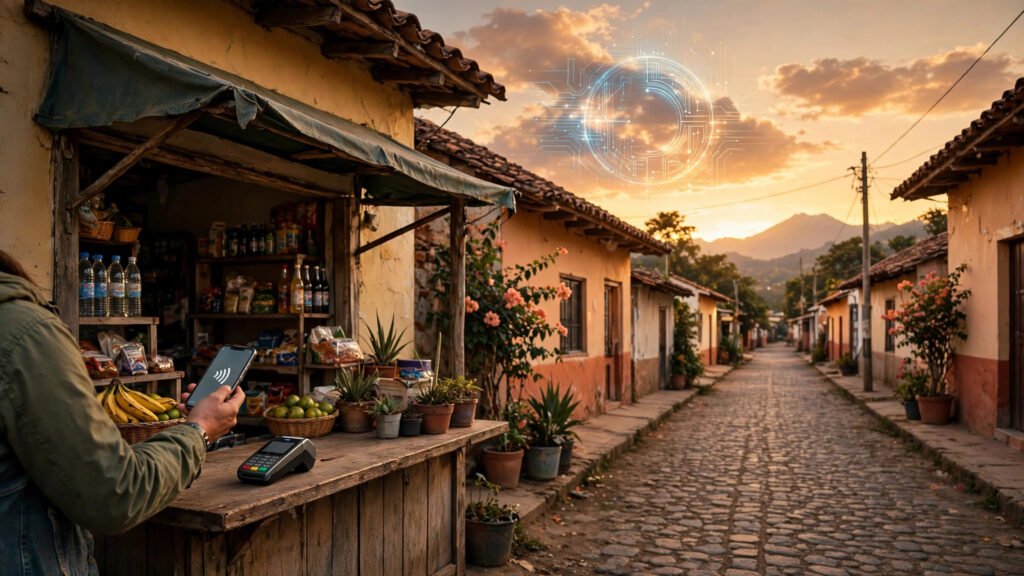
In 2021, El Salvador became the first country in the world to make Bitcoin legal tender, putting a digital currency created only a decade earlier on the same legal footing as the United States dollar, which Salvadorans already used every day. For most people outside the country, the news sounded like an experiment. For Salvadorans, it raised a much more practical question: what does it actually mean when you can pay for groceries, a bus fare or a phone top-up with Bitcoin?
The answer is less dramatic than the headlines suggested, and more interesting. Bitcoin did not replace the dollar in El Salvador, and everyday life did not change overnight. But the decision still matters, because it tested an idea that other countries have only debated: whether a cryptocurrency can work as ordinary money for ordinary people, not just as an investment traded on screens far away.
Key Takeaways
- El Salvador made Bitcoin legal tender in 2021, alongside the US dollar, becoming the first country to do so.
- The main goals were cheaper remittances from Salvadorans abroad and financial access for people without bank accounts.
- In everyday life, dollars remain dominant, and Bitcoin’s price swings are the biggest reason many people stay cautious.
What “legal tender” actually means
Legal tender is a legal status, not a guarantee that everyone will use something. When Bitcoin became legal tender in El Salvador, it meant that Bitcoin could legally be used to settle debts and pay for goods and services, just as dollars could. A shop, a bill or a tax payment could in principle be settled in Bitcoin, and the government accepted it too.
That distinction matters. Making something legal tender does not force people to abandon the money they already trust. In El Salvador, the dollar stayed in circulation, prices in shops continued to be shown in dollars, and many people kept thinking in dollars even when a payment app showed a Bitcoin option. Legal tender opened a door; it did not push everyone through it.
Why El Salvador tried it
Two reasons explain the decision better than any other. The first is remittances. Large numbers of Salvadorans work abroad, and the money they send home supports families across the country, paying for food, school, medicine and housing. Traditional transfer services charge fees and take time, and those costs fall hardest on the families who can least afford them. Supporters of the Bitcoin law argued that sending value over a phone, without intermediaries taking a cut at every step, could leave more money with the family receiving it.
The second reason is access. Many Salvadorans have no bank account, or live far from a bank branch, yet own a mobile phone. A digital wallet on a phone can, in theory, give such a person a way to receive, hold and send money without first opening a traditional account. The government launched its own wallet, Chivo, to make that first step as simple as downloading an app, and promoted it as a bridge into the financial system for people the banks had never reached.
There was also a third, quieter motive: attention. A small country rarely leads global financial news. By moving first on Bitcoin, El Salvador attracted visitors, conferences and entrepreneurs curious about crypto, and put itself on the map for a new kind of traveller and investor.
How paying with Bitcoin works in practice
For a Salvadoran with a phone, paying with Bitcoin works much like paying with any other wallet app. The payer opens a wallet, scans a code or enters an amount, and confirms the payment. The shopkeeper sees the payment arrive, and in many cases can choose to convert it into dollars straight away, so that a sudden price move does not change what the sale was worth by the evening.
That instant conversion is the detail that makes everyday use possible at all. Bitcoin’s price can move sharply in a single day, and a shopkeeper selling tortillas or phone credit cannot run a business on a currency that changes value between morning and night. Wallets that convert automatically remove that risk from the till, even if they also remove much of what makes Bitcoin different from a dollar payment in the first place.
- Bitcoin became legal tender alongside the US dollar, not instead of it.
- Remittances and bank access were the two main reasons behind the move.
- The Chivo wallet aimed to bring phone-based money to people without bank accounts.
- Instant conversion to dollars protects shopkeepers from Bitcoin’s price swings.
- Price volatility remains the biggest barrier to everyday Bitcoin use.
Why many Salvadorans stayed cautious
Caution, rather than enthusiasm or rejection, describes most everyday reactions. For a family living on a tight budget, a currency that can rise or fall sharply is a risk, not a convenience. If the money sent by a relative abroad is worth less by the time it is spent, the family loses, however modern the technology feels. Dollars, for all their flaws, do not have that problem from one day to the next.
Trust was another barrier. Many people had never used a crypto wallet, and stories of scams, lost passwords and confusing apps travel fast in small communities. When a wallet password is lost, there is no branch to walk into and no clerk to reset it, and that responsibility worries people who are used to cash or a bank card. Older Salvadorans, and those in rural areas with patchy signal, faced the same access gap that affects phone-based money everywhere.
Neighbouring countries show how the same phone-first shift takes different forms. In Guatemala, for example, many families receive money sent from abroad on their phones, while in Panama many people pay through Yappy on their phones instead of cash or cards. The tools differ, but the question is the same in each place: does the phone make money easier, cheaper and safer for the person holding it?
Legal tender opened a door; it did not push everyone through it.
What changed, and what did not
What changed is real but limited. El Salvador proved that a country can give a cryptocurrency legal status without its payment system collapsing, and it gave the world a live case study instead of a theory. Tourists can and do pay in Bitcoin in some places, some businesses accept it, and the country remains closely watched by policymakers, researchers and crypto firms wondering whether to follow.
What did not change is just as important. The dollar remains the money most Salvadorans think in, earn in and spend. Over time, the government itself softened parts of the original approach, making Bitcoin acceptance voluntary for businesses rather than mandatory, after the practical difficulties became clear. That shift is best read not as a collapse of the idea, but as an adjustment: the experiment continues, on terms closer to how people actually behave.
In Mexico, the contrast is instructive. Many Mexicans pay with SPEI bank transfers instead of cards, a phone-based system built on ordinary bank accounts rather than a new currency. El Salvador chose the bolder route, building on a currency nobody controls, while Mexico improved the system people already had. Both approaches chase the same goal: money that moves quickly, cheaply and safely on a phone.
What to Watch Next
El Salvador made Bitcoin legal tender to cut remittance costs, widen financial access and attract attention, and the experiment has survived without replacing the dollar. The watchpoints remain the ones this article has already set out: whether wallets become simpler and safer for people without bank accounts, whether price swings stay a barrier to everyday spending, and whether businesses keep accepting Bitcoin now that acceptance is voluntary. If Bitcoin ever becomes ordinary money in El Salvador, it will be because it proves itself useful at a market stall and in a family budget, not because a law says so.