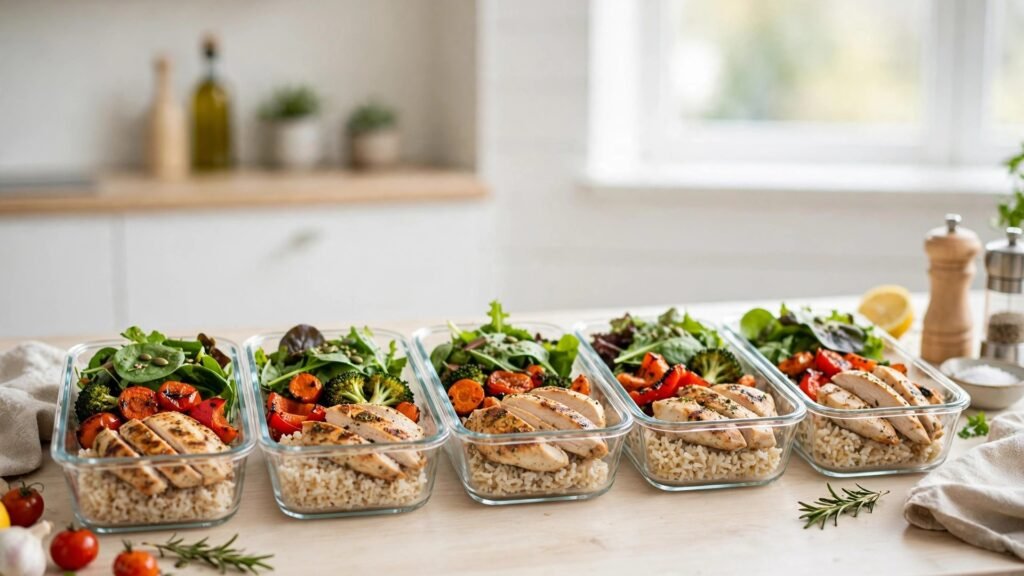
Packing lunch every morning feels like a small task, but it is the task most likely to be skipped on a busy day. Learning how to meal prep lunches for work changes that: one focused cooking session gives you a week of ready lunches, so the morning decision disappears entirely. You save money, eat better, and stop standing in front of an open fridge at 7 a.m. wondering what to take.
The trick is not cooking five different meals. It is cooking a few flexible parts that combine into lunches that still feel different from each other. A grain, a protein, two vegetables, and a sauce can become five lunches that do not taste like leftovers on repeat.
Key Takeaways
- Cook flexible parts, not five separate meals, and combine them differently each day.
- Pack lunches in sealed containers right after cooking so weekday mornings need no decisions.
- Change the sauce, topping, or wrap to keep the same base ingredients feeling new all week.
How to Meal Prep Lunches for Work in One Session
Set aside about ninety minutes, ideally on a weekend evening or a quiet Sunday afternoon. Start the grain first, since rice or quinoa cooks mostly unattended. While it simmers, roast a large tray of vegetables and cook your protein in the same window. When everything is done, you are not cooking five meals; you are filling five boxes from the same few trays.
Keep the session simple on your first attempt. Two proteins are plenty, and one grain is enough. The goal is a routine you can repeat next week, not an impressive spread that leaves you exhausted and unlikely to try again.
Use a Simple Formula for Every Box
A reliable lunch box follows a simple pattern: a base, a protein, vegetables, and something with flavour. The base might be rice, quinoa, pasta, or bread. The protein could be chicken, eggs, beans, lentils, or tofu. Then add vegetables in two forms, one cooked and one fresh, so the box has both warmth and crunch.
This formula is why a guide to how to build a balanced plate is worth reading alongside this one: the same balance of food groups that works at dinner works just as well packed into a container. Once the formula becomes habit, you can build a lunch from whatever is already in the kitchen without a recipe.
Cook Once, Pack for Five Days
Pack the lunches as soon as the food has cooled enough to handle. Divide the grain into containers first, then add protein and vegetables, and finish with anything that should stay separate, like dressing or crunchy toppings, in a small extra pot. Stack the boxes in the fridge in weekday order, with Monday at the front.
Label nothing fancy: the order in the stack is the plan. Each morning, you take the front box and go. If a lunch needs reheating, pack it in a container that can go straight into the microwave, and keep fresh items like salad leaves in a separate section or bag so they stay crisp.
Keep Lunches Fresh All Week
Most cooked lunches keep well in the fridge for three to four days, so plan the last days of the week around ingredients that hold up longer. Cooked grains, roasted vegetables, beans, and lentils all age gracefully. Fresh salads and soft cheeses are better eaten early in the week, while a wrap or grain bowl can comfortably carry Friday.
If you want to stretch the system further, freeze one or two portions on cooking day and move them to the fridge the night before you need them. That way a long week never forces you back to expensive takeaway on Thursday, and nothing sits in the fridge long enough to go to waste. Adding more vegetables is the easiest way to make each box feel generous, and our guide on how to eat more vegetables every day has practical ideas for working them into lunches without extra cooking.
Pack the lunches as soon as the food has cooled enough to handle, and each morning you take the front box and go.
Add Variety Without Extra Cooking
The most common reason meal prep fails is boredom, not effort. The fix is not more cooking; it is more variety in the small things. The same chicken, rice, and roasted vegetables can become a different lunch each day: Monday with a lemon and herb dressing, Tuesday wrapped in a flatbread, Wednesday with a spoonful of salsa, Thursday over salad leaves instead of rice, and Friday with a drizzle of chilli sauce and a handful of nuts.
Keep a small shelf of flavour helpers ready: dressings, pickles, hot sauce, seeds, and herbs. They cost little, last for weeks, and turn the same base into lunches that feel planned rather than repeated. Swap one vegetable each week so the routine evolves slowly instead of going stale.
- Start the grain first and cook protein and vegetables while it simmers.
- Build every box from a base, a protein, vegetables, and a flavour helper.
- Pack and stack boxes in weekday order so mornings need no decisions.
- Eat fresh salads early in the week and save grain bowls and wraps for later days.
- Change dressings, wraps, and toppings to beat boredom without extra cooking.
What to Do When the Week Goes Wrong
Some weeks, the cooking session does not happen, and that is fine. A half-prepared week still beats no plan at all: even two packed lunches save two rushed decisions and two takeaway bills. Keep a backup in the cupboard for those weeks, such as tinned beans, wraps, and a jar of sauce, so a missed session becomes a simpler lunch rather than a skipped one.
Morning routines work best when each part supports the next, and a packed lunch pairs naturally with a calm start to the day. If mornings are your hardest hour, our ideas for healthy 10-minute breakfast ideas for busy mornings can help you sort breakfast in the same spirit: quick, prepared, and decided in advance.
What to Watch Next
Meal prep lunches for work come down to one cooking session, a simple box formula, and small flavour swaps that keep the week interesting. Cook flexible parts, pack them in weekday order, eat fresh items early, and let dressings and toppings do the work of variety. Start this weekend with a single session and just three boxes; once the habit feels easy, five will follow on its own.