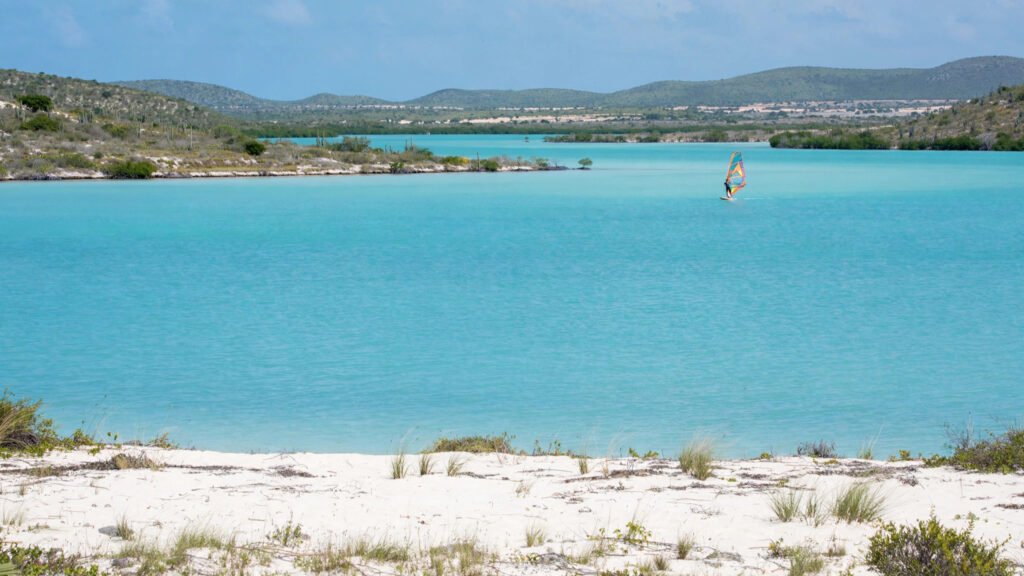
On Bonaire, a small Dutch Caribbean island famous for its clear water and steady trade winds, the day’s plans often start with a phone. Before a diver pulls on a wetsuit or a windsurfer rigs a sail, someone checks the wind, the waves, and the water. The sea looks calm from the shore, but the conditions that matter for a dive or a windsurf session are not always visible from land — and on an island where the ocean is the workplace, the playground, and the main attraction, that quick check has become part of the routine.
Bonaire is built around the sea. Its fringing reefs draw divers from around the world, and Lac Bay on the windward side is one of the Caribbean’s best-known windsurfing spots, thanks to the trade winds that blow across it. The island’s dive sites are mostly shore dives, reached by driving to a marked spot, walking in from the beach, and swimming out to the reef. That freedom is part of the appeal, but it also means there is no dive boat captain deciding whether conditions are suitable. Each diver and each windsurfer makes that call themselves, and the phone is where the information for that call now lives.
Key Takeaways
- Bonaireans check wind and sea conditions on their phones before diving and windsurfing.
- Shore diving puts the safety decision in each diver’s own hands, so a conditions check matters.
- The same phone check helps windsurfers pick the right sail size and the right time of day.
Why the Sea Decides the Day on Bonaire
The trade winds are Bonaire’s most reliable feature. They blow most days, which is why windsurfers plan trips around them and why the island’s windsurfing community is so active. But reliable does not mean identical. Wind strength rises and falls through the day, and a morning that suits a beginner can turn into an afternoon that only experienced sailors enjoy. A windsurfer who checks the forecast knows whether to rig a bigger sail for lighter air or a smaller one for a stronger breeze, and whether the best window is early, late, or right in the middle of the day.
For divers, the questions are different but just as practical. Wind stirs up the surface and can reduce visibility on the reef, and a choppy entry at a shore dive site is harder than a calm one. Currents vary by site and by day, and some sites are pleasant in one direction and tiring in the other. A diver who checks conditions before driving to a site can choose a sheltered spot when the wind is up, or save an exposed site for a calmer day. The check does not replace experience, but it helps experience make a better choice.
The same habit shows up wherever people depend on the sea. In Martinique, beachgoers check their phones for sargassum alerts before heading to the beach, because what washes up changes whether a beach day is worth it. In Guadeloupe, travellers check their phones before travelling between the islands, because ferry and sea conditions decide the journey. The setting is different in Bonaire, but the logic is the same: a phone check before leaving beats discovering bad conditions after arriving.
How a Phone Check Works in Practice
For most people on Bonaire, the check is quick and informal. A wind forecast, a wave report, and a look at the sky are usually enough. Windsurfers compare the forecast with what they can feel at the water’s edge, and they talk to each other about which sail sizes are working. Divers ask in a group chat whether anyone has dived a particular site that morning, and what the visibility and current were like. One report is a hint; several matching reports are a pattern, and that pattern is what people trust.
Timing is part of the decision too. The wind often builds through the morning, so a windsurfer may aim for the middle of the day when the breeze is steadiest, while a diver may prefer an early start before the wind picks up and the surface roughens. A photographer hoping for calm, clear water for underwater pictures has yet another window in mind. The phone holds all of this information at once — forecast, reports from other divers, and messages from friends — which is why it has become the first tool of the day rather than an afterthought.
Local knowledge still matters most. A forecast gives numbers, but a diver who knows a site understands what those numbers mean there: which sites stay calm when the wind is from one direction, which ones get rough, and where the entry is tricky when the waves are up. The phone check works best when it is combined with that knowledge, not when it replaces it. Newcomers learn this quickly, usually by asking locals, and the answers they get often start with a glance at a phone.
What the Check Means for Safety and Enjoyment
For divers, the benefit is straightforward. Shore diving is flexible, but that flexibility comes with responsibility. There is no crew to call the dive off, so the diver must judge the entry, the current, and their own energy for the swim back. A conditions check before leaving home reduces surprises: a diver who knows the wind is strong can pick a sheltered site, shorten the dive, or decide to go another day. None of that guarantees a perfect dive, but it removes one kind of risk — the risk of arriving unprepared.
For windsurfers, the check is about getting the session right. The wrong sail size turns a good day into hard work, and the right one turns the same wind into a great session. Lac Bay’s shallow, warm water makes it forgiving for learners, but the wind still decides how much fun anyone has. A quick check tells a windsurfer whether the day suits practising a new move, cruising comfortably, or sitting it out and waiting for a better window.
There are limits, and islanders know them. A forecast is a prediction, not a promise, and conditions can change during a session. A diver who checked in the morning still watches the water at the site, and a windsurfer still feels the wind before rigging. The phone helps with the plan, but the sea has the final word. That is why the most experienced people on Bonaire treat the check as a starting point: useful, fast, and worth doing, but never a substitute for looking at the water itself.
Why This Habit Fits Bonaire
Bonaire is small, and its sea life is close to daily life in a way that is unusual even for a Caribbean island. Many residents dive or windsurf regularly, and many visitors come specifically for the water. The island’s marine park, its marked shore dive sites, and its windsurfing bay all sit within a short drive of the main town of Kralendijk. A conditions check saves a wasted drive: a diver can find out whether a site is worth visiting before loading gear into a truck, and a windsurfer can decide whether to head to Lac Bay or wait an hour.
The habit also fits a community where sea knowledge is shared. Divers and windsurfers already talk about sites, winds, and water conditions. Adding a phone check to that conversation is natural, and the sharing makes everyone better informed. When one diver reports good visibility at a site, others benefit, and when a windsurfer shares that the wind is building, the whole bay knows. In Sint Maarten, a similar sharing habit helps people check their phones when crossing between the French and Dutch sides, because conditions on one side of an island are not always the same as on the other. Bonaire’s version is about the sea rather than a border, but the sharing works the same way.
A diver who checks conditions before driving to a site can choose a sheltered spot when the wind is up, or save an exposed site for a calmer day.
What to Watch Next
For Bonaireans, the phone check is likely to stay part of life by the sea, because it solves a simple problem: no one wants to drive to a dive site or rig a sail only to find the conditions are wrong. As forecasts improve and more divers and windsurfers share reports, the information people rely on may become more detailed. What will not change is the core habit itself — a quick look at the wind and the water before heading out — and the judgment that turns that information into a good day on the sea.
- Trade winds shape Bonaire’s days, but their strength changes through the day, so a check helps pick the right time.
- Shore divers use the check to choose sheltered sites when the wind is up and save exposed sites for calmer days.
- Windsurfers use the forecast to pick the right sail size and the best window at Lac Bay.
- Reports shared between divers and windsurfers turn one person’s observation into information the whole community can use.
- A forecast guides the plan, but the sea itself still has the final word on any dive or session.