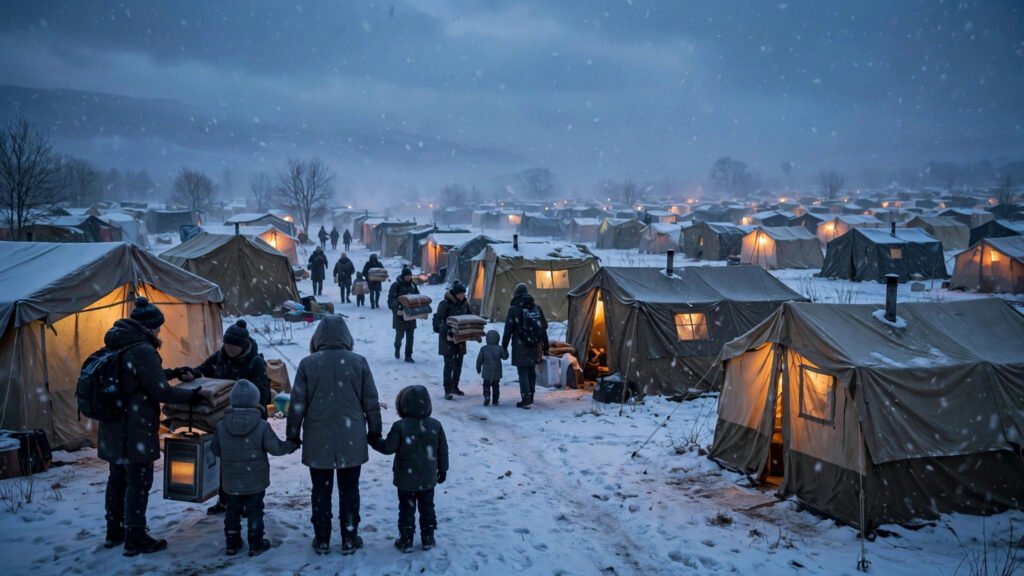
The United Nations refugee agency has launched a $50 million appeal to help nine million people survive the coming winter in four war-affected countries: Ukraine, Syria, Lebanon and Afghanistan. The appeal, announced in Geneva on Friday, October 30, 2026, asks individuals and the private sector to fund the basics that make cold weather survivable — heat, warm clothing, blankets and repairs to damaged homes.
UNHCR said the target is $3 million more than the amount raised last year, a reflection of how much harder the same help has become to deliver. Energy and food prices are rising, fuel for heating and cooking is in short supply in several of the affected areas, and humanitarian funding is under strain at the same time as needs grow.
Key Takeaways
- UNHCR is seeking at least $50 million to help nine million people in Ukraine, Syria, Lebanon and Afghanistan through winter.
- The appeal covers heaters, thermal blankets, warm clothes, cash for fuel and materials to repair homes damaged by attacks.
- In Lebanon, around 300,000 people are expected to need winter help, but funding currently allows UNHCR to reach only about half of them.
Dominique Hyde, UNHCR’s Director of External Relations, put the urgency in plain terms at the Geneva briefing. She said resources are scarce and costs are spiralling just as winter looms in the northern hemisphere, and she described what a donation means in practice rather than in the abstract.
A donation means something very tangible. A heater, blankets, warm clothes, cash to pay for fuel, or tarpaulin and tape to repair a blown out window.
That practical focus runs through the whole winter plan. UNHCR said donations will help provide heaters in Afghanistan, thermal blankets in Syria and Lebanon, and repair kits for homes damaged by attacks in Ukraine. The plan also includes cash assistance for around 310,000 people and improvements to home insulation for 80,000 people, so that families can keep the heat they do have instead of losing it through broken windows and thin walls.
Ukraine Faces a Fifth Winter of War
Ukraine is entering its fifth winter since Russia’s full-scale invasion, and UNHCR warned that temperatures there are likely to drop to minus 20 degrees Celsius. The cold is arriving alongside accelerating strikes on civilians and on energy infrastructure, which UNHCR said are causing power outages and fresh misery for a war-ravaged population.
The agency illustrated the risk with the story of Svetlana in Dnipro, Ukraine, whose apartment was targeted and heavily damaged in a drone strike last winter. Moments before the attack, Svetlana grabbed her son and ran to the basement. When they emerged, they no longer had anywhere to live. For families in that position, Hyde said, a donation may also avoid taking on more debt or keep their children off the streets and safe in school — a reminder that winter help is not only about warmth, but about holding a household together.
The same day brought a separate sign of how fragile humanitarian access remains in Ukraine, as an aid convoy entered the Russian-held town of Oleshky to deliver food and medicine and open evacuations for residents who wished to leave. That operation, under a local ceasefire, underlines why winter planning matters now: when access opens, even briefly, the supplies waiting behind it have to be ready.
Afghanistan: Returnees Starting From Scratch
In Afghanistan, UNHCR highlighted what it described as equally dramatic needs. The agency said an estimated 6.5 million people have returned to Afghanistan in recent years, most of them involuntarily, and many of the new arrivals have very little and need to build their lives from scratch. Reports of the briefing also put the recent return from Pakistan and Iran alone at close to four million people between January 2025 and July 2026, many with limited resources to rebuild.
For returnees, winter is not a seasonal inconvenience but a test of whether a household can re-establish itself at all. A heater, insulation material and cash for fuel can be the difference between a family staying in a damaged or makeshift home through the cold and being forced to move again, take on debt, or go without heating entirely.
Syria: Millions Returned, Millions Still in Need
In Syria, UNHCR said around 3.6 million refugees and internally displaced people have returned to what remains of their homes since December 2024, while 15.6 million people inside the country still need humanitarian assistance. The scale of return has not removed the scale of need: many returnees are coming back to homes that are damaged, stripped or barely standing.
The agency said it provides assistance to the most vulnerable, including families forced to live under plastic sheeting in all weathers. Last year, UNHCR repaired almost 5,000 homes in Syria, work that becomes most urgent as temperatures fall and rain, wind and cold turn a damaged roof or a missing window into a health risk.
Lebanon: Only Half the Need Can Be Met
Lebanon shows the funding gap most starkly. Around 300,000 people there are expected to need winter assistance, but UNHCR said available funding allows it to reach only half that number. That shortfall is the direct reason for the appeal: without new donations, the agency says, tens of thousands of people who need help this winter will not receive it.
The wider funding picture explains why the gap exists. UNHCR said it sought $8.5 billion for its programmes in 2026, but had only $3 billion available as of October 9. The winter appeal is a smaller, targeted ask inside that much larger shortfall — $50 million from individuals and the private sector, aimed at the months when cold weather itself becomes a threat to life.
- $50 million: the minimum UNHCR hopes to raise for winter support in 2026–27, $3 million more than last year.
- Nine million people: the number expected to need additional winter support across the four countries.
- 300,000 people in Lebanon are expected to need winter help; funding covers only about half.
- 310,000 people are set to receive cash assistance, and 80,000 homes are set for insulation improvements under the winter plan.
The appeal also lands in a week when UNHCR’s wider warnings have been hard to ignore. On the same day, the agency warned that fighting in Yemen has displaced more than 280,000 people and made relief too dangerous to reach in many areas. Winter, in that context, is not a separate crisis from war and displacement — it is the season that makes every existing shortage colder, costlier and more dangerous.
What to Watch Next
What happens next depends on whether the $50 million target is met, and how quickly the money turns into heaters, blankets, fuel and repairs before the coldest weeks arrive. UNHCR has said the appeal is aimed at individuals and the private sector, and that donations will go to the practical items Hyde described: heating devices, thermal kits, insulation materials, cash for fuel and materials to fix damaged homes.
Watch, too, for how the four countries diverge as winter sets in. Ukraine faces the sharpest cold and the heaviest strain on power and heating; Afghanistan faces the challenge of returnees rebuilding from almost nothing; Syria faces the long task of repairing homes for millions who have returned; and Lebanon faces the starkest arithmetic, with only half the expected need currently funded. In each case, the article’s central point stands: winter help, delivered early, is what keeps a damaged home habitable and a displaced family from sliding further into debt and danger.