A strong core is not about doing hundreds of sit-ups or buying expensive equipment. For most beginners, a home core workout for beginners is simply a short, steady routine that trains the muscles around your stomach, back, and hips to work together. Those muscles help you stand taller, carry shopping bags, climb stairs, and sit at a desk with less strain. The good news is that you can build that strength at home, in about ten minutes, with no equipment at all.
This guide gives you a simple starting point: five easy moves, clear form cues, and a weekly plan you can actually keep. You do not need to be fit already, and you do not need to push through pain. Start gently, move slowly, and let consistency do the work.
Key Takeaways
- A home core workout for beginners works best when it is short, slow, and regular.
- Good form matters more than speed or repetitions — a steady plank beats a rushed set of sit-ups.
- Three short sessions a week, plus rest days, are enough to build a lasting habit.
What Your Core Really Does
Your core is more than your stomach muscles. It includes the muscles at the front, sides, and back of your midsection, along with the deeper muscles that support your spine and pelvis. When these muscles work well together, everyday movements feel easier and more stable. You twist to reach something, bend to pick something up, and stand for longer without feeling tired in your lower back.
That is why a beginner core routine focuses on control, not just effort. Slow, steady moves teach your muscles to stay active while you breathe normally. Fast, jerky moves often do the opposite: they let momentum do the work and leave your back doing more than it should. If a move feels sharp or painful, stop, rest, and try an easier version. This is general information only, not medical advice — if you have a back problem, an injury, or a health condition, check with a qualified health professional before starting a new exercise routine.
How to Do a Home Core Workout for Beginners in 10 Minutes
Set aside ten minutes and a clear space on the floor. A mat or a rug helps, but it is not essential. Warm up for one minute with gentle marching on the spot and slow arm circles, then work through the five moves below. Rest for 20 to 30 seconds between moves, and repeat the whole set once if you feel comfortable. Keep breathing normally throughout — holding your breath is a sign you are pushing too hard.
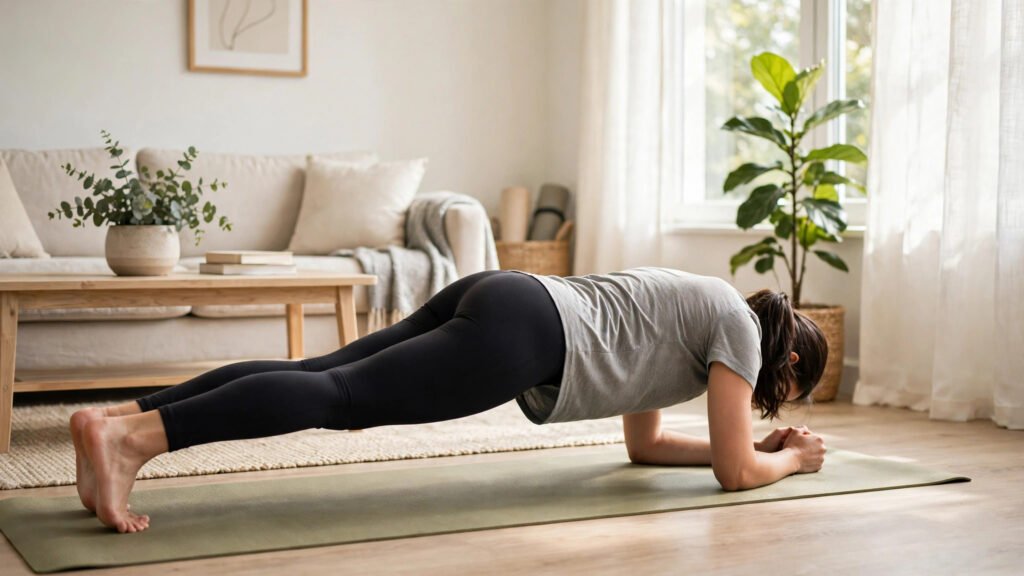
Start with a knee plank. Place your forearms on the floor, knees on the ground, and your body in a straight line from your knees to your head. Look down at the floor, keep your hips level, and hold for 20 seconds. If that feels easy after a week, try a full plank on your toes for the same time. The goal is a straight, steady line, not a long hold with sagging hips.
Next, try a dead bug. Lie on your back, arms pointing up, knees bent at a right angle. Slowly lower one arm and the opposite leg toward the floor, then return and switch sides. Move slowly and keep your lower back gently pressed toward the floor. This move is quiet and controlled, and it is one of the best ways for beginners to learn how the core should feel when it is working.
- Warm up for one minute before you start.
- Do five simple moves, with 20 to 30 seconds of rest between them.
- Keep every move slow and controlled — form first, speed second.
- Repeat the set once if you feel comfortable, then stop while it still feels good.
Three More Easy Core Moves to Add
The third move is a glute bridge. Lie on your back with knees bent and feet flat on the floor. Press through your heels, lift your hips until your body forms a straight line from shoulders to knees, hold for a few seconds, then lower slowly. This move strengthens the back of your core and your hips, which helps balance the front-focused work of planks.
The fourth move is a side plank on your knees. Lie on your side, prop yourself on your forearm, bend your knees, and lift your hips so your body forms a straight line. Hold for 15 to 20 seconds on each side. Side planks train the muscles along your waist, which help with balance and everyday twisting movements.
Finish with slow bird-dogs. Start on hands and knees, then extend one arm forward and the opposite leg back until both are level with your body. Hold for a few seconds, return slowly, and switch sides. This move challenges your balance in a gentle way and teaches your core to stay steady while your arms and legs move — exactly what it does all day in real life.
Keep every move slow and controlled — form first, speed second.
How to Build a Weekly Core Routine You Will Keep
Three sessions a week are plenty for a beginner. Pick days that fit your normal week — for example, Monday, Wednesday, and Friday — and keep the sessions short. A beginner weekly workout plan can help you fit core work alongside walking and stretching, so no single day feels overloaded. On rest days, a gentle walk or some light stretching is enough.
Progress slowly. After two steady weeks, add five seconds to each plank hold, or add one more repetition of each move. Change only one thing at a time, so you can tell what actually helped. If you feel sore the next day, that is normal for a new routine, but sharp pain is not — rest, and go back to an easier version. Our guide on how to recover after a workout covers simple recovery habits, such as gentle movement and good sleep, that help a new routine stick.
It also helps to pair core work with stretching. A few minutes of easy stretches after your session, like the moves in our morning stretch routine, can leave you feeling looser and make the next session easier to start. The routine does not need to be perfect. It needs to be repeatable, and ten calm minutes three times a week is a genuinely good place to begin.
What to Watch Next
A home core workout for beginners works when it stays simple: five slow moves, good form, short sessions, and rest days built in. Start with knee planks, dead bugs, glute bridges, side planks, and bird-dogs, progress a little at a time, and let three steady weeks build the habit. Your core will get stronger quietly, in the background of everyday life — and that is exactly the point.