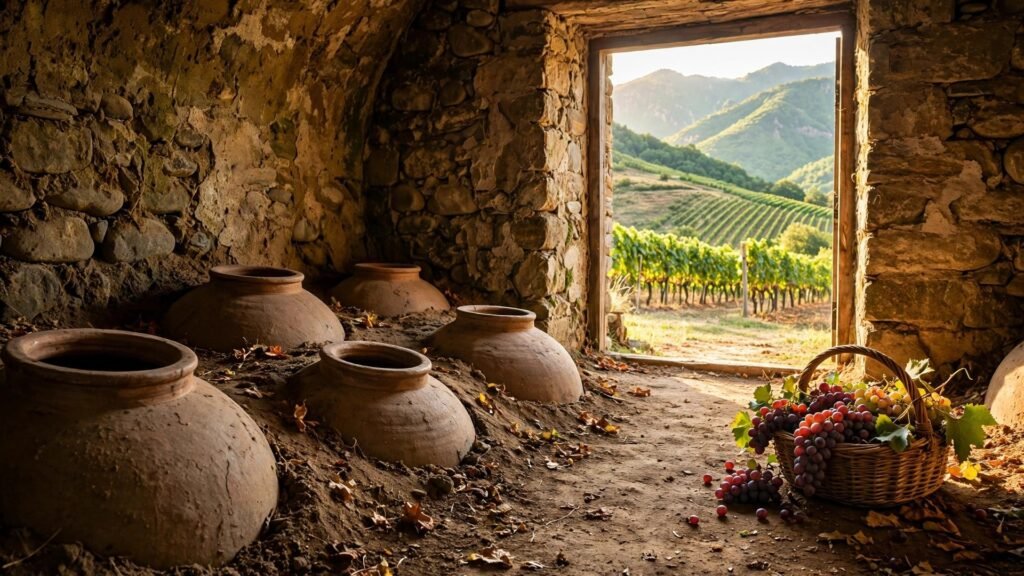
In Georgia, a country in the Caucasus between the Black Sea and the Caspian Sea, wine is not only made in steel tanks and oak barrels. In many homes and small wineries, it is still made in a large clay pot called a qvevri, buried in the ground up to its neck. The method is thousands of years old, and it is still in everyday use — not as a museum piece, but as a living way of making wine.
So why do Georgians make wine in clay pots buried in the ground, when modern equipment is widely available? The answer is a mix of climate, chemistry, and culture: the earth keeps the fermenting wine at a steady temperature, the clay lets it breathe in a gentle way, and the tradition itself is part of how Georgian families mark the harvest, the table, and the seasons.
Key Takeaways
- A qvevri is a large, egg-shaped clay vessel buried in the ground, used to ferment and store wine.
- The buried earth keeps the wine cool and steady while it ferments, which suits Georgia’s warm harvest season.
- White grapes fermented with their skins in a qvevri produce amber wine, a style closely tied to Georgian tradition.
What Is a Qvevri?
A qvevri is a clay vessel shaped a little like an egg, with a narrow mouth at the top and a pointed bottom. Sizes vary, from pots a family can manage at home to vessels large enough for a small winery. The inside is usually lined with beeswax, which helps seal the clay while still letting the vessel breathe.
The pots are made by specialist potters, and a good qvevri can be used for many years. Because the vessel is buried, only its mouth shows above the floor of the wine cellar, which in Georgia is called a marani. Lids, often made of stone or wood, cover the mouth during fermentation and storage.
The qvevri method was added to UNESCO’s list of intangible cultural heritage, a recognition of how deeply the practice is woven into Georgian life. It is one of the oldest known winemaking traditions still in continuous use anywhere in the world.
Why Bury the Pot in the Ground?
The main practical reason is temperature. Fermentation gives off heat, and in a warm climate a fermenting wine can get too hot, which can spoil its flavour. Soil is a natural insulator: buried in the ground, the wine stays cooler and its temperature changes only slowly, even when the air above swings between warm days and cool nights.
That steady temperature matters most during the harvest, when grapes are picked and crushed in large amounts over a short period. A buried qvevri does the work that, in a modern winery, would be done by temperature-controlled tanks — without any machinery at all. In a different way, Icelanders also draw on what lies beneath their feet, using heat from the earth to warm their homes.
Burial also protects the wine. Underground, it is shielded from light and from sudden changes in the weather. The pointed bottom of the pot helps the solids settle, so the clear wine can later be drawn off the top.
How the Wine Is Made, Step by Step
The process follows the rhythm of the harvest, and it is deliberately hands-on:
- Crushing: Ripe grapes are crushed, and the juice goes into the qvevri together with the skins, stalks, and pips.
- Fermentation: Natural yeasts on the grape skins start fermentation. The mixture is stirred during the early days, then left to settle.
- Resting: The wine rests in the buried pot for months, with the skins giving it colour, texture, and flavour.
- Drawing off: When the wine is ready, it is drawn from the top of the vessel, leaving the settled solids behind.
One result of this method is amber wine. When white grapes ferment with their skins, as they do in a qvevri, the wine takes on a deep golden or amber colour and a fuller, more textured taste than most white wines made without skin contact. Red grapes, fermented the same way, give a deeply coloured red wine.
A buried qvevri does the work that, in a modern winery, would be done by temperature-controlled tanks — without any machinery at all.
Why the Taste Is Different
Qvevri wine tastes different from wine made in steel or oak for a few reasons. The long contact with the skins adds tannin and texture, so even white qvevri wines feel fuller in the mouth. The clay itself adds no flavour of its own, unlike oak, which can add vanilla or spice notes — so the taste stays close to the grape and the place it grew.
That is part of the appeal for drinkers who want to taste the grape itself rather than the barrel. It is also why qvevri wines have found fans far beyond Georgia in recent years, as drinkers look for wines made with less intervention and more character.
Wine at the Georgian Table
In Georgia, wine is more than a drink. It is central to the supra, the traditional feast where dishes are shared, toasts are made in a set order, and a toastmaster known as the tamada leads the table. Wine from the family’s own qvevri is often served at these gatherings, which is one reason the method has survived: it is tied to hospitality, celebration, and family pride, not only to winemaking.
That closeness to daily life is also what keeps the tradition alive. Many families still tend a small vineyard, press their own grapes, and fill a qvevri each autumn. Modern Georgia has changed in many visible ways — Georgians today pay with bank apps and QR codes instead of cash — yet the buried clay pot remains a familiar sight in the marani.
Food habits can change quickly everywhere: in Thailand, many people now order food on their phones instead of cooking or eating out. In Georgia, by contrast, the oldest way of making wine has held its place alongside the new.
What to Watch Next
Qvevri winemaking survives because it works: the buried earth steadies the temperature, the clay lets the wine breathe gently, and the long skin contact gives amber wines their distinctive colour and texture. At the same time, it survives because it belongs to the Georgian table, the harvest, and the family cellar.
As more drinkers abroad discover amber wine, the question is whether small family producers can keep up with demand without losing the slow, hands-on character of the method. For now, each autumn still brings the same scene: grapes crushed, pots filled, lids sealed, and wine left to rest quietly underground until it is ready to be shared.