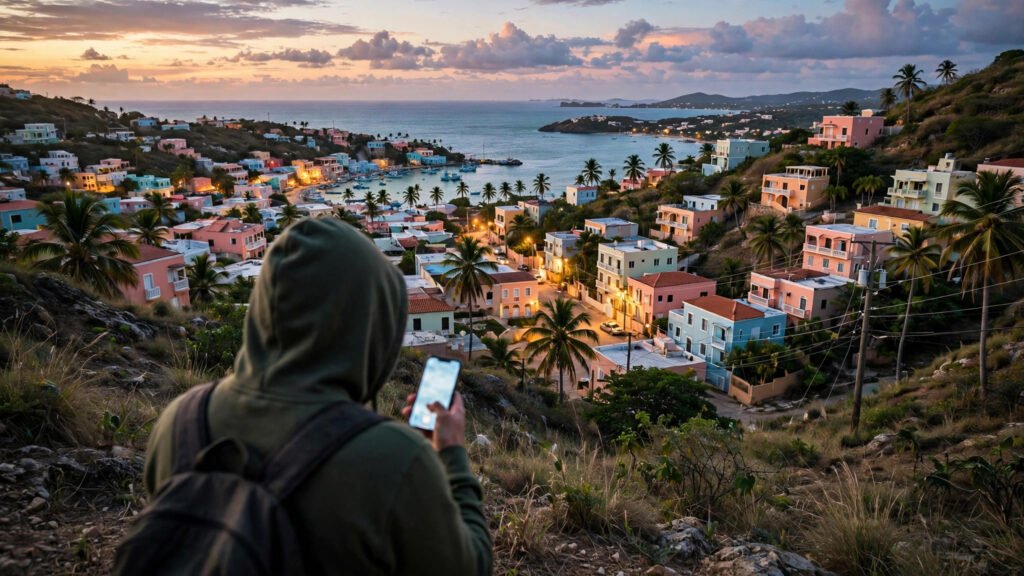
When the lights go out in Puerto Rico, the phone screen lights up. For many people on the island, the smartphone is not just a gadget for scrolling and streaming. It is the radio, the bank branch, the family meeting point and the emergency noticeboard, all in one pocket-sized device. That is why the question of why Puerto Ricans rely on their phones during power outages and hurricane season has such a practical answer: on an island where storms can knock out power and where many services now live online, the phone is often the last thing still working.
Puerto Rico sits in the Caribbean hurricane belt, and hurricane season runs from June through November each year. Islanders know that a single strong storm can damage power lines, flood roads and cut off neighbourhoods for hours or days. The experience of Hurricane Maria in 2017, which left much of the island without power for months, changed how many families think about preparation. Since then, keeping a phone charged, keeping a power bank ready and knowing which apps and contacts matter most has become part of the household routine before a storm arrives.
Key Takeaways
- For many Puerto Ricans, the phone is the main way to receive storm alerts, check on family and reach services when the power goes out.
- Hurricane season planning now includes charged phones, power banks and offline-ready information, not just food and water.
- Mobile banking, messaging apps and local news on the phone keep daily life running while homes and businesses wait for power to return.
Why the Phone Matters More When the Power Fails
A power outage changes what a home can do. The television stops, the Wi-Fi router dies and the fridge slowly warms up. But a charged smartphone on a mobile network can still receive messages, still open a weather alert and still make a call. That difference is why the phone becomes the centre of the house during an outage. Families gather around the one device with battery left, checking updates and passing the phone from person to person so everyone can read the latest news.
Mobile networks are not immune to storms either. Towers can lose power or be damaged, and signals can weaken. But networks are often restored in stages, and a phone can pick up a signal in one spot even when the home has no electricity. People learn which corner of the house, which hilltop or which nearby plaza gets a signal first, and that local knowledge becomes part of surviving an outage. Charging the phone becomes a small daily mission: at a neighbour’s generator, in a car, at a shelter or at a business that has power back.
Storm Alerts, Weather and Official Updates
During hurricane season, the phone is where warnings arrive first. Weather alerts, government notices and school or workplace closures usually reach people through messages, apps and social media long before anyone knocks on a door. For families spread across the island, or with relatives living in the United States mainland, the phone is also how they confirm that loved ones are safe. A short message saying “we are fine” can travel further and faster than any other kind of news after a storm.
Local radio still matters in Puerto Rico, and many people listen to it on their phones when the power is out. Community groups and neighbourhood chats also become informal newsrooms, where residents share which roads are blocked, which gas stations are open and where charging points or water distribution are available. This kind of neighbour-to-neighbour information, passed phone to phone, often fills the gap before official updates arrive. People in other island places face the same pattern: Grenadians rely on their phones during hurricane season for similar reasons, and Barbadians turn to their phones when storms approach too.
When the lights go out in Puerto Rico, the phone screen lights up, and that small screen becomes the family’s link to the rest of the island.
Money, Work and Daily Life on a Phone
An outage does not pause the need for money. Bills still come due, groceries still need buying and small businesses still need to serve customers. Mobile banking and payment apps let people check balances, send money to family and pay for essentials without visiting a branch that may be closed or without power. For workers whose jobs depend on messages and email, the phone is also the office during an outage, the way they tell an employer they are safe or arrange a shift once conditions improve.
Students use phones to follow class announcements when schools close, and parents use them to check whether classes have resumed. Tourists visiting the island, meanwhile, lean on their phones for flight updates, hotel information and directions when local services are disrupted. In that sense the phone is not only an emergency tool but a daily-life tool that simply becomes more visible when everything else stops. Saint Lucians use their phones for tourism and work in a similar everyday way, showing how island life and mobile life now run together.
How Families Prepare Their Phones for Storm Season
Preparation for hurricane season in Puerto Rico now has a digital checklist alongside the traditional one. Families charge power banks in advance, download offline maps, save important phone numbers on paper as well as on the phone, and make sure group chats with relatives are set up before a storm is forecast. Some keep an older spare phone charged as a backup. Others agree in advance on a check-in time, so that if the network is weak, everyone knows when to try calling or messaging.
- Charge phones and power banks fully before a storm warning takes effect.
- Save emergency numbers and family contacts somewhere other than just the phone.
- Follow official weather and government alerts rather than unverified forwarded messages.
- Agree on a family check-in time and a meeting point in case networks fail.
- Keep the phone’s battery for essential calls and updates during a long outage.
The Grid Question Behind the Habit
There is a deeper reason the phone habit runs so strong in Puerto Rico. The island’s electricity grid has been fragile for years, and outages can happen outside hurricane season as well, during maintenance, faults or periods of high demand. When blackouts are a recurring part of life rather than a rare event, people adapt. They buy power banks, they keep car chargers handy and they organise more of life around a device that has its own battery. The phone habit is, in part, a response to living with an unreliable grid.
That adaptation also shapes expectations. When the power returns, life snaps back to normal quickly because so much of it never fully stopped: messages kept flowing, payments kept moving and news kept arriving on small screens. The phone does not fix the grid, but it softens what an outage means for a household. It turns a blackout from a total cut-off into a partial one, where information and contact survive even when the lights do not.
What to Watch Next
The pattern described here is unlikely to change soon. Hurricane season will return each year, the grid will remain a work in progress, and phones will keep getting more central to how Puerto Ricans get alerts, move money, work and stay in touch. What is worth watching is how preparation keeps evolving: better backup power options for homes, wider use of alerts and community chats, and more services designed to work on a phone even when the wider infrastructure is down. For now, the lesson stays simple and practical: in Puerto Rico, a charged phone is part of storm readiness, just like water, food and a safe place to wait out the weather.