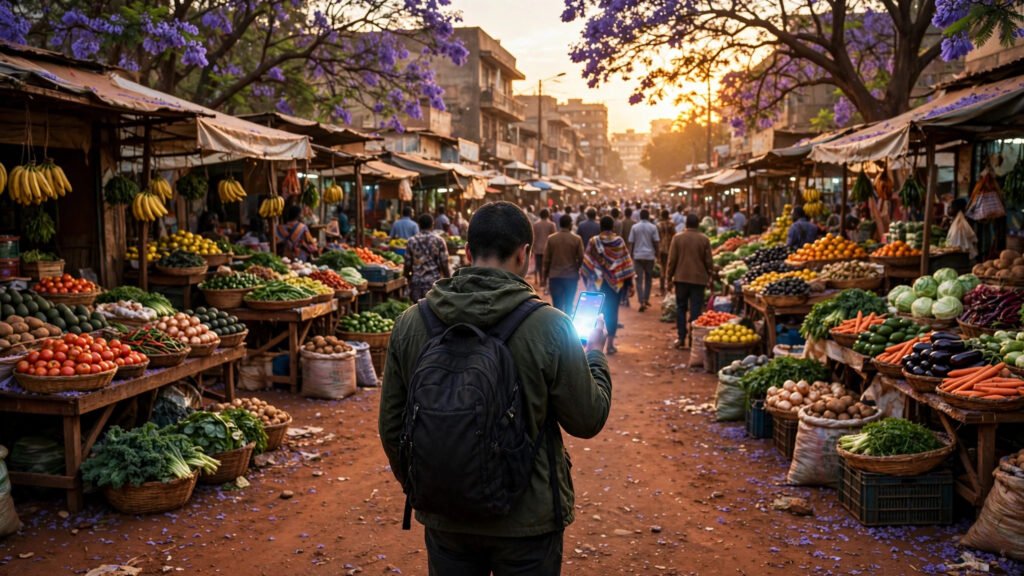
In Zimbabwe, the phone in your pocket is often more useful than the wallet in your hand. For many Zimbabweans, paying, sending money and checking a balance starts with a mobile phone, even when banknotes are hard to find. That habit did not appear overnight. It grew out of years in which cash was scarce, queues were long, and a phone-based balance felt easier to reach than physical money.
This explained guide looks at why mobile money became so central to daily life in Zimbabwe, how people actually use it, and what limits still shape it. It is a story about convenience, trust and necessity, not about one app alone.
Key Takeaways
- Mobile money lets many Zimbabweans pay, send and receive money without relying on banknotes that can be hard to withdraw.
- Cash shortages, long distances to banks and a large informal economy all pushed phone-based payments into everyday use.
- Mobile money is practical and widely understood, but network, agent and fee issues still matter for users.
Why Cash Became Hard to Rely On
Cash shortages have shaped everyday decisions in Zimbabwe for a long time. When ATMs run low or banks limit withdrawals, a simple plan, such as buying groceries or paying for transport, can become uncertain. People learn to keep alternatives ready, and for many, the phone became that alternative.
A mobile money balance does not need a trip to a bank branch. It can be checked from home, from a market stall or from a bus stop. That matters in a country where distances between towns can be long and where a wasted trip costs both time and transport money.
Cash also has practical problems of its own. Notes wear out, change can be hard to find, and carrying large amounts of cash feels risky. A phone balance, by contrast, can be sent in small amounts, split between people and kept as a record of what was paid and when.
How Mobile Money Fits Daily Life
For many Zimbabweans, mobile money is not a special financial tool. It is simply how everyday payments happen. A market trader can accept payment without a card machine. A customer can pay for airtime, electricity or groceries from the same phone used to call family. A parent can send money to a child at school without travelling to deliver it in person.
Small businesses benefit from the same simplicity. A vendor who sells vegetables, clothes or phone accessories does not need expensive equipment to accept a mobile payment. The phone already in the vendor’s hand is enough. That lowers the barrier to trading and makes it easier for informal traders, who form a large part of Zimbabwe’s economy, to take part in digital payments.
Remittances are another important use. Zimbabweans living abroad often send money home to support family, and relatives inside the country may pass money between towns. Mobile money makes those transfers faster than posting cash or waiting for a courier, and the recipient can often use the balance directly rather than converting it into notes first.
For many Zimbabweans, paying, sending money and checking a balance starts with a mobile phone, even when banknotes are hard to find.
The Role of Agents and Everyday Access
Mobile money agents sit at the centre of this system. These are small shops, kiosks and traders who help customers deposit cash into a mobile wallet or withdraw cash from it. In places without a bank branch nearby, an agent may be the closest point of access to the financial system.
Agents also help people who are less comfortable with technology. A first-time user can ask an agent to explain a step, confirm a number or check a balance. That human help matters, especially for older users or for people using a basic phone rather than a smartphone.
At the same time, agents depend on having enough cash and enough electronic balance to serve customers. If an agent runs out of cash, a withdrawal becomes impossible even when the customer’s balance is healthy. That is one reason mobile money works best when people can spend the balance directly, rather than always converting it back into notes.
Why Phones Beat Cards for Many People
Bank cards work well in many settings, but they assume a bank account, a card reader and a reliable connection at the point of sale. Mobile money, by contrast, often works on basic phones using simple menus, and it does not require the buyer and seller to both have bank accounts.
This pattern is not unique to Zimbabwe. Across southern Africa, phone-based payments have grown where card infrastructure is uneven. In neighbouring countries, people have adopted similar habits for the same reasons: distance, informality and the sheer convenience of a phone. Readers can see how Zambians pay with mobile money instead of bank cards and how Rwandans pay with mobile money instead of cash and bank cards, two examples of the same regional shift.
For Zimbabweans, the phone also doubles as a record keeper. A sent payment leaves a message trail, which helps when a trader needs to prove a payment was made or when family members need to confirm that money arrived. Cash leaves no such trail, and that difference builds confidence over time.
What Still Gets in the Way
Mobile money is not free of problems. Network outages can block a payment at exactly the wrong moment, such as at a till or a bus fare collection point. When the network fails, a customer may have the balance but no way to use it, which can be frustrating.
Fees are another concern. Sending money, withdrawing cash and paying certain bills can each carry a charge, and those charges add up for people making many small transactions. Users therefore weigh the cost of a mobile payment against the cost of travelling to find cash or waiting in a queue, and the balance of that calculation can change from week to week.
There is also the question of trust. A mobile balance depends on the network, the agent and the service provider all working as expected. Most days they do, but a system outage or an agent dispute can shake confidence. That is why many people still keep some cash when they can, using mobile money as their main tool rather than their only one.
- Mobile money reduces dependence on scarce banknotes for everyday payments.
- Agents bring financial access to places without bank branches.
- Basic phones can handle mobile payments, so no smartphone or card reader is required.
- Remittances and family support move faster through a phone balance.
- Network outages, agent cash limits and transaction fees remain real limits.
Mobile Money and the Wider Economy
When payments move onto phones, small traders gain a clearer picture of their income. A vendor can see payments coming in through the day, plan restocking and avoid carrying the day’s takings home in cash. Over time, that record can also help a trader show a pattern of sales, which may matter when applying for support or credit.
For the wider economy, the effect is subtler but real. Money that moves by phone can travel between cities and rural areas without a physical journey, which helps families share resources across distances. It also lets people pay for services, such as electricity or school-related costs, without losing a working day to travel and queues. The pattern resembles the one in Eswatini, where people in Eswatini pay with mobile money instead of cash and cards for similar everyday reasons.
None of this means cash has disappeared. Cash still matters for small purchases, for areas with weak coverage and for people who prefer it. The change is one of balance: the phone has become the first option for many payments, while cash remains a backup.
What to Watch Next
Zimbabweans will keep judging mobile money by how it performs on ordinary days: whether payments go through quickly, whether agents have cash when it is needed, and whether fees feel fair for small transactions. If networks stay reliable and agent coverage stays wide, phone-based payments are likely to remain central to daily life.
The other question is how far the balance can be used directly. The more bills, shops and services accept mobile payments without requiring a cash withdrawal, the less cash shortages matter to everyday life. For now, the phone remains the practical answer to a simple problem: how to pay, send and receive money when banknotes are hard to come by.