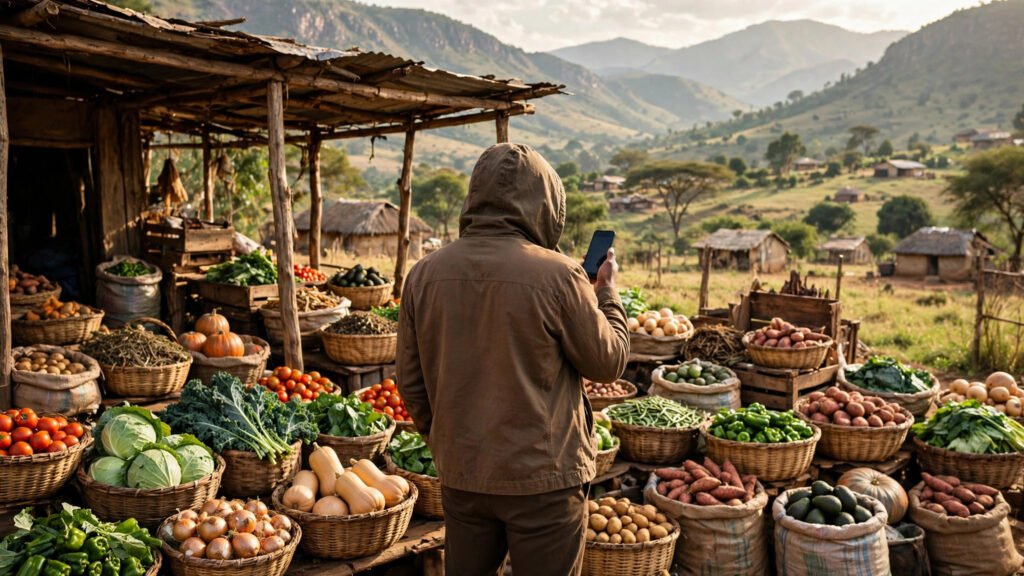
In Eswatini, a small landlocked kingdom in Southern Africa, the phone in your pocket often does the job of a bank branch. For people who live far from a town, or who need to send money to family in another region, a mobile money wallet can be faster and simpler than a long journey to withdraw cash. That is why the question comes up so often: why do people in Eswatini pay with mobile money instead of cash and cards?
The short answer is distance, habit and practicality. Cash still matters in Eswatini, and cards work well in larger shops, but mobile money fills the gaps in between. It lets people store value on a phone, send it to another phone, pay a bill, or buy airtime without carrying notes or finding a card machine that works. In a country of mountains, valleys and scattered rural communities, that convenience is not a luxury. It is a daily tool.
Key Takeaways
- Mobile money turns a phone into a wallet, which matters where bank branches are far away.
- It fits everyday life in Eswatini, from market stalls and bills to money sent home from South Africa.
- Cash and cards are not disappearing; mobile money works best alongside them, not instead of them.
Why a Phone Wallet Fits Eswatini
Eswatini is compact on a map, but its terrain makes travel slower than the distance suggests. A trip to town can take time, cost transport money, and eat up a whole morning. When a payment can be made from home instead, people naturally prefer it. A mobile wallet removes the journey for many small, routine transfers: sending money to a relative, topping up airtime, or settling a small bill.
Mobile money also fits how many people already use their phones. A basic smartphone, and in some cases a feature phone with a menu-based service, is already part of daily communication. Adding payments to that same device feels like a small step, not a new system to learn from scratch. Friends and family can show each other how it works, and local agents can help with the first deposit or withdrawal.
That agent network is a key part of the story. Small shops and kiosks act as human points of contact for a digital service. Someone can hand over cash to an agent and see the balance appear on their phone, or withdraw cash when they need notes for a market purchase. For people who are unsure about a purely digital balance, the agent makes the system feel real and reversible.
How Mobile Money Works Day to Day
In practice, mobile money in Eswatini works much like mobile money elsewhere in Southern Africa. A user registers a wallet linked to their mobile number, loads it with cash through an agent or from a bank account where that option exists, and then sends, receives or spends the balance from the phone. The best-known service in the country is MTN MoMo, offered by MTN Eswatini, and other mobile and banking options also serve the market.
Day-to-day uses are deliberately ordinary. People send money to family members studying or working in another town. Traders accept a phone payment when a customer has no notes. Households pay for services and top up airtime without queuing. None of these uses requires a bank card, and none requires the sender and receiver to be in the same place at the same time.
In a country of mountains, valleys and scattered rural communities, that convenience is not a luxury. It is a daily tool.
Remittances add another reason for mobile money to matter. Many Eswatini families have relatives working in South Africa, and money sent home supports households, school costs and small businesses. A phone transfer can arrive faster than a physical delivery, and the receiver can withdraw part of it in cash through an agent while keeping the rest on the phone. That flexibility, rather than any single feature, is what keeps people using the service.
Cash, Cards and Phones Side by Side
It would be wrong to describe Eswatini as a cashless country, because it is not. Cash remains essential in markets, on public transport, and in small rural shops where a card machine may not be available or practical. Cards are common in supermarkets, larger retailers and hotels, especially in Mbabane and Manzini. Mobile money sits between those two worlds.
People choose the method that fits the moment. Cash wins when the seller only takes notes, or when a phone battery is low. A card wins for a larger purchase in a store with a working terminal. A phone wallet wins when distance is the problem, when the other person is far away, or when a small amount needs to move quickly. Understanding mobile money in Eswatini means understanding that mix, not declaring one winner.
A similar pattern appears in other countries where phones have become everyday payment tools. In Rwanda, many people pay with mobile money instead of cash or bank cards for much the same reason: the phone reaches places a branch does not. In island countries, the phone also bridges distance, as shown by how Cape Verdeans rely on their phones across nine islands. And for families split by migration, Marshallese living abroad send money home through their phones rather than relying only on banks.
- Distance is the main driver: a phone payment avoids a long trip to town.
- Agents bridge cash and digital money, so people can load and withdraw locally.
- Remittances from South Africa give mobile wallets a clear family purpose.
- Cash still rules in markets and small shops, and cards still suit larger stores.
- Trust grows through everyday use, not through a single big switch.
What Still Holds People Back
Mobile money is not without friction. Network coverage can be patchy in remote valleys, and a payment that fails halfway can shake confidence. Registration and identity checks, while necessary for safety, can feel like a barrier for a first-time user. Fees, even small ones, matter when amounts are small, and people compare the cost of a transfer with the cost of handing cash over in person.
Trust is the slower part of adoption. A balance that exists only as numbers on a screen feels different from notes in a pocket, especially for older users or for people saving for school fees or a family emergency. Scams and mistaken transfers are a real worry everywhere mobile money is used, and clear, patient customer support makes a difference. When help is easy to reach and problems are resolved, people are more willing to keep a larger balance on their phones.
Phone access itself is another limit. A lost, broken or stolen phone can temporarily lock someone out of their money, and not everyone can afford a smartphone or a replacement handset. That is why cash remains a safety net, and why the most useful systems are the ones that work simply, recover gracefully, and do not punish a user for a single mistake.
What to Watch Next
Cash will remain central to daily life in Eswatini, and cards will keep their place in larger stores. What to watch instead is steadier and more telling: more market traders accepting phone payments, more bills settled from a phone, more money sent between towns and from South Africa arriving as a wallet balance, and more agents able to help in rural areas. Each small step keeps cash in its place while giving people in Eswatini one more way to pay, and over time those steps add up to a genuinely mixed payment culture, where cash, cards and the phone share the counter rather than fighting over it.