In Spain, paying a friend back for lunch rarely involves cash, a card machine, or a long bank account number. For many Spaniards, it involves a phone number and a few taps inside the banking app they already use. That shortcut is Bizum, and it has quietly become one of the most ordinary parts of everyday spending in Spain.
Bizum is not a separate bank and it is not a new kind of money. It is a payment service offered through participating Spanish banks, built into their own mobile apps. When someone sends money with Bizum, the money moves from one bank account to another, using the recipient’s mobile number as the identifier. The sender does not need to ask for an account number, and the recipient does not need to install a different app to receive it.
Key Takeaways
- Bizum works through participating Spanish banks and lives inside their existing mobile apps, not as a separate bank.
- It lets people send money using just a mobile phone number, instead of sharing a full bank account number.
- Its everyday appeal comes from small, social payments: splitting a bill, sharing a gift, or paying a small business.
Why a Phone Number Was Enough
The most important idea behind Bizum is also its simplest one. Most people know their friends’ phone numbers, and most people carry those numbers in their contacts. Traditional bank transfers asked for something people rarely memorised: a long string of digits that had to be copied carefully. One wrong digit could send money to the wrong place or delay a payment for days.
Bizum removed that friction. A sender picks a contact, types an amount, and confirms the payment in the banking app. The phone number does the work of identifying the account, because the recipient has linked that number to a bank account through their own bank. For a country where friends and families share costs constantly, that small change mattered more than any complicated feature.
It also matched how Spaniards already socialise. Meals are often shared, outings are often group outings, and gifts are often collected together. Splitting a restaurant bill used to mean working out who owed what, finding cash, or making a note to settle up later. With Bizum, the settling up happens on the spot, before everyone has left the table.
From Friends to Small Shops
Bizum started as a way to move money between people, but its use has grown well beyond that. Many online shops in Spain now offer Bizum at checkout, so a buyer can approve a payment through a bank app instead of typing card details into a website. Some charities and small organisations accept donations through Bizum as well, because a donor only needs a phone or a code provided by the organisation.
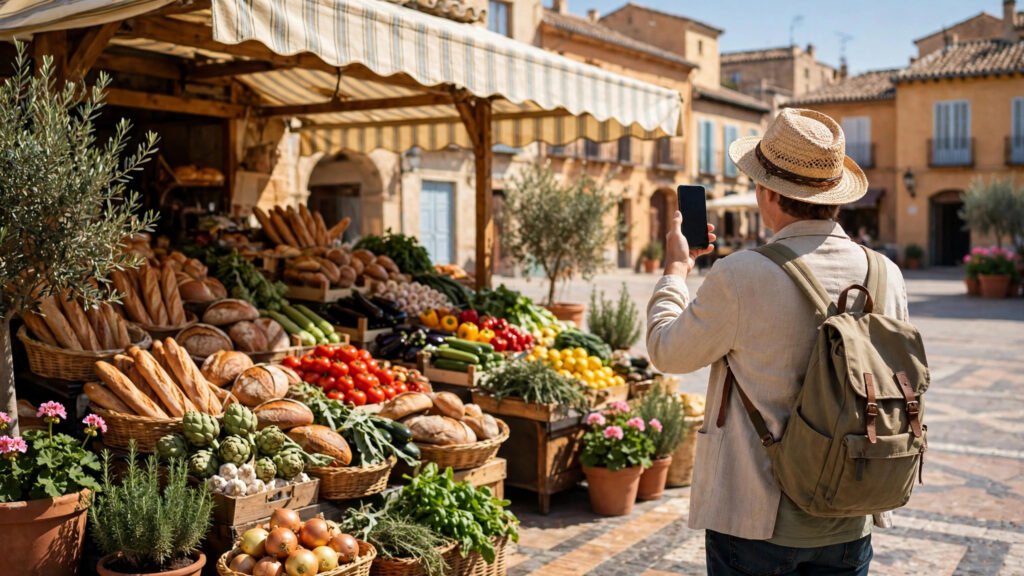
Small businesses have found it useful for a similar reason. A market stall, a neighbourhood shop, or a freelance worker may not want the cost and equipment of a card terminal for every small sale, and may not want to handle piles of coins at the end of the day. A Bizum payment arrives directly in a bank account, with a record inside the banking app that both sides can check. That record matters: it replaces a vague memory of cash changing hands with a clear, dated entry.
For a country where friends and families share costs constantly, that small change mattered more than any complicated feature.
None of this means cash or cards have disappeared in Spain. Cash is still used, especially for very small purchases and by people who prefer it, and cards remain common in supermarkets, petrol stations, and larger stores. Bizum sits alongside those options rather than replacing them all. Its strength is in the payments that used to be awkward: the shared taxi fare, the birthday collection at work, the money a parent sends to a student, or the payment to a trusted local seller.
Why Banks Backed It Together
Another reason Bizum spread so widely is that Spanish banks built it together, rather than each launching a rival system that only worked inside one bank. A payment service is only useful if the other person can receive it, and a system limited to customers of a single bank would have left too many people out. By offering Bizum through many participating banks, the service became useful from the start, because a sender and a recipient at different banks could still pay each other.
That shared approach also kept the experience familiar. Users did not have to learn a new brand, create a new account, or trust a new company with their money. They opened the banking app they already trusted, found Bizum inside it, and used the same login and security checks they already used for other banking. For people who are cautious about new financial apps, that familiarity lowered the barrier to trying it.
Security, of course, still depends on the user. A Bizum payment, like any bank transfer, should only be sent to someone the sender knows or a seller the sender trusts, and unexpected payment requests should be checked before they are approved. Banks generally set their own limits and rules for Bizum, so the exact limits, fees, and options can differ from one bank to another. Anyone using it for the first time should check those details inside their own banking app rather than assuming every bank works in exactly the same way.
- Bizum moves money between bank accounts, using a mobile number instead of a full account number.
- It is built into participating Spanish banks’ apps, so there is no separate bank account to open.
- It fits shared social spending: bills, gifts, group outings, and small business payments.
- Cash and cards are still widely used in Spain; Bizum is an additional option, not a total replacement.
- Limits and features can differ by bank, so users should check their own banking app for details.
What It Says About How Spain Pays
The rise of Bizum says something broader about payments in Spain. People did not adopt it because they wanted a futuristic technology; they adopted it because it solved a small, repeated annoyance. Asking for an account number felt formal and slow, while asking for a phone number felt natural. Once that step became easy, the habit spread through families, friend groups, workplaces, and neighbourhoods, one small payment at a time.
Other countries have their own answers to the same question. In the Netherlands, many people pay online with iDEAL and split bills with Tikkie, while in Switzerland, TWINT has become the everyday phone payment habit. In the Philippines, GCash and Maya play a similar everyday role for people who want to pay, send, and receive money from a phone. Each system fits its own banking setup and social habits, but the underlying idea is the same: make the small payment as easy as sending a message.
For visitors to Spain, Bizum is also a useful thing to understand, even if they cannot use it themselves. A visitor who only carries a foreign bank account will not usually be able to send a Bizum payment, because the service runs through participating Spanish banks. But knowing what it is explains why a Spanish friend might suggest it so casually, and why a small seller might ask whether a buyer can pay that way. It is part of the local payment language, like knowing that a card is expected in one shop and cash is preferred in another.
What to Watch Next
Bizum’s story in Spain is now less about launching something new and more about how far an everyday habit can extend. The same phone-number simplicity that made it useful between friends is the reason it has spread to online shops, donations, and small businesses, while cash and cards continue to sit alongside it. Its limits and features will keep varying by bank, and users will keep needing to check their own banking app and to send payments only to people and sellers they trust. What is unlikely to change is the basic appeal that made it stick: in Spain, paying someone back no longer needs an account number, because a phone number is enough.