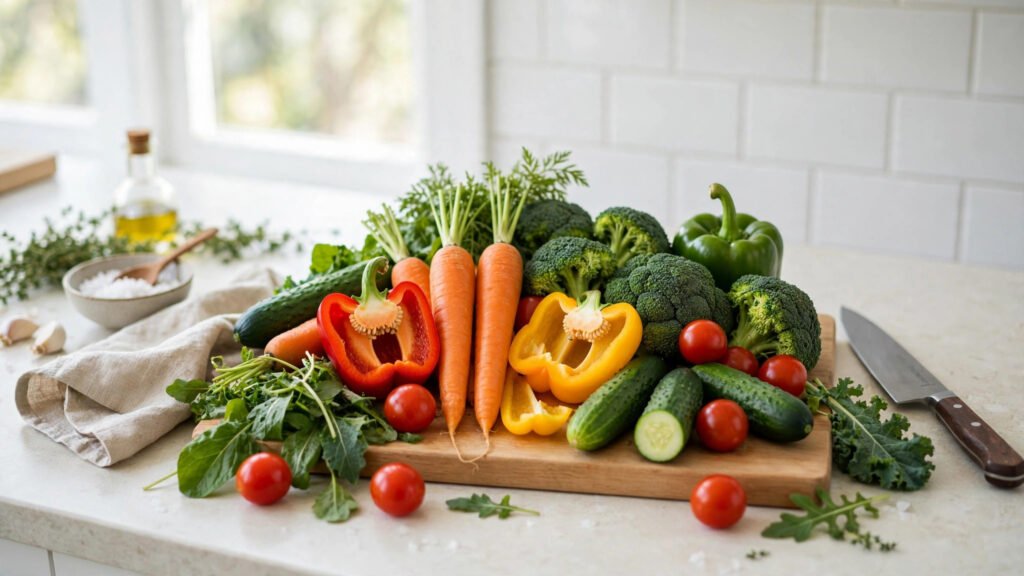
Learning how to eat more vegetables does not have to mean learning complicated recipes, buying unusual ingredients, or spending an extra hour in the kitchen. For many people, the hardest part is not knowing that vegetables are a good addition to a meal. It is finding a way to add them that fits into a busy day, a small kitchen, and a routine that already feels full. This guide focuses on simple, practical steps that make vegetables an ordinary part of everyday meals, without turning dinner into a project.
Key Takeaways
- Start with vegetables you already enjoy, and add them to meals you already cook.
- Keep preparation short: washing, slicing, and simple cooking methods are usually enough.
- Make vegetables easy to reach by keeping a few ready options visible in the kitchen.
How to Eat More Vegetables Without Changing Your Whole Routine
The easiest changes are the ones that sit inside a routine you already have. If you usually make eggs in the morning, a handful of spinach, sliced mushrooms, or chopped peppers can go into the same pan. If you usually make a sandwich at lunch, adding cucumber, lettuce, or tomato takes only a few extra seconds. Nothing about the meal has to be reinvented. The vegetable simply joins what is already there.
This approach works because it lowers the barrier to starting. A completely new meal plan can feel exciting for a day and then fade when life gets busy. A small addition to a familiar meal is much easier to repeat, and repetition is what turns a good intention into a habit. Try one addition at a time rather than changing every meal at once, and give each change a few days before deciding whether it suits you.
It also helps to think in terms of portions rather than perfection. One extra serving at one meal is a real step, even if the rest of the day looks exactly as it did before. Over a week, those single servings add up, and they do so without any dramatic overhaul of how you shop or cook.
A small addition to a familiar meal is much easier to repeat, and repetition is what turns a good intention into a habit.
Start With Vegetables You Already Like
There is no rule that says you must start with the vegetables you find hardest to enjoy. Begin with the ones you already like, even if the list is short. Carrots, cucumbers, peppers, peas, sweetcorn, and broccoli are common starting points, and any of them can appear in more meals than you might expect. Liking the food you eat makes the habit far more likely to last.
Once a few favourites are part of your routine, you can try one new vegetable at a time, prepared in a simple way. Roasting, steaming, or adding a vegetable to a soup or a stir-fry can change how it tastes and feels, so a vegetable you disliked in one form may suit you better in another. There is no need to force yourself to like everything. A short list of vegetables you genuinely enjoy is enough to build on.
Keep Preparation Short and Simple
Complicated preparation is one of the main reasons vegetables get skipped. The good news is that most everyday vegetables need very little work. Washing and slicing is often the whole job. A cucumber can be sliced for a salad, carrots can be cut into sticks for snacking, and peppers can be chopped straight into a pan.
Simple cooking methods also help. Steaming keeps the process quick and the washing-up light. Roasting with a little oil turns a tray of mixed vegetables into a side dish with almost no attention while it cooks. Adding frozen or pre-cut vegetables to a soup, a pasta sauce, or a rice dish can save even more time, and they are a perfectly practical option on busy days. If you already enjoy a morning drink, a healthy smoothie at home is another easy way to include vegetables such as spinach or cucumber without extra cooking.
Keeping a sharp knife, a chopping board, and a colander within easy reach also makes a difference. When the tools are already out, preparation feels like a small step rather than a chore, and that small difference matters on tired evenings.
Add Vegetables to Meals You Already Make
Almost every familiar meal has a natural place for an extra vegetable. Pasta sauce can take grated carrot, chopped peppers, or mushrooms. A rice dish can take peas, sweetcorn, or broccoli florets. A wrap can take shredded cabbage, grated carrot, or sliced cucumber alongside its usual filling. Soups and stews are especially forgiving, because vegetables blend into the flavour of the dish while adding colour and texture.
Planning a little ahead makes this easier still. If you like to batch-cook meals for the week, adding an extra tray of roasted vegetables or an extra pot of vegetable soup gives you ready options for several days. Even a single extra portion cooked on a quiet evening can become tomorrow’s lunch, which removes one more decision from a busy day.
Breakfast deserves attention too, because it is often the meal with the fewest vegetables. Tomatoes or mushrooms with eggs, cucumber on toast, or a small side salad with a weekend brunch can all shift the balance of the day without changing breakfast beyond recognition.
Make Vegetables Easy to Reach
What you see first in the kitchen often shapes what you eat. Keeping washed vegetables at eye level in the fridge, rather than hidden in a drawer, makes them the obvious choice when you open the door looking for a snack. A bowl of carrot sticks, cucumber slices, or cherry tomatoes ready to eat can compete with any other snack simply by being there first.
The same idea applies at work. Packing a small container of sliced vegetables the night before means you do not have to decide in the morning rush, and choosing healthy snacks for work becomes a matter of grabbing what is already prepared. At home, keeping a few long-lasting options on hand, such as onions, carrots, and frozen mixed vegetables, means a vegetable is available even on days when you have not shopped recently.
Visibility also helps with variety. When different colours are sitting side by side on a chopping board or in a fridge container, mixing them into a meal feels natural rather than forced, and a more colourful plate is often a more interesting one to eat.
A Simple Weekly Rhythm That Keeps It Going
A loose weekly rhythm can keep the habit going without strict rules. You might aim to add a vegetable to one meal a day at first, then to two meals once that feels normal. You might pick one new vegetable to try each week, or set aside one evening for a tray of roasted vegetables that covers several meals. The exact pattern matters less than the fact that it is realistic for your week.
Shopping can follow the same rhythm. Adding two or three vegetables to a regular shopping list, rather than buying a large unfamiliar selection, keeps waste down and keeps the fridge manageable. If something goes uneaten one week, swap it for a favourite the next week rather than treating it as a failure. Eating habits change gradually, and a flexible plan survives busy weeks far better than a rigid one.
Finally, notice what is already working. If a particular addition has become automatic, that is progress worth keeping. Building slowly around those small wins is how eating more vegetables becomes an ordinary part of life, not a short-lived effort.
- Start with vegetables you already like, not the ones you find hardest.
- Add vegetables to familiar meals instead of learning new recipes.
- Keep preparation short, and keep ready vegetables visible and easy to reach.
- Build gradually, one meal and one new vegetable at a time.
What to Watch Next
Eating more vegetables without complicated cooking comes down to small, repeatable steps: start with what you like, add it to meals you already make, keep preparation short, and make vegetables easy to reach. None of these steps requires a new kitchen routine, and each one can be adjusted to fit your week. Over time, those small additions can turn vegetables from an occasional extra into an ordinary part of everyday eating.