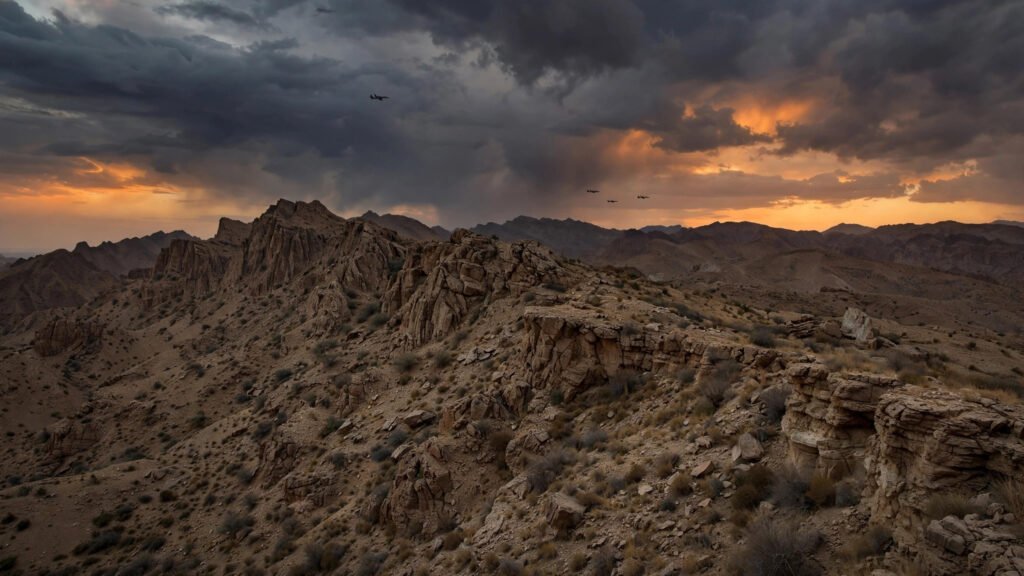
US President Donald Trump said on Saturday that the United States could strike Iran’s remaining nuclear targets “in 10 minutes,” naming a suspected underground site known as Pickaxe Mountain as one of the locations still to be dealt with. The warning, delivered to reporters at his Mar-a-Lago club in Florida during a Halloween party, came just days before the November 3 midterm elections and at a moment when Washington is publicly weighing whether to resume military action against Iran.
Key Takeaways
- Trump said the US still has “one or two sites” left to deal with in Iran, and that it could do so “in 10 minutes.”
- He named Pickaxe Mountain, a suspected underground nuclear site near Natanz that has not been struck in the war so far.
- He also said negotiations with Iran were continuing, while Secretary of State Marco Rubio said no decision on fresh strikes had been made.
Trump presented the warning as a statement of capability rather than an announcement of an imminent attack. He said the United States had already knocked out much of Iran’s military and nuclear infrastructure in the war that the US and Israel began in late February, and that Washington was in no hurry to act again. At the same time, he left no doubt that the option remained open, and he put a name to a target that had previously only been discussed in intelligence assessments.
What Trump Actually Said
Speaking to reporters at Mar-a-Lago on Saturday night US time, Trump said: “We’ve knocked out their nuclear. We still have to take care of, I would say one or two sites, but we can do that in 10 minutes.” He then pointed directly to the site he had in mind, adding: “You probably could look at Pickaxe Mountain, and you have to take care of that. We can do that all very quickly.”
On the diplomatic track, Trump struck a more cautious note. He said Iran wanted to reach an agreement and that negotiations were “going fine,” but added that Tehran was “not very reliable.” That dual message — a threat of swift military action alongside an open door to talks — has defined Washington’s posture for weeks, with the president repeatedly saying he was weighing whether to, in his words, finish the job against Iran’s nuclear programme.
We still have to take care of, I would say one or two sites, but we can do that in 10 minutes.
Why Pickaxe Mountain Matters
Pickaxe Mountain, located near Iran’s Natanz nuclear complex, is a suspected underground facility that Western intelligence agencies have flagged as a site likely used to store nuclear material. It has not been struck by the US in the war so far. Previous American strikes targeted Iran’s established nuclear facilities at Natanz, Fordow and Isfahan, while Pickaxe Mountain’s fortified tunnel network and underground construction have made it a harder target for conventional air attacks.
What exactly the site holds remains unverified. Reports describe its precise operational status and whether nuclear material is present there as unconfirmed, and the Iranian government has consistently denied that any nuclear work is carried out at the site. That uncertainty is part of why naming it matters: it moves a site from the realm of intelligence reporting into the centre of a public warning from the president himself.
- Trump named Pickaxe Mountain, near Natanz, as a site the US could strike “very quickly.”
- The site is a suspected underground facility flagged by Western intelligence, and Iran denies nuclear work there.
- Previous US strikes hit Natanz, Fordow and Isfahan; Pickaxe Mountain was not among them.
- The US has not struck Iran since September 1, and Trump had pledged no further attacks until after the midterms.
- Secretary of State Marco Rubio said Trump has not made a decision on fresh strikes and prefers a diplomatic solution.
The Timing: Midterms, Allies and a Phone Call
The warning lands in a crowded diplomatic week. Hours earlier on Saturday, Trump spoke by phone with Israeli Prime Minister Benjamin Netanyahu, according to a Wall Street Journal report, as the United States laid plans for a possible resumption of strikes. Washington has also warned Gulf allies to prepare for a possible new round of strikes on Iran, with one report citing Gulf officials saying allies were told to be ready as early as November 4, the day after the midterms.
At the same time, Secretary of State Marco Rubio said on Saturday that Trump “hasn’t made a decision” on whether to resume strikes, and that the president prefers a diplomatic resolution. That distinction is important: the warning is a threat and a signal, not a confirmed order. The US has not struck Iran since September 1, and Trump had previously pledged to refrain from further attacks until after the midterm elections, which take place on Tuesday, November 3.
The diplomatic backdrop includes a reported draft arrangement on uranium transfer and the reopening of the Strait of Hormuz, a reminder that talks and threats are running in parallel. Whether either track produces a settlement, or whether the warning hardens into action, is the question hanging over the days after the vote.
Iran’s Response
Iran’s supreme leader, Mojtaba Khamenei, warned the United States and Israel on Saturday against launching new attacks, following threats that strikes could resume after the elections. According to announcements reported from Tehran, Khamenei ordered military commanders to prepare for an immediate and powerful response, without geographical limits, in the event of another attack, and Iran’s military leadership said the country’s list of potential targets had been expanded.
Iran has repeatedly said it would respond to any new attacks by striking at US and Israeli targets in neighbouring countries. That exchange of warnings — a ten-minute threat from Washington, a promise of a broad response from Tehran — is what makes the coming days so volatile: both sides are publicly setting the terms of what happens next, while the decision itself, according to Rubio, has not yet been made.
What to Watch Next
What to watch next is whether the warning stays a warning or becomes action after the November 3 midterms, whether the reported November 4 window for a possible strike materialises or passes quietly, and whether the negotiations Trump described as “going fine” produce anything concrete. The other tests are whether Pickaxe Mountain is struck, targeted diplomatically or left alone, and whether Iran’s promised response stays rhetorical or turns into retaliation. Until those questions are answered, the ten-minute warning stands as both a military threat and a negotiating signal — a claim about what the US can do, made days before voters decide the political landscape in which any decision would be taken.