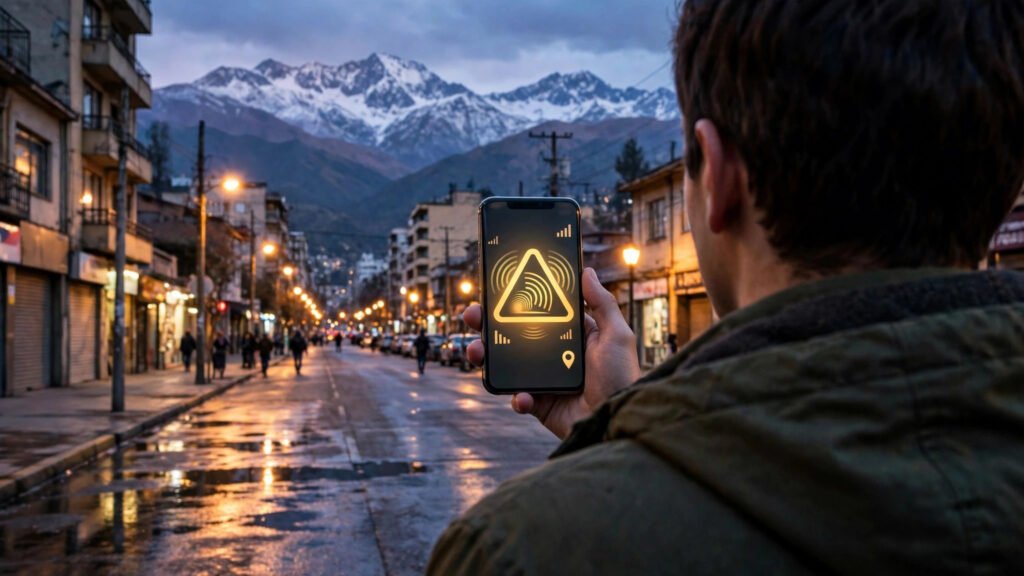
When the ground moves in Chile, the first thing many people reach for is not the television remote or the radio dial. It is the phone in their pocket. A vibration, a loud alert tone, or a message from family can be the first sign that something is happening, and in those first seconds, people want one thing above all else: clear information, fast.
That habit did not appear out of nowhere. Chile is one of the most earthquake-prone countries in the world, and living with that reality shapes everyday routines. Checking a phone for an earthquake alert is not about curiosity alone. It is about safety, about knowing where the shaking was felt, about deciding what to do next, and about checking on the people who matter most.
Key Takeaways
- Chile’s location on a highly active plate boundary makes earthquakes a regular part of life, so alerts are treated as practical information, not a rare event.
- Phones are checked first because they are always nearby, they can deliver alerts quickly, and they combine warnings, maps, news and family messages in one place.
- An alert is only the start: the safest response is to stay calm, follow official guidance, and avoid spreading unverified rumours.
Why Chile Shakes So Often
Chile stretches along the western edge of South America, where one of the Earth’s large tectonic plates is slowly sliding beneath another. That slow, powerful movement builds up strain over time, and when the strain is released, the ground shakes. Small tremors are common, and larger earthquakes have shaped the country’s history, its building rules, and its public safety culture.
Because earthquakes cannot be predicted with the precision of a weather forecast, preparedness matters more than prediction. Schools, workplaces and families in Chile grow up with drills and safety routines. Children learn where to take cover, adults learn to keep a phone charged, and households talk about meeting points and emergency supplies. In that context, an earthquake alert on a phone fits naturally into a wider habit of readiness.
The geography of the country adds another reason for the habit. Chile is long and narrow, with cities spread from the northern desert to the far south, and with the Andes running along much of its eastern side. An earthquake felt in one region may be barely noticed in another, so people do not just want to know that an earthquake happened. They want to know where it happened, how strong it felt near them, and whether any further guidance has been issued.
Why the Phone Comes First
The simplest reason is proximity. A phone is usually within arm’s reach, day and night, while a television may be off and a radio may be in another room. When an alert arrives, it can cut through the noise of daily life in a way that a scheduled news bulletin cannot. A short message can say enough to act on: shaking has been detected, a location is named, and further updates will follow.
Speed is the second reason. Official warnings, news updates and messages from friends and family often travel through phones within moments of an event. A person who feels shaking can open a phone and see whether others felt it too, whether an official alert has been issued, and whether roads, transport or services are affected. That shared, fast picture helps people avoid guessing in isolation.
When the ground moves in Chile, the first thing many people reach for is not the television remote or the radio dial. It is the phone in their pocket.
The third reason is that a phone does several jobs at once. It can carry the alert itself, show a map or a news update, and then become the tool for checking on family. A short call or message to parents, children or neighbours can settle the most urgent question after any shaking: is everyone safe? In a country where families may live in different cities, that check-in role matters as much as the alert itself.
What an Alert Can and Cannot Tell You
An earthquake alert is useful, but it has limits, and understanding those limits is part of using it well. An alert can draw attention to an event and point people toward official information. It cannot, on its own, describe the full situation in every street or building, and early information can change as more reports come in. That is why the most careful habit is to treat the first alert as a prompt to check official sources, not as the final word.
People in Chile also learn to separate the signal from the noise. After a noticeable shake, social media fills quickly with posts, videos and claims, and not all of them are accurate. A phone makes that flood visible, but it also makes it easier to compare sources: an official warning, a trusted news outlet, and messages from people nearby can be weighed together before anyone forwards a claim to a wider group.
- Keep the phone charged and alerts switched on, so a warning can reach you even at night.
- Read the alert, then check an official source before sharing it further.
- Use the phone to check on family, but keep calls short if networks are busy.
- Stay away from damaged buildings and follow local safety guidance after strong shaking.
Why Not Wait for the Television or Radio?
Television and radio remain important, especially for longer updates, expert explanation and coverage that continues through the day. But they are not always the fastest first step. A bulletin has to be prepared and broadcast, while a phone alert can arrive while a person is at work, on a bus, or walking in the street. For many Chileans, the phone is therefore the first check, and television or radio becomes the second, deeper source.
The same pattern appears in other places where a fast warning matters. In Fiji, for example, people check their phones first when a cyclone warning is issued, because warnings, storm updates and family check-ins all arrive fastest on one device. In Bhutan, travellers check their phones for weather and road alerts before mountain travel, where conditions can change quickly. And on Montserrat, residents rely on their phones across a volcano-divided island where distance and daily movement make a pocket-sized update essential. Chile’s earthquake habit belongs to that same wider story: when danger can arrive suddenly, the device that is already in your hand becomes the first source of news.
Staying Calm in the First Minutes
Checking a phone is only helpful if it leads to a calm response. The standard safety advice taught in earthquake-prone regions is to protect yourself first: take cover under sturdy furniture where possible, stay away from windows and heavy objects that could fall, and avoid running outside during shaking. Once the shaking stops, the phone becomes useful again for checking official guidance, finding out whether aftershocks are expected, and learning whether any areas should be avoided.
Keeping the phone ready is part of that routine. A charged battery, a working mobile connection, and alerts switched on are small preparations that pay off in a moment when every second feels long. So is knowing, in advance, which official channels to trust, so that a frightening rumour does not have to compete with a reliable update for attention.
What to Watch Next
Chileans will keep checking their phones first for earthquake alerts, because the reasons behind the habit are not changing: the country sits on an active plate boundary, phones are always close at hand, and alerts combine warnings, news and family check-ins in one place. The habit works best when the first alert is followed by a check of official sources, a calm and careful response, and a short message to the people who need to know you are safe. As alert systems and phone technology continue to improve, the first check may become even faster, but the core idea will stay the same: in an earthquake-prone country, a phone is not just a device for daily life, it is part of how people stay informed and look out for each other when the ground moves.