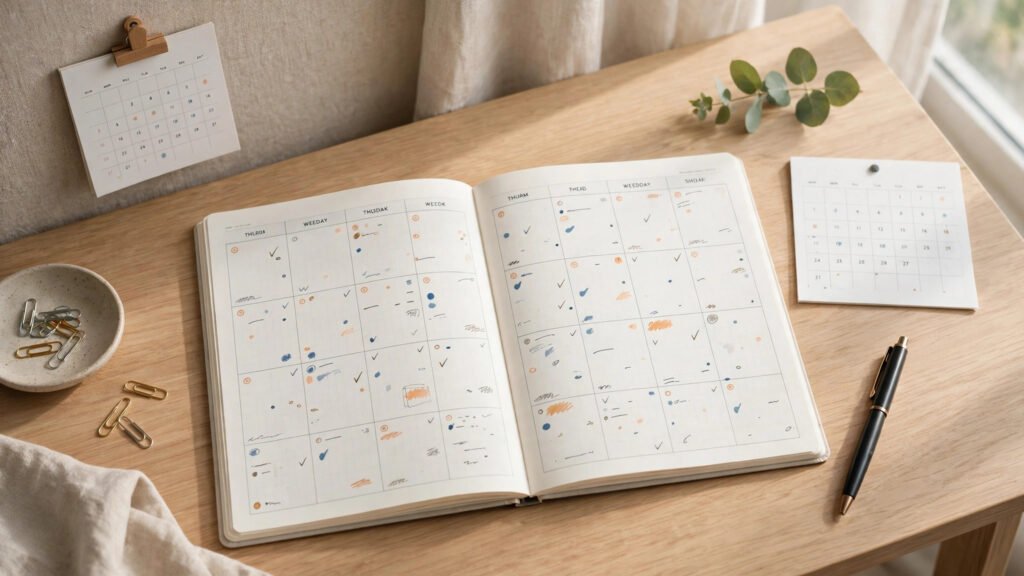
Missing a deadline rarely happens because someone did not care. It usually happens because the due date lived in the wrong place — in an email that scrolled away, in a chat message that was never reopened, or in a head that was already full. Learning how to keep track of deadlines is less about buying a new app and more about giving every due date one reliable home and checking it on a regular rhythm.
Key Takeaways
- Keep every deadline in one master list, not scattered across emails, chats, and memory.
- Review the list once a week so nothing surprises you the day before it is due.
- Set one reminder a few days early, so you still have time to act when it fires.
The system below works with a paper planner, a phone calendar, or a simple notes app. Pick the tool you will actually open, then follow the same steps every time a new deadline arrives.
How to Keep Track of Deadlines: Start With One Master List
The first rule is simple: one list, not five. When a deadline reaches you — from a teacher, a boss, a client, or a bill — write it down in the same place immediately, with three details: what is due, the exact date and time, and where it has to be sent or handed in. A vague entry like “report soon” helps no one; a clear entry like “project report, Friday 5 pm, email to manager” tells future-you exactly what to do.
It also helps to sort the list by due date rather than by the order things arrived. The nearest deadline goes at the top, so a quick glance tells you what matters most right now. If you use a digital tool, keep a single view sorted by date; if you use paper, rewrite the top of the list when the order changes.
Capture Deadlines the Moment They Appear
Most missed deadlines start as a small delay: you meant to write it down later, and later never came. Build a capture habit instead. When a due date appears in an email, forward it to yourself or copy it into your list before you close the message. When someone mentions a date in a meeting, note it before the meeting ends. When a bill or form arrives, its due date goes on the list the same day it arrives.
This habit matters because memory is a poor filing cabinet. A two-minute capture now saves a stressful search later, and it means your list stays complete enough to trust. A list you trust is a list you will keep checking.
Review Your Deadlines Once a Week
A list only works if you look at it. Set aside ten minutes once a week — Sunday evening or Monday morning both work well — to review the next two weeks of deadlines. Ask three questions: what is due this week, what needs starting now so it is ready next week, and is anything missing from the list?
This weekly review is where you catch problems early. If two big deadlines land on the same day, you can move work forward or ask for help while there is still time. If a task needs several steps, the review reminds you to start the first step now rather than the night before. Pair this habit with time blocking for your day so the work actually gets a slot in your calendar, not just a line on a list.
A list you trust is a list you will keep checking.
Use Reminders That Give You Time to Act
A reminder on the day something is due is often too late. Set reminders that fire early enough to finish the work: a few days before for a small task, and a week or more before for a large one. For a long project, set two reminders — one when you should start, and one a couple of days before the final date.
Keep reminders simple. One reminder per deadline, at a time when you can act on it, beats five alarms you learn to ignore. If a reminder fires while you are busy, move the task to a specific time the same day instead of dismissing it and hoping you will remember.
Break Big Deadlines Into Smaller Checkpoints
Large deadlines feel easier to ignore because the finish line is far away. Break each big task into two or three smaller checkpoints with their own dates: a draft date, a review date, and a final date. Each checkpoint becomes its own entry on your list, so progress is visible and the final deadline stops feeling like a surprise.
This also makes it easier to spot trouble. If a checkpoint slips by a day, you still have room to recover. If the whole project had only one date, that same slip might only become visible when it is already too late. When you have several tasks competing, prioritizing your to-do list helps you decide which checkpoint deserves your attention first.
- One master list, sorted by due date, for every deadline.
- Capture each new due date the moment it appears.
- A weekly review of the next two weeks catches clashes early.
- Reminders a few days early, not on the due day itself.
- Big tasks split into draft, review, and final checkpoints.
What to Do When a Deadline Slips
Even a good system will slip sometimes. When it happens, do not spend the day feeling bad about it — update the list first. Write down the new date, tell the person waiting if they need to know, and note what caused the slip. Often the cause is a missing capture or a skipped weekly review, and fixing that one habit prevents the next miss.
If you notice the same kind of deadline slipping again and again, the system needs a small change, not more effort. Maybe that type of deadline needs an earlier reminder, or maybe it belongs on a different list you check more often. Small fixes like these are how a simple system stays useful for years. For days when everything feels urgent at once, the Eisenhower Matrix offers a quick way to sort what is truly urgent from what only feels urgent.
What to Watch Next
Keeping track of deadlines comes down to three habits: capture every due date in one list, review that list every week, and set reminders early enough to act. Start with the deadlines you already have — gather them into one place today — and add each new one the moment it appears. Over a few weeks, the habit becomes automatic, and the list becomes the place you trust instead of your memory.