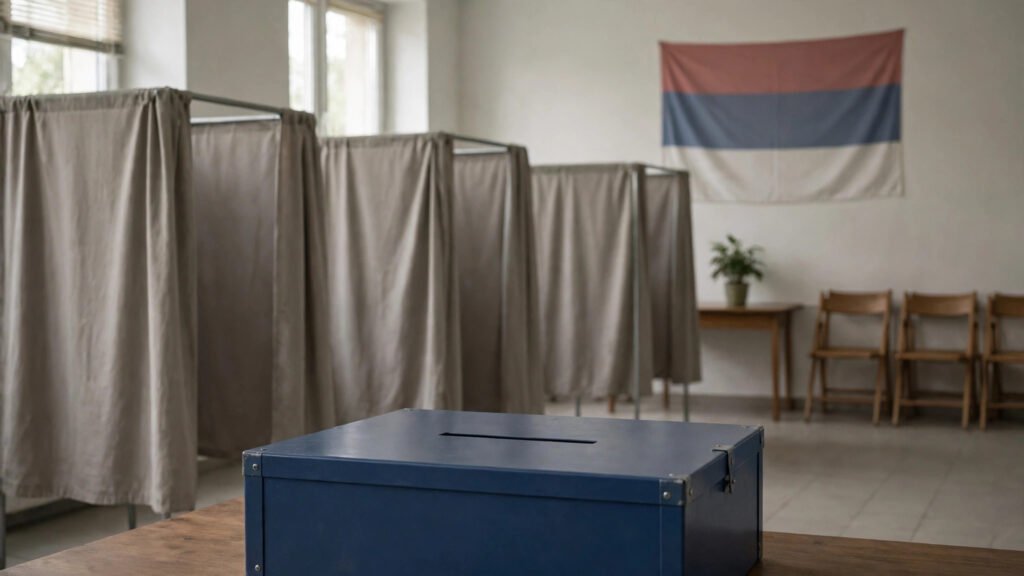
Repeat voting in Serbia’s October 25 snap parliamentary election began on Sunday, November 1, at 53 polling stations across the country, according to the Serbian Republic Electoral Commission (RIK). Polling stations opened at 7 a.m. local time and are scheduled to close at 8 p.m., with 24,438 registered voters eligible to cast ballots at those stations.
Only voters registered at those 53 stations can take part — the rest of the country is not voting again. The repeat vote covers a small fraction of Serbia’s 8,392 polling stations, but it matters because the final, overall result cannot be declared until every station’s result is settled.
The RIK ordered the repeat vote at its session on October 28. The commission printed 24,438 ballots for the repeat vote, matching the number of voters registered at the affected stations.
Key Takeaways
- Repeat voting began on November 1 at 53 polling stations, from 7 a.m. to 8 p.m. local time, for 24,438 registered voters.
- Voting is being repeated at 31 stations where results could not be determined and at 22 stations where the vote was annulled.
- The final overall result depends on these stations, with the RIK due to issue its overall report within 96 hours of the polls closing.
Why the vote is being repeated
Under Serbia’s Law on the Election of Members of Parliament, voting at a polling station is repeated when the results cannot be established or when the vote has been annulled. The RIK said the 53 stations fall into two groups: at 31 stations, the local electoral commissions found that the results of the October 25 vote could not be determined, and at 22 stations, the local commissions annulled the vote.
RIK president Vladimir Dimitrijevic, who presided over the October 28 session, explained the split between the two groups. In at least one reported case, a municipal electoral commission ruled that the results could not be established because none of the members of the polling board had signed the record of its work, although at least three signatures were required.
The repeat vote must be held within ten days of the decision ordering it, and the RIK issues its decision on a repeat vote within three days of the publication of the local commission’s ruling. Sunday’s vote falls within that timetable.
Only voters registered at those 53 stations can take part — the rest of the country is not voting again.
Where voting is taking place
The 53 stations are spread across 24 towns and municipalities: Aleksinac, Backa Topola, Babusnica, Bojnik, Vladicin Han, Indjija, Zemun, Kanjiza, Koceljeva, Kula, Krusevac, Kursumlija, Loznica, Ljig, Majdanpek, Novi Pazar, Petrovac na Mlavi, Pirot, Pozarevac, Prokuplje, Subotica, Trstenik, Cuprija and Sid.
Aleksinac has the most repeat stations, with eight in all. Several municipalities appear on both lists — stations where results could not be determined and stations where the vote was annulled — including Aleksinac, Backa Topola, Kursumlija and Cuprija.
Election silence began at midnight between October 29 and 30 and lasts until the polling stations close at 8 p.m. on Sunday. During that period, campaigning and the publication of assessments of election results are prohibited.
Observers on the ground
The election monitoring organisation Crta said its observers were present at the opening of all the polling stations on Sunday morning. The organisation had announced earlier that, as on October 25, its observers would be there from the preparations for opening a polling station through the vote count and the publication of the voting record.
That observation matters because the repeat vote exists precisely to resolve doubts at these stations. A clean, documented count at each of the 53 stations is what allows the RIK to fold their results into the national total.
What the preliminary results showed
Serbia held early parliamentary elections on October 25, with 18 electoral lists and 2,418 candidates competing for the 250 seats in the National Assembly. Around 6.45 million voters were registered nationwide.
Preliminary results released earlier in the week had put the student-backed list ahead of the list led by former president Aleksandar Vucic. That early lead is part of the story behind the student-backed list’s win in the October 25 vote, which reshaped Serbia’s political landscape. The repeat vote does not reopen the national contest, but it completes the count that the preliminary figures were based on.
Sunday is also an election day elsewhere in the region: voters in neighbouring Bulgaria are casting ballots in a presidential runoff, as covered in our report on Bulgaria’s presidential runoff, also held on November 1.
- 53 polling stations, 24 municipalities, 24,438 eligible voters
- 31 stations where results could not be determined, 22 where the vote was annulled
- Polls open 7 a.m. to 8 p.m. local time, with election silence until closing
- 250 National Assembly seats were contested by 18 lists on October 25
What happens next
Once polling closes at 8 p.m., the votes at the 53 stations will be counted and their records published. Under the law, the RIK issues its overall report on the results within 96 hours of the polls closing, or of the end of the last procedure for protecting electoral rights that could affect the results.
Only after that overall report can the process of constituting the new National Assembly move forward, and with it the formation of a government. Under the Serbian Constitution, the government formation process begins once the new assembly is constituted.
A presidential election must also be held by the end of December, according to reports on the electoral calendar, so Sunday’s repeat vote is not the end of Serbia’s election season.
What to Watch Next
Watch for the RIK’s overall report within 96 hours of Sunday’s polls closing, which will confirm the final national result once the 53 stations are counted. Watch also for whether any further complaints or legal challenges are filed over the repeat vote itself, since those procedures can affect the timing of the final report. After that, attention will turn to the constitution of the new National Assembly and the start of government formation — and, before the year ends, to the presidential election that must still be held.