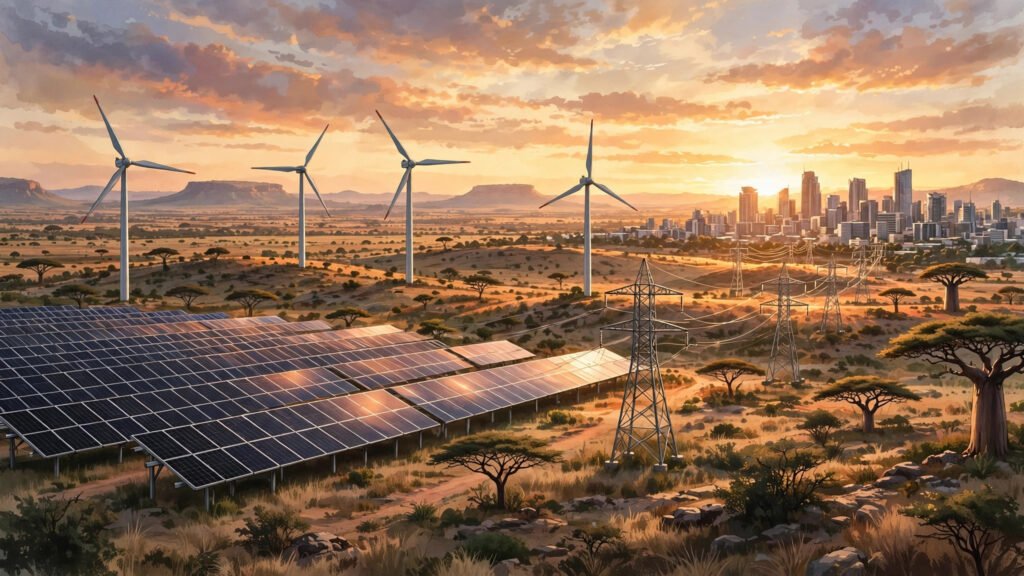
Africa has a new energy lender. The African Export-Import Bank (Afreximbank) and the African Petroleum Producers’ Organisation (APPO) formally established the Africa Energy Bank (AEB) at its inaugural general meeting in Abuja, Nigeria, on October 31, 2026, with $5 billion in authorised capital.
The announcement, made in a joint statement from the two institutions, marks the formal start of an institution that has been in preparation for more than four years. Its backers say it is designed to finance energy projects on the continent at a time when, in their words, global lenders are pulling back from fossil-fuel investment.
Key Takeaways
- Afreximbank and APPO formally established the Africa Energy Bank at an inaugural general meeting in Abuja on October 31, 2026.
- The bank has $5 billion in authorised capital and will support projects across the energy value chain.
- Helmy Ghazi was appointed as the bank’s inaugural president, and its first board of directors was formed.
What Was Announced in Abuja
The establishment was announced during the bank’s first general meeting in Abuja, Nigeria’s capital. Resolutions passed at that meeting included the appointment of Helmy Ghazi as the bank’s inaugural president and the formation of its first board of directors, drawn from the public and private sectors and from policy institutions across the continent.
According to the joint statement, the bank will support projects across the energy value chain, including exploration and production, transportation, processing, refining and distribution. That broad mandate covers both the production of energy and the infrastructure needed to move it to users.
The promoters put Africa’s energy investment needs at an estimated $200 billion. The new bank is presented as one part of the answer to that gap, rather than as a single solution to it. Nigeria’s own financial landscape shows how quickly new financial services can spread when they meet a clear local need, and the bank’s backers are betting on a similar logic at continental scale.
A Four-Year Path to Launch
The launch follows a long preparation period. In May 2022, APPO ministers meeting in Luanda, Angola, adopted a resolution directing the organisation to work toward establishing the bank. Afreximbank subsequently joined as a strategic partner, and in June 2024 the two institutions signed an Establishment Agreement and Charter, creating the legal and institutional framework for the bank.
The formal launch in Abuja came about four years and five months after that 2022 ministerial resolution. The bank is structured as an independent, supranational, pan-African financial institution, a status intended to let it operate across member countries rather than as a national bank of any single state.
With an authorised capital of $5 billion, the AEB will support projects across the energy value chain, including exploration and production, transportation, processing, refining, and distribution.
What the $5 Billion Figure Means — and Does Not Mean
The $5 billion figure is authorised capital, a capital framework approved for the institution. It is not evidence that the entire amount has already been paid in or lent to projects. The joint announcement did not disclose the amount of capital already paid in, nor a timetable for the bank’s first loans, and those details will matter more than the headline figure when the bank’s first financing decisions are judged.
Reporting on the launch has noted that Afreximbank approved $1.7 billion for investment in the institution in 2024, a substantial commitment toward the planned $5 billion capital base. That earlier approval helps explain how the bank reached its launch, but it is not the same as $5 billion in money already deployed.
- $5 billion in authorised capital, announced in Abuja on October 31, 2026
- Energy investment needs across Africa estimated by the promoters at $200 billion
- Mandate spanning exploration, production, transport, processing, refining and distribution
- Helmy Ghazi appointed inaugural president; first board of directors formed
- No paid-in total or first-loan date disclosed in the launch announcement
Why the Timing Matters
The bank arrives at a moment of competing pressures on African energy. Many African countries still need to expand access to reliable power, while also facing international pressure to move toward cleaner energy. The bank’s mandate, as described, spans the full energy value chain rather than a single fuel or technology, which leaves room for different kinds of projects as its lending begins.
Its launch also coincides with a wider week of firsts for the continent. Dakar hosted Africa’s first Olympic event on the same weekend, a reminder that institutions and events long planned elsewhere are now being built on African soil. For energy, the test will be less ceremonial: whether the bank can turn authorised capital into signed projects, and whether those projects reach the communities that need power most.
Energy markets are also shifting around the new bank. Long-term gas deals are being reshaped by supply risks, and African producers are watching those shifts closely as they weigh where to invest and whom to sell to.
What to Watch Next
What to watch next is simply what the article has already set out: how much capital is actually paid in, when the bank announces its first loans and for which projects, how its board balances different energy sources in its lending, and whether its financing reaches beyond large production projects to the transport, refining and distribution links that connect energy to everyday users. Until those first lending decisions are announced, the verified picture remains the launch itself: a formally established bank, a $5 billion authorised capital framework, a first president and board, and a mandate to finance energy across Africa.