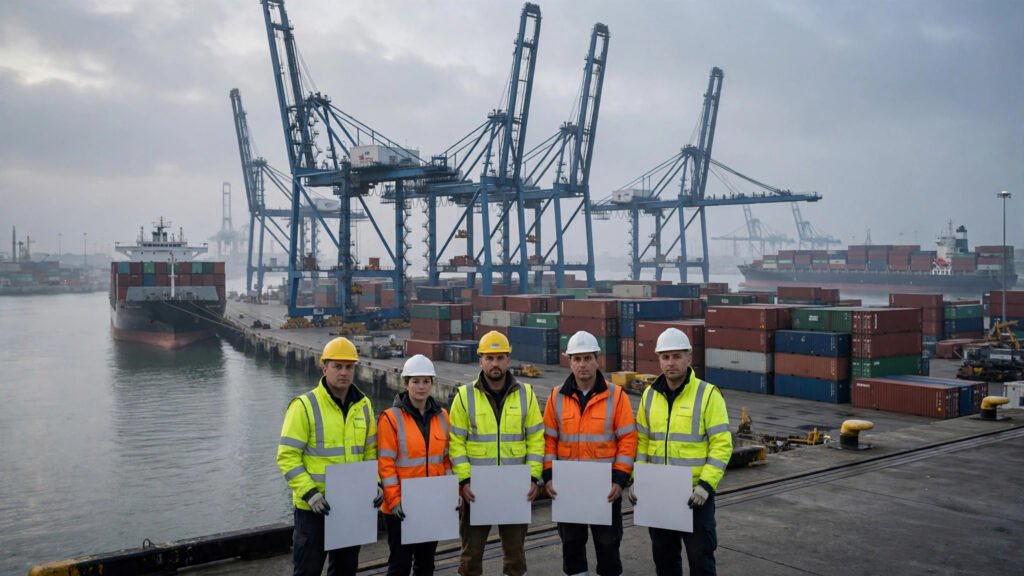
Dockworkers went on strike across Europe and beyond on Friday, October 30, disrupting shipping and ferry services as they protested against the use of their ports for arms shipments and the number of seafarers killed in wars from the Gulf to the Black Sea, Reuters reported.
The walkout covered 113 ports in 22 countries, according to organisers cited by Reuters. Strikers also called for pay rises, better working conditions and the right to have doctors on board vessels crossing war zones.
Key Takeaways
- Dockworkers struck at 113 ports in 22 countries on Friday, disrupting shipping and ferry services.
- The protest targeted the use of ports for arms shipments and highlighted seafarers killed in wars in the Gulf and the Black Sea.
- Unions also demanded pay rises, better working conditions and doctors on board vessels crossing war zones.
A Protest That Started in Six Places and Spread
The strike was originally called in Italy, France, Greece, Spain’s Basque Country, Turkey and Morocco, Reuters reported. More than 25 unions have now backed it, and on Friday it covered major shipping hubs in Piraeus, Valencia, Le Havre, Algeciras and Genoa, as well as Morocco’s Tangier Med and India’s Nhava Sheva.
In Greece, about 3,000 dockworkers and seafarers joined the walkout at Piraeus, the country’s largest port. Cargo operations were disrupted there and ferry services to the Greek islands were suspended, Reuters reported.
Apostolos Kypraios, head of the Greek union of merchant marine engineers, told Reuters during a rally at Piraeus: “We will not work for their wars, and we will not become food for their cannons.”
The walkout covered major shipping hubs from Piraeus to Valencia, Le Havre, Algeciras and Genoa.
Why Seafarers Are at the Centre of the Dispute
The unions’ case rests on the dangers facing crews in waters affected by war. Greek seafarers’ union PENEN said there had been 28 attacks on vessels in the Gulf in the first 21 days of October, a record since the start of the Iran war, according to Reuters.
The same union figures cited by Reuters put confirmed attacks in the Black Sea at 570 so far this year, leaving 40 seafarers dead and hundreds wounded. Those numbers are the backdrop to the demand for doctors on board vessels crossing war zones, and to the wider call for ports not to be used to move weapons.
The dispute sits alongside continuing attacks on shipping in the region and the risks reported in Gulf waters, including mines and attacks affecting tankers near the Strait of Hormuz. For crews, the argument is practical as much as political: the routes they sail have become more dangerous, and the ports they work in are part of the supply chains feeding those conflicts.
What the Disruption Looked Like
The scale of the disruption varied from port to port, and Reuters noted that the full impact was not immediately clear everywhere. A spokesman for Italy’s Genoa port said it expected only a limited impact, while Piraeus warned of disruption to ferry services for the Greek islands.
A group of dockworkers and other activists, called “No Harbour for Genocide” and campaigning to stop military cargo from reaching Israeli ports, said on Friday the protest would halt some 52,000 containers and snarl cargo worth $2.8 billion. Reuters said it was not able to independently verify that impact, and the claim should be read as the campaigners’ estimate rather than a confirmed count.
- 113 ports in 22 countries joined the Friday walkout, backed by more than 25 unions
- Major hubs covered included Piraeus, Valencia, Le Havre, Algeciras, Genoa, Tangier Med and Nhava Sheva
- About 3,000 dockworkers and seafarers joined the walkout at Piraeus, where ferries to Greek islands were suspended
- 570 confirmed attacks in the Black Sea this year, with 40 seafarers dead, according to union figures cited by Reuters
- 28 attacks on vessels in the Gulf in the first 21 days of October, described as a record since the start of the Iran war
The Istanbul Declaration Behind the Strike
The action did not come out of nowhere. In May 2026, dockworkers’ unions from over 35 European countries published the so-called Istanbul Declaration demanding that port facilities not be used to transport weapons destined for war zones, Reuters reported.
That declaration frames the current strike as a continuation of a longer campaign rather than a one-day protest. The unions involved include ver.di in Germany, Ireland’s largest trade union SIPTU, 3F in Denmark and CGT Ports et Docks in France, according to Reuters’ advance report on the action.
In Italy, the grassroots union Unione Sindacale di Base called a 24-hour general strike for the same day, with protests scheduled in over 40 cities. In Greece, dockworkers at Piraeus said they would stop work from 0800 to 1100 GMT, while other unions in the country stopped work for 24 hours, and ferries remained docked at Greek ports on Friday.
The strike also comes as governments debate how far their own support for Ukraine and other partners should go, with regional states weighing military support amid Houthi attacks — a reminder that the dockworkers’ protest touches supply chains that governments themselves are actively shaping.
What to Watch Next
What to watch next is only what this article has already set out: whether the disruption at the 113 ports proves to be a one-day stoppage or the start of further coordinated action, whether port operators and governments respond to the demands for pay rises, better working conditions and doctors on board vessels in war zones, and whether confirmed figures emerge for the containers and cargo affected. Until then, the verified picture remains the one reported by Reuters: a Friday walkout across 113 ports in 22 countries, centred on arms shipments and the seafarers killed in wars from the Gulf to the Black Sea.