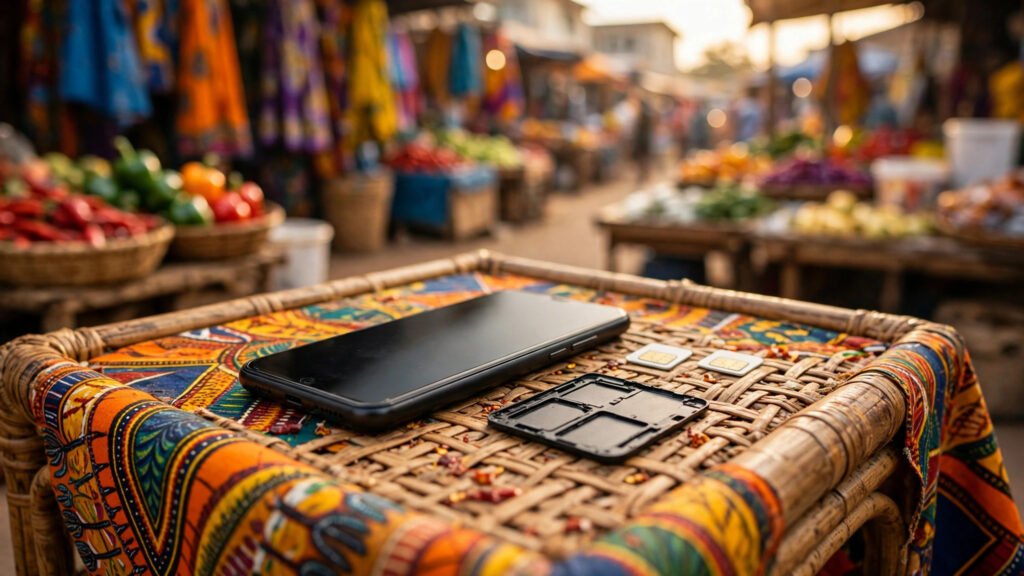
If you have ever borrowed a phone in Nigeria, you may have noticed something familiar: two SIM cards, two numbers, and sometimes two different networks — all in one handset. For many Nigerians, carrying two SIMs is not a fashion choice. It is a practical answer to everyday problems with coverage, cost, and staying reachable.
This guide explains, in plain language, why two SIM cards became so common in Nigeria, how people actually use them day to day, and what to check before you decide whether a second SIM is worth it for you.
Key Takeaways
- Two SIMs give Nigerians a backup: when one network is weak in a particular area, the other may still work.
- People often split their use — one SIM for calls, another for data — to match the plan that suits each job best.
- A second SIM also helps separate work from personal life and keeps you reachable if one line goes down.
Coverage Is Not the Same Everywhere
The biggest reason for a second SIM is simple: no single network is strongest everywhere. A network that works well at home may struggle at the office, on a journey, or in a village. Signal strength depends on how close you are to a mast, what stands between you and it, and how busy the network is at that moment — the same factors that leave people asking why their signal fades in rural areas.
With two SIMs, you do not have to guess. If one line shows no service or crawls along, you can switch to the other without hunting for a second phone. For traders, drivers, students, and anyone who travels between towns, that backup can be the difference between a completed call and a missed opportunity.
Different Plans for Different Jobs
The second reason is cost control. Networks price their plans differently, and one may suit calls while another suits data better. A person might keep one SIM mainly for voice calls and family contacts, and use the second SIM for mobile data, browsing, and messaging apps.
This split also helps with budgeting. Instead of buying one large bundle that covers everything, some people buy a smaller bundle on each SIM and use each one where it gives them the most value. It takes a little more attention — you need to know which SIM is set for data — but for many users the saving is worth it.
With two SIMs, you do not have to guess: if one line shows no service, you can switch to the other without hunting for a second phone.
One Phone for Work and Personal Life
A second number is also a simple way to draw a line between work and personal life. A trader can give customers one number and keep another for family. A freelancer can keep a business line that can be switched off in the evening, while the personal line stays on.
It also protects your main number. If you need to share a number with a new contact, a shop, or an online form, you can share the second number and keep your primary one private. If spam starts arriving, it lands on the line you can most easily ignore or replace.
Staying Reachable When One Line Fails
Networks go down. A mast can fail, maintenance can interrupt service, or congestion can make a line unusable at a busy hour. When your work, your banking alerts, or your family contact depends on one line, an outage can be genuinely disruptive.
A second SIM on a different network is cheap insurance. It does not guarantee perfect service — both networks can struggle in the same place — but it sharply lowers the chance that you are completely cut off. That is why the habit is common not just among heavy phone users, but among ordinary people who simply cannot afford to be unreachable.
Why Dual-SIM Phones Took Off in Nigeria
The habit grew alongside the phones themselves. Dual-SIM handsets became widely available at prices ordinary buyers could afford, and they removed the old need to carry two phones. Modern dual-SIM phones let you choose which SIM handles calls, which handles data, and which receives messages, all from the settings menu.
As with any phone, the icon on screen is not the whole story: a phone can show a strong signal type yet still load slowly, which is why understanding why 4G can feel slow matters as much as counting signal bars. The same applies to data on either SIM — speed depends on the network behind the icon, not the icon itself.
- Check which SIM is set as your default for mobile data before buying a bundle.
- Keep both SIMs active with occasional use so neither line is deactivated for inactivity.
- Label your contacts by SIM where your phone allows it, so you know which number people will see.
- Test both networks at home, at work, and on your usual route before deciding which SIM does what.
Is a Second SIM Right for You?
Two SIMs are not for everyone. If one network serves you well everywhere you go, a second line only adds a second bill and a second number to manage. But a second SIM is worth considering if you regularly lose signal in places that matter, if your data costs feel high on your main line, or if you want a clear split between work and personal calls.
An eSIM, where your phone supports it, can play the same role without a physical card — but the logic is unchanged. The question is not how many cards you carry, but whether you have a backup when the first line lets you down.
What to Watch Next
The two-SIM habit is unlikely to disappear soon, because it solves real, everyday problems: patchy coverage, different plan strengths, and the need to stay reachable. What may change is the form it takes, as more phones support eSIMs and as networks improve coverage in underserved areas. Until one network is reliably strong everywhere, many Nigerians will keep a second SIM in the tray — not out of habit, but out of common sense.