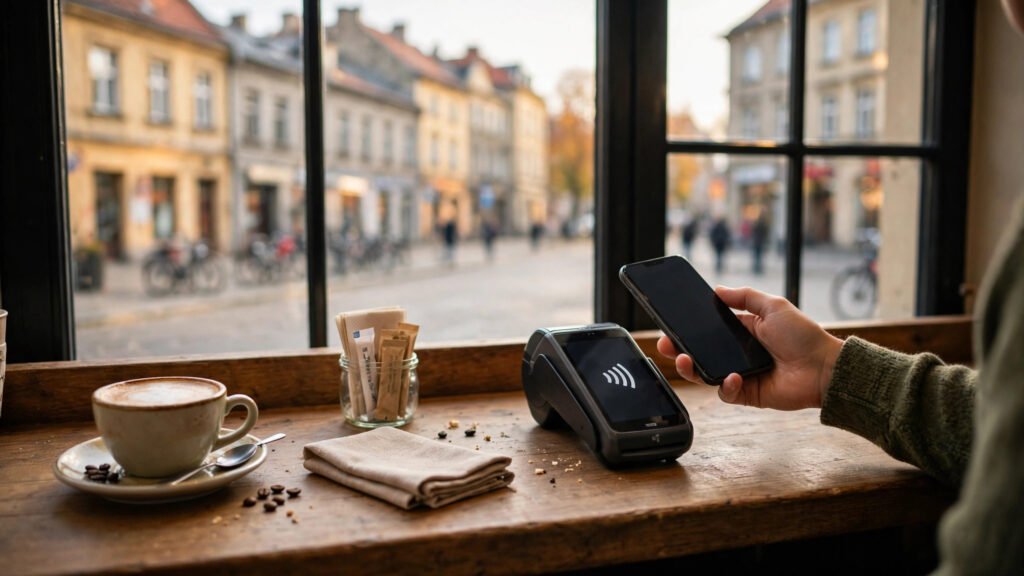
In Poland, paying for something often takes just a few taps on a phone — no card pulled from a wallet, no notes counted at the till. The system behind that habit is called BLIK, and for many Poles it has become the default way to pay. Visitors who are used to reaching for a card can find it surprising at first, but once the logic clicks, it feels like a natural step: the phone itself becomes the payment tool.
BLIK grew out of Poland’s banking apps rather than arriving as a separate wallet from a tech company. That matters, because it means most people did not have to download something new or open a new account. If their bank supported it, BLIK was already sitting inside the app they used every day. From there, it spread from online shopping into shops, restaurants, and transfers between friends.
Key Takeaways
- BLIK lives inside Polish banking apps, so most users never need a separate wallet or account.
- A short-lived code, a phone number, or a QR code can replace a card or cash for everyday payments.
- Its appeal comes from speed and familiarity: paying feels like sending a message, not starting a transaction.
What Is BLIK?
BLIK is a mobile payment method built into the apps of participating Polish banks. Instead of typing in card details or carrying a physical card, a user opens their banking app, generates a code, and uses it to confirm a payment. The code is short-lived, which is part of the security design: even if someone glimpsed it, it would soon be useless on its own.
The same system also supports transfers to other people using just a phone number, so splitting a restaurant bill or paying a friend back does not require exchanging bank account details. For online shopping, BLIK appears as a checkout option alongside cards, and the payment is confirmed inside the banking app rather than on a separate page full of card forms.
If their bank supported it, BLIK was already sitting inside the app they used every day.
Why Phone-Number Payments Caught On
Part of BLIK’s success is that it removes friction from the moments people actually pay. Sending money to a friend used to mean asking for an account number and waiting for a transfer to arrive. With a phone-number transfer, the recipient is identified the way people already identify each other — by the number in their contacts.
That simplicity matters in daily life. A group of friends can settle a shared cost in seconds, a parent can send money to a student in another city, and a small seller can accept a payment without renting a card terminal. The payment habit fits the phone habits people already have, which is why it spread by word of mouth as much as by advertising.
Where People Use It
Online, BLIK is a familiar sight at checkout for shoppers who would rather confirm in their banking app than type out card numbers. In physical shops, QR codes let customers scan and pay with their phones, and some cash machines allow withdrawals without a card by confirming through the app instead.
This range is important. A payment method that only works online, or only in big stores, stays a niche tool. BLIK covers enough everyday situations — shopping, eating out, paying friends, taking out cash — that many users can get through a normal day without reaching for anything else. Similar phone-first habits have grown elsewhere too: readers curious about other countries can see how Swiss pay with TWINT and how Dutch pay with iDEAL and Tikkie.
- Inside the banking app — no separate wallet needed
- Short-lived codes for online checkout and in-store payments
- Phone-number transfers between friends and family
- QR codes for shops and card-free cash machine withdrawals
Why Not Just Cards or Cash?
Cards still work perfectly well in Poland, and cash has not disappeared. BLIK’s edge is not that it replaces them everywhere, but that it is often quicker for the specific jobs people do most. Typing a card number into a phone browser is fiddly; confirming in an app you already trust takes a moment. Counting out notes and waiting for change is slower than scanning a code.
There is also a trust factor. Because BLIK sits inside a bank’s own app, users do not hand their card details to every shop or website they buy from. The confirmation step happens in a familiar place, with the bank’s own login protections, which reassures people who are cautious about entering payment details online.
What About Visitors and Newcomers?
Visitors to Poland will notice BLIK at checkouts and on payment screens, but it is mainly designed for people with a Polish bank account, so tourists usually pay by card or cash instead. That is worth knowing before a trip: seeing a payment option everywhere does not mean it is open to everyone, and nobody should be surprised if their foreign bank app does not offer it.
For newcomers who do open a Polish account, BLIK is usually one of the first features worth setting up, since it unlocks the same everyday convenience locals rely on — from splitting bills with friends to paying for groceries. The pattern is familiar around the world: Peruvians pay with Yape for many of the same everyday reasons.
What to Watch Next
BLIK’s story in Poland is less about a single clever feature and more about a payment habit that fits inside apps people already use. Its short-lived codes, phone-number transfers, and QR payments cover the everyday jobs of shopping, eating out, and paying friends, and its place inside banking apps gives users a familiar confirmation step. For anyone watching how countries pay, Poland is a clear example of what happens when the phone itself becomes the wallet — not by replacing cards and cash overnight, but by being quicker and simpler for the payments people make most often.