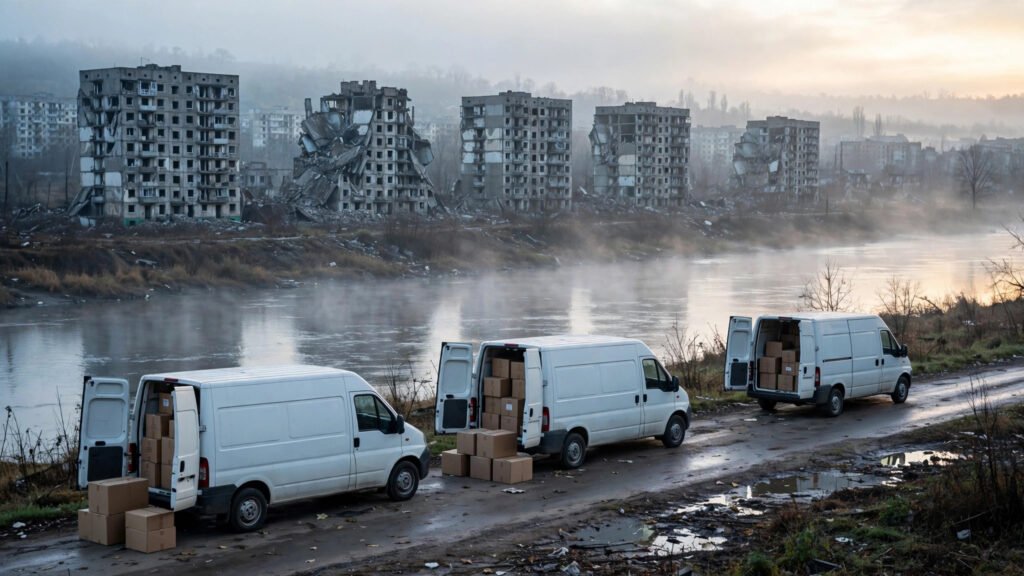
A truce between Ukraine and Russia aimed at allowing humanitarian aid into the Russian-occupied city of Oleshky was set to enter into force early on Tuesday, October 27, after being announced by US First Lady Melania Trump last week. Both sides said earlier they would observe the truce starting at 3am local time, or 0100 GMT, in a limited area of southern Ukraine where residents have been cut off from regular supplies for years.
Oleshky, in Ukraine’s southern Kherson region, has been caught in the crosshairs of fighting since 2022, when it was seized by Russian forces at the start of their invasion. Former residents told AFP earlier this year that those remaining in the city were starving, lacked medicine and could not easily leave. The new truce is therefore not presented as an end to the wider war, but as a narrow humanitarian opening: a pause in firing so that aid can get in, and so that residents who wish to leave can do so with coordinated support.
Key Takeaways
- The truce was set to begin at 3am local time on Tuesday, October 27, in the Russian-occupied city of Oleshky in the Kherson region.
- Its stated aim is to allow humanitarian aid in and to give residents a coordinated route out, with civilian officials from both sides visiting homes to assess needs.
- Neither side has said how long the truce will last, who will monitor it, or given details of the humanitarian operation that will accompany it.
What the Truce Covers
Announcing last Friday that she had brokered the ceasefire, Melania Trump said civilian officials from both Russia and Ukraine would visit residents in their homes and determine the level of assistance they require. She said: “Residents who wish to evacuate will receive coordinated support and transportation to their preferred destination. I anticipate some will want to go to Russia, and some to Ukraine.”
The Russian defence ministry said on Friday it would halt fire in the “Kherson sector” for the duration of the ceasefire, without giving details. Army chief Valery Gerasimov was quoted as saying: “To ensure the safety of the population and the delivery of essential humanitarian supplies… the safe passage of a humanitarian convoy to the settlement of Oleshky, Kherson Region, will be facilitated.”
Ukraine has accused Russia of blocking residents from leaving, a charge Moscow has denied. The Ukrainian army said Friday it would do everything possible to assist the residents of Oleshky and would make every effort to ensure the safety and rescue of its fellow citizens. That tension — over who controls movement out of the city — is one reason the practical details of the truce matter as much as the announcement itself.
Residents who wish to evacuate will receive coordinated support and transportation to their preferred destination.
Life Inside a City Cut Off
The city sits on the southern bank of the Dnipro River and was seized by Russian troops in 2022. Its population has since dropped from about 24,000 before Moscow’s invasion to around 2,000, including as many as 50 children, according to Ukrainian and US estimates. Former residents told AFP earlier this year that people still living in the city were forced to hunt pigeons or survive on whatever they had in their garden.
“They’ve forgotten what bread is. You need flour for bread, and there’s not even flour left,” said Olga, who was in touch with two families still in Oleshky. The city was also heavily damaged by the 2023 destruction of the Kakhovka dam, which unleashed major flooding along the Dnipro River, adding to the destruction already caused by years of fighting.
Drone footage released by the Ukrainian military shows rows of empty apartment blocks, some charred by fire or partially destroyed by fighting. Other videos have shown Ukrainian authorities using drones to dispatch medicine and food to remaining residents, a sign of how difficult ground access has been. The Russian military does not routinely grant international media access to areas under Russian occupation, including Oleshky, which makes independent verification of conditions on the ground difficult.
Russia’s human rights commissioner, Yana Lantratova, alleged on Monday that most of those who wished to depart had already done so, entirely of their own volition. That claim sits alongside the accounts from former residents of severe shortages, and it underlines why the coming days will be watched closely: whether convoys actually arrive, whether residents can move freely, and whether aid reaches the people who need it most.
- The truce was set to start at 3am local time (0100 GMT) on Tuesday, October 27, 2026.
- Oleshky is on the southern bank of the Dnipro River in Ukraine’s Kherson region.
- The population has fallen from about 24,000 before the invasion to around 2,000, including as many as 50 children.
- The city was heavily damaged by the 2023 destruction of the Kakhovka dam and flooding along the Dnipro.
- Newsmax said it had been granted exclusive television access to accompany observers entering the city on Thursday.
- Three-way peace talks between Washington, Moscow and Kyiv are set to resume in November after a months-long hiatus.
What Is Still Unknown
The ceasefire applies to a limited area, and neither Russia, Ukraine nor the United States has said who would monitor the truce, or given details about the humanitarian operation set to accompany it. Neither side has said how long the truce would last. Those gaps matter because a humanitarian pause without a clear monitor or timetable can break down quickly, and because residents must decide whether to trust a route out that has no publicly confirmed guarantor.
The wider context is also uncertain. The ceasefire comes as the Ukraine war grinds through its fifth year, with hundreds of thousands of soldiers and civilians killed and millions forced to flee their homes since Russia invaded Ukraine, in a conflict that has spiralled into Europe’s deadliest since World War II. Russia now occupies around a fifth of its neighbour, including Crimea, most of the eastern Donetsk and Lugansk regions, and large parts of the southern Zaporizhzhia and Kherson regions.
Diplomacy elsewhere in the region continues in parallel. Moscow has hosted high-level talks involving Russia’s leadership and regional partners, while other ceasefire and security talks in the wider region remain fragile. For civilians in war zones, international warnings about famine and humanitarian access have become a recurring feature of 2026, and Oleshky is now the latest test of whether a negotiated pause can turn into real deliveries.
What to Watch Next
What to watch next is whether the truce holds past its first hours, whether a humanitarian convoy reaches Oleshky safely, and whether residents who wish to evacuate receive the coordinated support and transportation that was promised. The other tests are whether observers enter the city on Thursday as reported, whether either side names a monitor or a duration for the pause, and whether the three-way peace talks set to resume in November produce anything beyond this limited humanitarian opening. Until those questions are answered, the Oleshky truce stands as a narrow, fragile test: aid and evacuation for one cut-off city, inside a war that is still far from over.