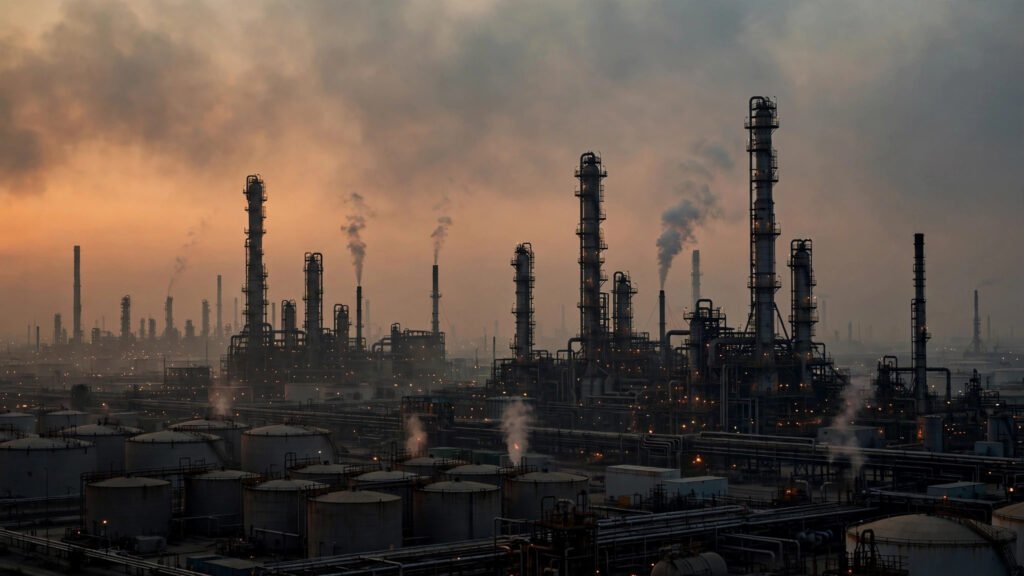
Ukraine’s military has paused its strikes on Russian oil refineries after pressure from United States President Donald Trump, the Wall Street Journal reported on Thursday, according to Reuters’ October 30 report on the Journal’s account.
The report, citing people with knowledge of the operations, says Ukrainian units carrying out long-range strikes were told in mid-October that the campaign against refineries was effectively on hold once missions already in motion were completed.
The unofficial pause is expected to last until after the United States midterm elections and potentially deeper into November, the Journal reported. That timing, if accurate, would make the pause a temporary halt rather than a permanent end to the campaign, and it would leave open the question of what happens once that period passes.
There is an important caveat to keep in view from the start. Reuters said it could not immediately verify the report. The account therefore rests on the Journal’s sourcing, and it should be read as a reported development rather than as a confirmed announcement by Kyiv or Washington.
Key Takeaways
- The Wall Street Journal reports that Ukraine has paused strikes on Russian oil refineries after pressure from Donald Trump.
- Ukrainian units were reportedly told in mid-October that the refinery campaign was effectively on hold once missions already in motion were completed.
- The unofficial pause is expected to last until after the US midterm elections and potentially deeper into November, while Reuters notes it could not immediately verify the report.
What the report says
At the centre of the report is a change in tempo. Ukraine’s long-range campaign against Russian refineries had been one of the most visible parts of its effort to put pressure on Russia’s energy infrastructure. According to the Journal, that campaign was put effectively on hold in mid-October, with the instruction applying once missions already under way had run their course.
The pause, if it holds, would mark a significant shift in a campaign Ukraine has defended as its only viable response to years of Russian bombardment.
The pause, if it holds, would mark a significant shift in a campaign Ukraine has defended as its only viable response to years of Russian bombardment.
That defence matters, because it explains why a pause would be a difficult decision for Kyiv. Ukraine had refused to halt the strikes, the report says, arguing that its long-range drone campaign was its only viable response to years of Russian bombardment. A halt, even an unofficial one, therefore does not sit easily with the position Ukraine had previously taken in public.
The report does not describe the pause as a formal agreement. It calls it unofficial, and it ties its expected duration to the American political calendar rather than to a negotiated ceasefire or a published statement. That distinction is important: an unofficial pause can be reversed more quietly than a formal deal, and it can also be denied or downplayed more easily by either side.
- Reported pause: Ukraine’s military has paused strikes on Russian oil refineries, the Wall Street Journal reports.
- Timing of the order: units were told in mid-October that the campaign was effectively on hold once missions in motion were completed.
- Expected duration: the unofficial pause is expected to last until after the US midterm elections and potentially deeper into November.
- Verification status: Reuters says it could not immediately verify the report.
- Wider context: the report comes amid renewed efforts to revive US-backed peace talks.
Why Washington is pushing for a pause
According to the report, the pressure from Washington is linked to frustration in the White House over the strikes themselves. Relations between Trump and Ukrainian President Volodymyr Zelenskiy have taken a sharp downward turn in recent weeks, the report says, with Trump growing increasingly frustrated over Ukrainian strikes on Russian energy infrastructure as diesel prices hit record highs.
That frustration, as described in the report, connects the battlefield campaign to a domestic American concern. Diesel prices matter far beyond the war, affecting transport, farming and household costs, and a campaign that puts upward pressure on fuel markets can quickly become a political issue in Washington as well as a military one in Kyiv.
The report also points to a further step by Trump. It says that, after Ukraine had refused to halt the strikes, Trump announced a deal to buy diesel from Moscow and waive sanctions on Moscow authorised by a bill he signed into law in September. That sequence, as reported, shows a president moving from pressure to a separate arrangement on fuel supply, rather than simply repeating the request to Kyiv.
Read together, those details suggest that the reported pause did not emerge in isolation. It arrived after a disagreement over the refinery campaign, after rising diesel prices, and after a separate American move on diesel supply. Each of those elements helps explain why the issue had become a point of tension between the two leaders.
What has not changed
A pause in one campaign is not the same as a pause in the war. The report notes that Russia has meanwhile stepped up attacks on Ukrainian energy and civilian infrastructure. That point underlines the asymmetry in the current moment: even as one Ukrainian campaign is reported to be on hold, Russian strikes on Ukrainian infrastructure are described as intensifying.
That contrast is likely to shape how the report is received in Ukraine. For Ukrainians living through attacks on energy and civilian sites, a halt to strikes on Russian refineries may look less like a step towards peace and more like a one-sided restraint, unless it is matched by a wider reduction in fighting or by progress in talks.
The report also places the pause in the context of renewed efforts to revive US-backed peace talks to end what it describes as Europe’s deadliest conflict since World War Two. Those efforts, however, are described as efforts to revive talks, not as a breakthrough. No agreement is reported, and no end to the wider war is claimed.
Overnight drone activity around Moscow has continued to disrupt flights in recent days, as covered in Ukraine’s overnight drone operations and the disruption around Moscow, which shows how active the air war has remained even as this reported pause concerns refineries specifically. Separately, reported plans for a Trump, Putin and Zelenskiy meeting underline how much diplomatic attention is still focused on bringing the leaders together.
What to Watch Next
The first thing to watch is whether the reported pause holds. The Journal’s account says the unofficial pause is expected to last until after the US midterm elections and potentially deeper into November, so the weeks around and after those elections will be the test of whether the halt continues, ends, or is extended.
The second thing to watch is whether the renewed efforts to revive US-backed peace talks produce anything concrete. The report describes those efforts as under way, but it does not report an agreement, and the wider war, including Russian attacks on Ukrainian energy and civilian infrastructure, is described as continuing.
The third thing to watch is verification. Reuters has said it could not immediately verify the report, so any confirmation, denial or clarification from Kyiv or Washington would change how firmly this reported pause can be stated. Until then, it remains a report attributed to the Wall Street Journal, with its sourcing described as people with knowledge of the operations.