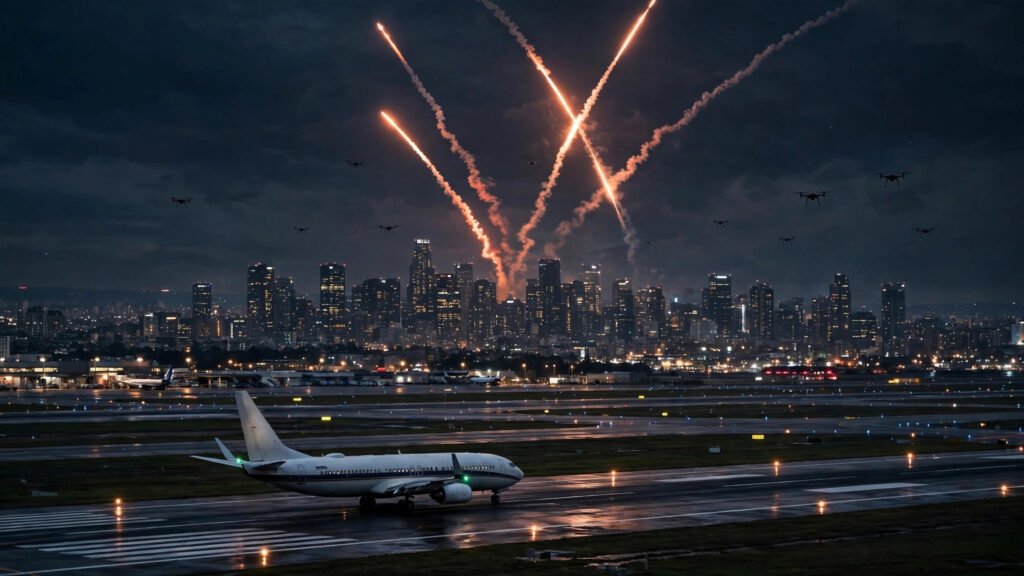
Moscow came under a large overnight drone attack on October 28-29, according to Russian officials, with air defences active through the night and flight restrictions imposed at three of the capital’s airports. The figures released during the night rose sharply as the hours passed, and the claims have not been independently verified.
Moscow Mayor Sergei Sobyanin reported drone interceptions in a series of updates, beginning shortly after midnight with 15 drones said to have been repelled on approach to the city. Emergency services were sent to sites where debris fell, he said. Later updates pushed the reported totals far higher, and by the morning of October 29 Sobyanin said 613 drones had flown towards Moscow Oblast between the evening of October 28 and the morning of October 29, with most downed well before reaching the capital and 231 destroyed as they approached Moscow.
The attack began before 10:30 p.m. local time on October 28, according to reports of Sobyanin’s updates, and continued in waves through the night. Residents of Moscow Oblast reported explosions near Naro-Fominsk, a town about 50 kilometres southwest of the capital. No casualties or damage have been reported by the authorities, and Sobyanin did not indicate specific targets for the attack.
Key Takeaways
- Moscow’s mayor said 613 drones flew towards Moscow Oblast overnight, with 231 destroyed as they approached the capital — figures that have not been independently verified.
- Flight restrictions were imposed at Vnukovo, Domodedovo and Zhukovsky airports, and two flights from Turkey to Moscow turned back because of the restrictions at Vnukovo.
- Emergency services were dispatched to debris sites, while authorities reported no casualties or damage.
What Moscow Reported Overnight
The overnight picture built up in stages. Sobyanin’s first update after midnight reported 15 drones intercepted, with emergency services working where debris fell. Further updates through the night added dozens more, and one count put the total intercepted above 100. By the morning, the mayor’s account had grown to 613 drones heading towards Moscow Oblast, of which 231 were said to have been destroyed as they approached Moscow.
That progression is important to how the night should be read. The different totals reported during the night are not necessarily different attacks; they are successive updates from the same overnight operation, with the final morning figure covering the whole Moscow region rather than only the capital itself. The Kyiv Independent, reporting Sobyanin’s claims, noted that it could not independently verify them at the time of publication.
Russian air defence units began repelling the attack before 10:30 p.m. local time, and the hours-long operation included several waves, according to the mayor’s updates. Reports also mentioned air defence activity in other regions, including Voronezh, Kursk, Bryansk and Belgorod, although the focus of the overnight reporting was Moscow and its surrounding region.
Flights Disrupted at Three Airports
Russia’s Federal Air Transport Agency, Rosaviatsiya, imposed restrictions on flights at three of the region’s four major airports: Vnukovo, Domodedovo and Zhukovsky. Restrictions at Zhukovsky were lifted after about an hour, while temporary limits remained in place at the other two airports.
Two flights from Istanbul to Moscow turned back because of the restrictions at Vnukovo, according to Russian state news agency TASS. The disruption fits a pattern seen repeatedly in recent weeks: Ukrainian drone strikes have disrupted aviation operations over Moscow multiple times in October, turning air defence alerts into delays, diversions and temporary airport closures even when no damage is reported on the ground.
The figures remain claims, not independently verified counts.
Why the Numbers Differ
Readers following the story overnight will have seen very different numbers — 15, then dozens, then more than 100, then 613. The explanation lies in what each figure counted and when it was released. Early figures covered only drones approaching the capital at that moment. The morning figure of 613 covered all drones said to have flown towards Moscow Oblast across the whole night, while 231 was the number said to have been destroyed as they approached Moscow itself.
That distinction matters, and so does the source. All of the totals come from Moscow’s mayor and Russian defence reporting. No independent count of drones launched, intercepted or damaged has been published, and the precise number launched towards Moscow and the extent of any damage remain unclear. Until independent verification is available, the honest description is that Moscow reported a very large overnight attack, not that a specific number has been confirmed.
- Attack window: evening of October 28 into the morning of October 29, with air defences active before 10:30 p.m. local time.
- Morning claim: 613 drones towards Moscow Oblast, 231 destroyed approaching Moscow, according to Mayor Sergei Sobyanin.
- Airports affected: Vnukovo, Domodedovo and Zhukovsky faced restrictions; Zhukovsky’s were lifted after about an hour.
- Flights turned back: two flights from Turkey to Moscow turned back because of restrictions at Vnukovo.
- Reported impact: emergency services at debris sites; no casualties or damage reported by authorities.
- Verification status: the figures are Russian official claims and have not been independently verified.
What This Fits Into
The overnight attack comes as the wider war continues to be fought with long-range strikes on both sides. Russian missile strikes have hit Kyiv in recent days, and a UN inquiry has examined attacks on Ukraine’s energy infrastructure. Drone warfare has become a central feature of the conflict, with attacks repeatedly affecting infrastructure and disrupting aviation on both sides.
At the same time, the diplomatic track remains uncertain. The next round of three-way talks aimed at ending the war has no agreed date yet, with Moscow linking the timetable to the battlefield and to the crisis in the Middle East. An overnight attack of this reported scale is unlikely to make that timetable easier to agree, even though neither side has linked the two developments directly in the overnight reporting.
What to Watch Next
Whether independent reporting confirms or revises the overnight drone totals, and whether authorities report any damage or casualties beyond the current account of none. Whether flight restrictions at Vnukovo and Domodedovo are fully lifted and normal schedules resume. Whether further waves follow in the coming nights, as has happened repeatedly in October. And whether the reported scale of this attack affects the already uncertain timetable for the next round of Ukraine peace talks.