Police Clear Lisbon Housing Protest Camp After Thousands March Against Rental Bill
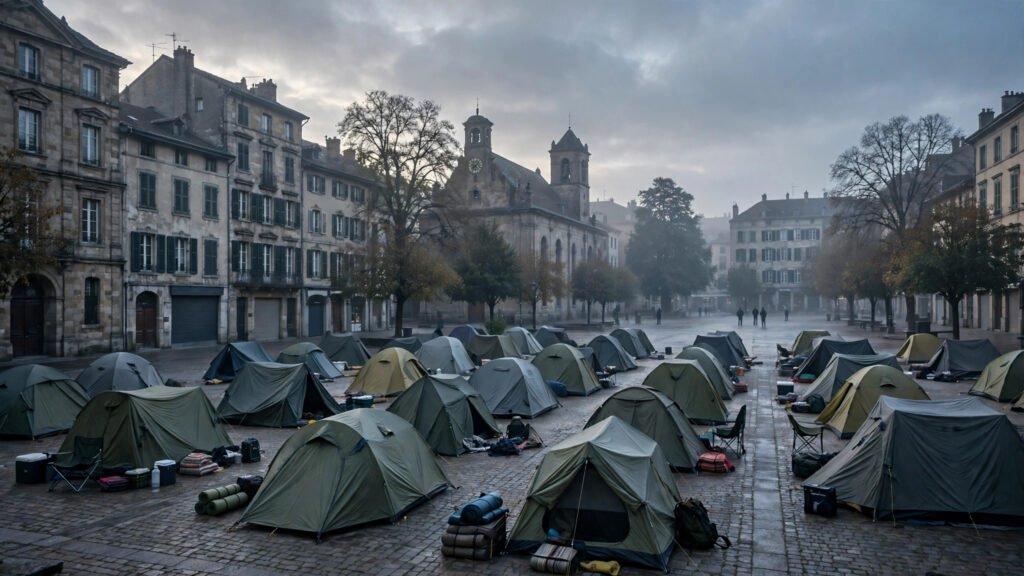
Police moved into Lisbon’s Rossio Square in the early hours of Sunday, November 1, 2026, to clear a tent camp erected by housing protesters after thousands marched through the Portuguese capital the day before. Officers dismantled more than 50 tents and dispersed hundreds of demonstrators who had gathered to shield the camp, in the latest flashpoint of Portugal’s deepening housing crisis.
Dozens of officers, some accompanied by police dogs, entered the square at about 4:30 a.m. local time. Police commander Iuri Rodrigues had issued three warnings to remove the tents, saying they had been erected illegally and that anyone resisting their removal could face disobedience charges.
Separately, police dismantled a smaller encampment in Porto’s Dom Joao I square, where protesters had set up camp after a parallel demonstration in Portugal’s second city.
Key Takeaways
- Police cleared more than 50 tents from Lisbon’s Rossio Square early on Sunday, November 1, after thousands marched against a rental bill.
- Protesters want the government to scrap legislation that would make evictions easier and remove rent caps on new leases.
- Portugal faces a housing shortage estimated at 300,000 homes, with house prices more than doubled since 2017.
Dawn Clearance in Rossio Square
The camp had been pitched after a march through central Lisbon on Saturday that drew thousands of people demanding that Portugal’s minority centre-right government withdraw the rental bill. Protesters say the bill would worsen the country’s housing crisis and leave tenants more exposed.
Hundreds of demonstrators shielding the camp were dispersed as officers moved in, according to reports from the scene. The intervention followed similar operations in the same squares the previous Sunday, when police arrested 25 people in Lisbon and six in Porto.
Housing campaign group Casa para Viver said 60 people were injured across those earlier operations, which police described as “proportionate”. The previous week’s clearances had drawn criticism from protesters and rights groups, and Sunday’s repeat operation is likely to draw fresh scrutiny.
Portugal is grappling with one of Europe’s worst housing crises, with young people among those hardest hit.
What the Protesters Are Demanding
At the heart of the dispute is a bill that would make evictions easier and end rent caps on new leases. The legislation passed a first parliamentary reading with the abstention of the far-right Chega party, and a final vote is expected in the coming weeks.
Prime Minister Luis Montenegro ruled out scrapping the bill on Thursday but said he was open to amending it ahead of the final vote, saying parties “have to move closer” while making clear that “the main line of action is the government’s programme”. Protesters have rejected that offer, insisting the bill must be withdrawn entirely.
- More than 50 tents were pitched in Rossio Square after Saturday’s march through Lisbon.
- Police issued three warnings before moving in at about 4:30 a.m. on Sunday.
- A smaller camp in Porto’s Dom Joao I square was also dismantled.
- The previous Sunday’s operations saw 25 arrests in Lisbon and six in Porto.
- The rental bill passed its first reading with the far-right Chega party abstaining.
A Housing Crisis Years in the Making
Portugal faces one of Europe’s severest housing affordability crises, with young people among the hardest hit. House prices have more than doubled since 2017, while rents on new leases have almost doubled, putting home ownership and even renting out of reach for many workers.
The Bank of Portugal estimates a nationwide shortage of 300,000 homes, equivalent to Lisbon’s entire housing stock. Campaigners argue that easing evictions and lifting rent caps will only deepen that shortage by pushing more tenants out of their homes.
Protests over soaring housing costs have intensified in Portugal in recent weeks, mirroring similar unrest sweeping across Spain, France, Germany and elsewhere in Europe. In France, hundreds of thousands marched for a third weekend over the cost of living, while in Germany, youth-led protests turned violent in several cities.
What to Watch Next
Attention now turns to the final parliamentary vote on the rental bill in the coming weeks, and to whether the government amends it in response to the protests. Campaigners have signalled further demonstrations if the bill advances unchanged, while police face continued questions over the handling of the camp clearances. With Portugal’s housing shortage estimated at 300,000 homes and rents still climbing, the dispute shows no sign of easing.