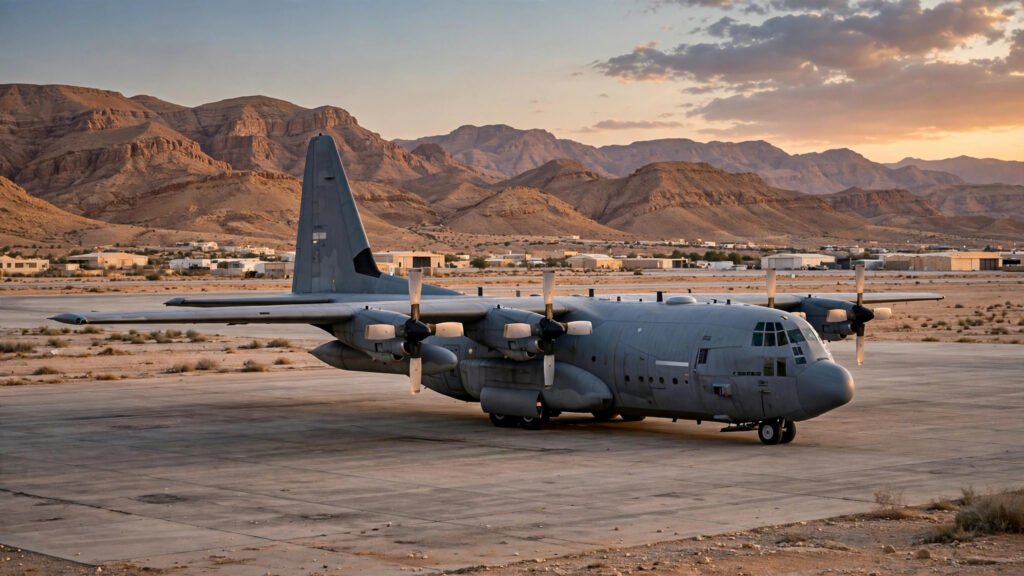
The United States has reportedly transferred 10 military cargo aircraft to Israeli air bases in the southern Negev desert, Israeli public broadcaster KAN reported on Thursday, October 29, as Washington and Jerusalem step up preparations for the possibility of a new military campaign against Iran. The report, carried by several international outlets on October 30, describes a wider airlift across the Middle East, but it stops short of saying that a strike has been ordered.
According to KAN, the aircraft landed at Ovda and Nevatim air bases, while additional US military planes were reportedly sent to bases in Jordan, Saudi Arabia and Qatar. The aircraft departed from Fort Bliss in Texas, which houses one of the US military’s largest air defence centres, including facilities linked to interceptor missiles and air defence batteries.
Key Takeaways
- KAN reported that 10 US military cargo aircraft landed at Ovda and Nevatim air bases in southern Israel.
- The aircraft reportedly departed from Fort Bliss, Texas, a major US air defence hub.
- There has been no US confirmation of the deployment, no disclosed cargo, and no confirmed decision on a strike against Iran.
What KAN Reported
The core of the report is the movement itself: ten transport aircraft arriving in Israel as part of a larger Middle East air convoy transferring military equipment across the region. KAN did not name the aircraft types involved, and it did not say what cargo the planes were carrying. That gap matters, because a cargo flight can carry defensive equipment, supplies, or weapons, and the report on its own does not settle which of those applies here.
An Israeli official told KAN that Israel and the United States are coordinating closely and preparing for any decision President Donald Trump makes, without specifying the nature or timing of any potential decision. The report arrived on the same day that US Central Command chief Adm. Brad Cooper briefed President Donald Trump on military options for Iran, according to The Wall Street Journal, a briefing that was also reported on October 30. Earlier in the week, KAN reported that Washington had warned Gulf allies to prepare for the possibility of a short, limited military campaign against Iran.
Where the Planes Came From and Where They Landed
Fort Bliss, in Texas, is the detail that links the flight to air defence. The base houses one of the US military’s largest air defence centres, and reporting on the KAN account has suggested the aircraft may be replenishing interceptor missiles for systems such as THAAD and Patriot. That suggestion is an interpretation of the Fort Bliss origin, not a confirmed cargo list, and it should be read as such until Washington or Jerusalem says more.
Ovda and Nevatim sit in the Negev desert in southern Israel. Nevatim is a major Israeli air force base, and The Jerusalem Post noted that it is home to several F-35I squadrons. The choice of southern bases, rather than a single destination, fits the wider pattern described in the report: aircraft spread across Israel, Jordan, Saudi Arabia and Qatar, rather than concentrated in one place.
No decision has been confirmed, and what the aircraft were carrying has not been disclosed.
No decision has been confirmed, and what the aircraft were carrying has not been disclosed. That is the clearest limit on the story so far. The deployment shows preparation, and preparation can be defensive, precautionary, or the groundwork for an offensive operation. Without an official statement on cargo or intent, the flights prove movement, not a mission.
A Wider Buildup Across the Region
KAN’s report also described other elements of a buildup. It said the US military has transferred a Patriot missile defence system from Texas to reinforce air defences in the Gulf region, and that US troops stationed at bases across the region had been instructed to leave as a precaution against a possible escalation. It added that US forces were replenishing weapons stockpiles, with an additional aircraft carrier and Marine Corps unit expected to arrive in November.
Those reinforcements would reportedly join approximately 20 US warships already operating in the Middle East. Taken together, the picture is of a force being positioned and protected at the same time: more aircraft and ships arriving, air defences strengthened, and personnel moved away from sites seen as vulnerable to retaliation. That combination is consistent with both deterrence and preparation, and it is why the report has drawn attention even though no strike decision has been confirmed.
- 10 US military cargo aircraft reportedly landed at Ovda and Nevatim air bases in southern Israel.
- Additional US military planes were reportedly sent to bases in Jordan, Saudi Arabia and Qatar.
- The aircraft reportedly departed from Fort Bliss, Texas, a major US air defence hub.
- A Patriot missile defence system was reportedly transferred from Texas to the Gulf region.
- An additional aircraft carrier and Marine Corps unit are reportedly expected in November, joining about 20 US warships already in the Middle East.
- No US confirmation, no disclosed cargo, and no confirmed strike decision have been reported.
What Has Not Been Confirmed
Three things remain unconfirmed, and each one changes how the story should be read. First, Washington has not publicly confirmed the reported movements. Second, the cargo carried by the aircraft has not been officially disclosed. Third, it is unclear whether the US administration has made any decision on a possible strike against Iran, or whether the movements are precautionary steps taken while a decision is still open.
Political reaction in the United States has already begun. Democratic Senator Chris Murphy, who said he and several other senators had received a briefing on possible plans, criticised the reported plans and warned that such an operation would lead to a devastating escalation. His criticism shows that the debate is not only about what is happening on air bases in the Middle East, but also about authorisation and consequences at home.
The wider conflict behind the report began on February 28, when the United States and Israel launched attacks against Iran, prompting Tehran to retaliate against Israel and US targets across the region before a ceasefire agreement was reached in April. The United States and Iran later signed a memorandum of understanding in June concerning freedom of navigation through the Strait of Hormuz, but its implementation has stalled over disagreements about the waterway’s security. That unresolved dispute is part of why any new military movement in the region is watched so closely.
What to Watch Next
What to watch next is only what this article has already set out: whether Washington confirms the reported flights and says what the aircraft were carrying, whether any decision on a strike against Iran is confirmed or ruled out, and whether the reported November reinforcements, including the additional carrier and Marine Corps unit, arrive as described. The other tests are whether troops moved as a precaution return to their bases, whether Gulf allies receive further warnings or reassurances, and whether the stalled dispute over navigation through the Strait of Hormuz moves toward a settlement or back toward escalation. Until those questions are answered, the reported flights stand as preparation, not as proof of an attack to come.