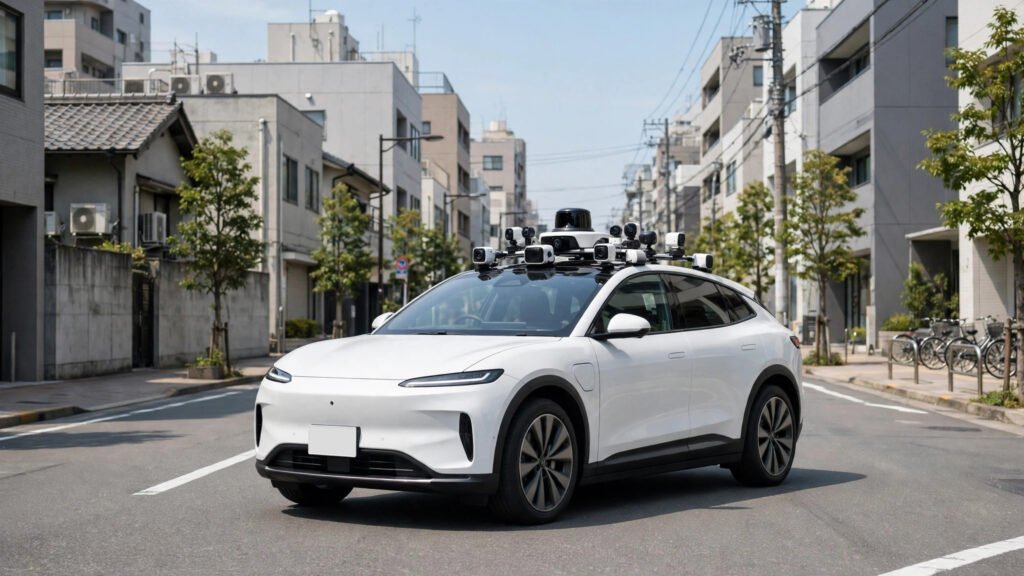
Toyota and Waymo will begin testing autonomous Toyota bZ4X electric vehicles in Japan in 2027, the two companies announced on October 30, 2026, turning a partnership that began as an agreement to explore cooperation into a concrete vehicle programme with a factory and a start year. The vehicles will be built at Toyota’s Takaoka plant in Toyota City, Aichi Prefecture, where Waymo’s self-driving hardware will also be installed, so the base car and its autonomous driving system come together under one roof.
The announcement sets out the next phase of a collaboration first agreed in April 2025, when Toyota and Waymo signed a preliminary agreement to explore the development and deployment of an autonomous vehicle platform. Eighteen months later, that exploration has produced a named model, a manufacturing site and a testing schedule, even though several details remain undecided.
- Toyota and Waymo will test autonomous bZ4X vehicles in Japan in 2027, with deployment in the UK and other Waymo markets planned for later years.
- The vehicles will be built at Toyota’s Takaoka plant, where Waymo’s autonomous driving hardware will be integrated on the same production line.
- The 2027 programme is a test and validation fleet, not a confirmed public commercial launch, and the companies have not disclosed fleet size or operating cities.
A factory-built robotaxi, not a retrofit
The most important detail in the announcement is how the vehicles will be made. Rather than taking finished cars and fitting them with sensors afterwards, Toyota will assemble the bZ4X and integrate Waymo’s autonomous vehicle hardware at the Takaoka plant itself. The companies describe the whole process, from assembling the base vehicle to integrating Waymo’s hardware, as taking place under one roof, which matters because a factory-built vehicle can be designed around the driving system from the start.
The customised vehicles will include automatic doors, according to reports of the announcement, a detail aimed at ride-hailing use, where passengers get in and out without a driver to help. Waymo, the autonomous driving business owned by Google parent Alphabet, will supply the driving technology, while Toyota supplies the vehicle and the manufacturing capacity.
The plan moves the partnership from an agreement to explore cooperation into a named vehicle, a factory and a start year.
Japan first, then the UK
Testing and validation will begin in Japan in 2027, and Waymo intends eventually to operate a robotaxi service there. The UK and other markets where Waymo already operates are planned for subsequent years, with no dates given for those later deployments. Waymo co-CEO Dmitri Dolgov said the company would start with the right-hand drive markets in Japan and the UK, and that it had no other countries or timelines to share.
The right-hand drive focus explains the order of the rollout. Japan and the UK both drive on the left, so a vehicle built for one market can be adapted for the other more easily than for a left-hand drive market. Toyota has said it also makes left-hand drive vehicles, including the bZ4X, and wants to gain experience in Japan before pursuing broader opportunities.
Waymo is already testing autonomous Jaguar I-PACE vehicles in London and plans to launch a robotaxi service there once it receives the necessary permits. The bZ4X programme is separate from that Jaguar testing, which Waymo still plans to run as a pilot in 2027. The UK therefore appears twice in Waymo’s plans: once through its existing Jaguar tests and again as a later destination for the Toyota-built fleet.
What is confirmed and what is not
The confirmed parts of the programme are the vehicle, the factory and the testing year. Toyota will build the 2027 bZ4X vehicles at Takaoka, Waymo’s hardware will be integrated there, and initial operations to test and validate the fleet will begin in Japan in 2027. The companies have also confirmed that deployment in the UK and other Waymo-serviced markets is planned for the following years.
What is not confirmed is almost everything about scale. The companies did not disclose how many bZ4X vehicles they would initially deploy or where in Japan they would operate. Toyota has said only that initial operations would involve a small number of vehicles, and no public-service opening date for the bZ4X fleet has been announced. The announcement also does not attach the fleet’s 2027 testing schedule to a consumer vehicle, so there is no promise that private Toyota owners will receive Waymo’s driving technology.
- Announced October 30, 2026: Toyota and Waymo move from a 2025 exploratory agreement to a factory-built fleet.
- Built at Takaoka: the bZ4X is assembled and fitted with Waymo hardware at the same plant in Toyota City.
- Japan testing in 2027: a small initial fleet for test and validation, with the UK and other Waymo markets to follow.
- Still undecided: fleet size, operating cities in Japan and any commercial launch date.
Why the partnership matters for driverless cars
The deal gives Waymo something it has lacked: a high-volume manufacturing partner building vehicles designed for its system from the factory floor. Waymo’s existing fleets have largely been built around vehicles from other makers, and a purpose-built supply line could make it easier to expand into new markets, including right-hand drive countries where its current vehicles are less suited.
For Toyota, the programme is a way into the robotaxi business without building its own self-driving system from scratch. The carmaker has spent years developing driver assistance and automation technology, but Waymo’s system is already carrying passengers in commercial services elsewhere. Pairing Toyota’s manufacturing scale with Waymo’s driving technology is, on paper, a straightforward division of labour.
The timing also matters. Driverless technology is advancing at the same time as the rules around it are still being written, and the wider debate over how AI systems are governed is shaping what companies can deploy and where. Autonomous vehicles face their own version of that question, with permits, safety cases and local rules deciding whether a test fleet can become a public service. Waymo’s London plans, which depend on receiving the necessary permits, are a reminder that the technology alone does not open a market.
The same week has also shown how fast AI is spreading into other fields, from AI systems operating beyond Earth to military displays of AI-equipped hardware. Against that background, a factory-built robotaxi programme looks less like a science experiment and more like an industrial plan, even if its first step is only a small test fleet.
What to Watch Next
What to watch next is what the companies have left unsaid. The first test vehicles are due in Japan in 2027, but the operating cities, the fleet size and the path from testing to a public service are still to be announced. The UK deployment has no date, and Waymo’s separate Jaguar pilot in London, also due in 2027, will show whether permits arrive in time for a service launch. Until those details appear, the Toyota and Waymo programme remains a manufacturing plan with a testing date, and its real test will come when the first factory-built bZ4X vehicles reach public roads.