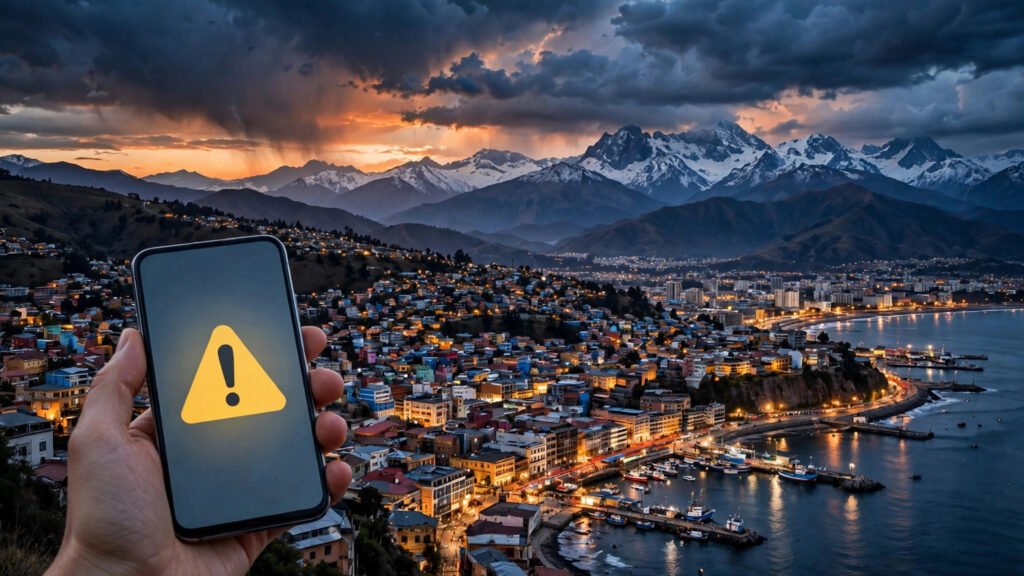
When the ground shakes in Chile, the first thing many people reach for is not the television or the radio. It is the phone in their pocket. Within seconds, screens light up with alerts, messages from family, and maps showing where the shaking was felt. For Chileans, checking an earthquake alert on a phone has become almost a reflex, and there are good reasons why.
Chile is one of the most earthquake-prone countries on Earth. It sits along the Pacific Ring of Fire, where the Nazca Plate slides beneath the South American Plate off the country’s long Pacific coast. That slow collision builds up strain in the Earth’s crust, and when the strain releases, the ground moves. Because Chile stretches for thousands of kilometres along this plate boundary, almost no part of the country is far from earthquake risk.
Key Takeaways
- Chile sits on the Pacific Ring of Fire, so earthquakes are a normal part of life there.
- Phones deliver earthquake alerts faster than television or radio for many people.
- Alerts help Chileans check on family, decide whether to move to higher ground, and follow official guidance.
A Country Built on a Plate Boundary
Living with earthquakes shapes daily life in Chile in ways visitors often notice. Buildings in major cities are designed with earthquakes in mind, schools practise evacuation drills, and families talk about what to do when shaking starts. Earthquakes are not a rare emergency in Chile. They are a familiar fact of life, and people have learned to respond quickly and calmly.
That familiarity is one reason the phone matters so much. When shaking is felt, the immediate questions are simple: how strong was it, where was it, and should I do anything? A phone can answer those questions in moments, while a television bulletin may take much longer to appear. In a country where a tremor can be felt in one city and not in another, that speed matters.
Why the Phone Wins Over Television and Radio
The phone is almost always within reach, day and night. It vibrates on a bedside table, buzzes in a pocket on a bus, and lights up during a meal. Television and radio, by contrast, need to be switched on and tuned in. In the first minute after a quake, most people are not near a television. They are holding the device that can tell them what just happened.
Modern phones also carry several alert systems at once. Chile’s national emergency alert system can send warnings directly to mobile phones in affected areas, and phone operating systems include their own earthquake alert features that detect shaking and warn nearby users. News apps, social media, and messaging groups then spread the same information further, often within seconds. The result is that a single alert can reach millions of people faster than any broadcast.
In a country where a tremor can be felt in one city and not in another, that speed matters.
Alerts Are About Family as Much as Safety
For many Chileans, the first check after an alert is not about the earthquake itself. It is about people. Parents message children, children message parents, and friends check on one another in group chats. A short message saying “did you feel that, are you okay” travels faster than any official update, and it brings reassurance when it matters most.
This habit is not unique to Chile. In other countries, people also turn to their phones every day for information that affects their lives, from checking the dollar rate on their phones in Argentina to following storm warnings elsewhere. In Grenada, for example, phones play a similar role during hurricane season, when warnings and family check-ins travel the same way. What makes Chile different is how often the reason is an earthquake.
The Tsunami Question on the Coast
Chile’s long coastline adds another reason to check alerts quickly. A strong earthquake offshore can raise the question of a tsunami, and coastal residents need to know whether to move to higher ground. Official alerts and evacuation guidance are shared through phones, and in coastal towns the phone has become part of the evacuation routine, alongside sirens and local knowledge.
That does not mean every alert means danger. Many tremors are small and require no action at all. Part of the habit is learning to tell the difference: a quick check of the alert, a look at the location and depth, and then a decision. Over time, Chileans build a sense of which alerts matter and which ones simply confirm what they already felt.
- Chile lies along the Pacific Ring of Fire, where two tectonic plates meet.
- Phones are usually closer at hand than a television or radio when shaking starts.
- Alerts combine official warnings, operating-system features, and messages from family and friends.
- On the coast, a quick alert check helps people decide whether to move to higher ground.
- Not every tremor needs action, and the alert helps people judge that quickly.
What the Habit Says About Chile
The habit of checking earthquake alerts also says something about how Chileans live with risk. Rather than panic, most people treat a tremor as something to verify and then carry on with. The phone supports that calm response. It turns uncertainty into information: where it happened, whether it matters, and whether loved ones are safe.
Chilean territory far out in the Pacific feels this too. Easter Island, which belongs to Chile, sits in the same restless ocean, and its residents rely on the same kinds of alerts and communication when the ground moves. Distance from the mainland makes the phone even more important there, not less.
Technology will keep changing how alerts arrive. Faster detection, better location accuracy, and wider coverage will all help. But the core habit is unlikely to change. In a country shaped by earthquakes, the phone has become the fastest way to turn a frightening moment into a clear answer.
What to Watch Next
Chileans will keep checking their phones first when the ground shakes, because the phone answers the questions that matter fastest: how strong it was, where it was, and whether family is safe. As alert systems improve, those answers should arrive even sooner. And on the coast, the habit of checking before deciding whether to move to higher ground will remain a quiet, everyday part of life in one of the world’s most earthquake-prone countries.