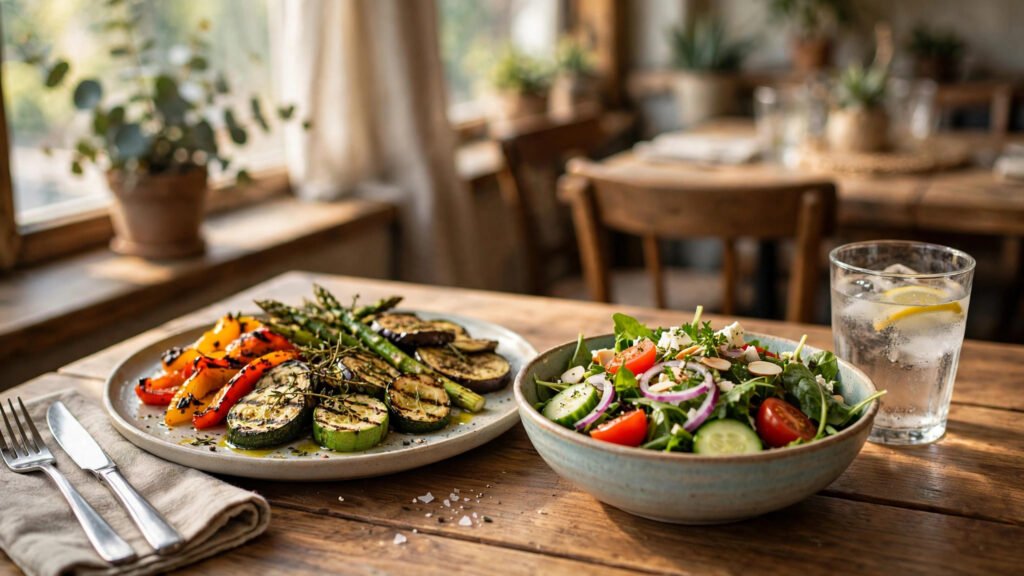
Learning how to eat healthy when eating out does not mean ordering a plain salad while everyone else enjoys their meal. Restaurant food can fit into a balanced way of eating, as long as you make a few deliberate choices before and during the meal. The goal is not perfection on one plate. It is a pattern of small decisions that leave you satisfied, comfortable, and still enjoying the occasion.
Most restaurant meals are simply larger and richer than home cooking. Portions tend to be generous, sauces are often heavier, and extras like bread baskets and sugary drinks add up quietly. Once you know where those extras hide, you can adjust without turning dinner into a maths exercise.
Key Takeaways
- Check the menu before you go so you choose calmly instead of deciding while hungry.
- Build your plate around vegetables and a protein, then add the foods you enjoy most.
- Small swaps on drinks, sauces, and sides often matter more than skipping a dish entirely.
Look at the Menu Before You Arrive
One of the simplest habits is also the most effective: read the menu online before you leave home. When you decide in advance, you are choosing with a clear head. When you decide at the table, hunger, noise, and time pressure do most of the choosing for you.
As you scan the menu, look for dishes built around vegetables, beans, fish, chicken, or other straightforward proteins. Grilled, roasted, steamed, and baked preparations are usually lighter than battered or heavily fried options. That does not make fried food forbidden. It simply helps you decide where you want to spend your appetite.
If a dish you love comes with a rich sauce, consider asking for the sauce on the side. You still get the flavour, but you control how much ends up on the plate. The same idea works for dressings, dips, and extra cheese.
How to Eat Healthy When Eating Out at Any Restaurant
The balanced-plate idea works in almost any restaurant, from a casual cafe to a formal dinner. Start by filling a good part of your plate with vegetables or salad. Add a protein portion that satisfies you. Then add the starch or bread you enjoy, in an amount that feels comfortable rather than automatic.
Portion size deserves attention because restaurant servings are often designed for sharing, even when they arrive for one person. Eating slowly helps here. Put your cutlery down between bites, talk with the people at the table, and notice when you feel comfortably full. If a portion is very large, sharing a starter or a main course with a friend can be a pleasant solution, and taking leftovers home is perfectly reasonable too.
For healthy snacks for work, the same thinking applies: keep something satisfying nearby so hunger never forces a rushed choice. At a restaurant, that preparation is simply the menu check you did earlier.
Eating slowly helps here, because you notice when you feel comfortably full instead of finishing a large portion on autopilot.
Drinks, Sauces, and Sides Matter More Than You Think
Drinks are one of the easiest places to make a difference without feeling deprived. Water is the simplest choice, and sparkling water with lemon can feel like a treat. If you enjoy a sweet drink or an alcoholic drink, having one and savouring it is often more satisfying than refilling without thinking.
Sides are the second quiet lever. Swapping chips for a side salad, roasted vegetables, or a simple soup changes the meal noticeably while keeping the main dish you actually wanted. If the chips are the part you love most, keep them and adjust elsewhere instead. Healthy eating at a restaurant is about trade-offs you are happy with, not rules you resent.
Sauces and dressings follow the same logic. A creamy dressing served on the side lets you dip lightly instead of having the salad arrive soaked. A tomato-based sauce is usually a lighter choice than a cream-based one, but the difference only matters if you enjoy the swap.
- Check the menu before you arrive and pick your dish calmly.
- Ask for sauces and dressings on the side when you can.
- Choose water or sparkling water as your default drink.
- Pick a vegetable-based side for at least one part of the meal.
- Eat slowly and stop when you feel comfortably full.
Buffets, Fast Food, and Celebrations
Buffets reward a quick first look at everything on offer before you pick up a plate. A short walk around the buffet lets you spot the dishes you genuinely want, rather than filling the plate with the first items you see. Starting with vegetables and a protein, then adding smaller amounts of richer dishes, keeps the meal balanced without missing out.
Fast food can work the same way. Many fast-food menus now include grilled options, salads, and smaller portion sizes alongside the classics. Choosing a smaller size, adding a salad or fruit where available, and drinking water are simple moves that keep a quick meal from becoming an oversized one.
Celebrations deserve a special note. A birthday dinner, a holiday meal, or a night out with old friends is about more than nutrients. Enjoying dessert or a richer dish on those occasions is part of a normal eating pattern. One celebratory meal does not undo a generally balanced routine, just as one salad does not create one. The pattern across weeks matters far more than any single plate.
Home habits support restaurant choices too. When your everyday meals are already balanced, an occasional restaurant meal feels less like a test. Planning ahead at home, for example with batch cooking meals for the week, makes weekday eating steadier, so eating out stays a pleasure rather than a source of stress.
What to Watch Next
The ideas in this guide come down to a few repeatable habits: check the menu before you go, build your plate around vegetables and a protein, use drinks, sauces, and sides as gentle levers, and eat slowly enough to notice when you are full. Buffets, fast food, and celebrations all work with the same approach, adjusted to the occasion. For mornings, a similar head start helps: quick healthy breakfast ideas for busy mornings show how a little preparation keeps the rest of the day on track. Keep the swaps you enjoy, drop the ones you do not, and let restaurant meals stay what they should be: good food, shared with people you like.