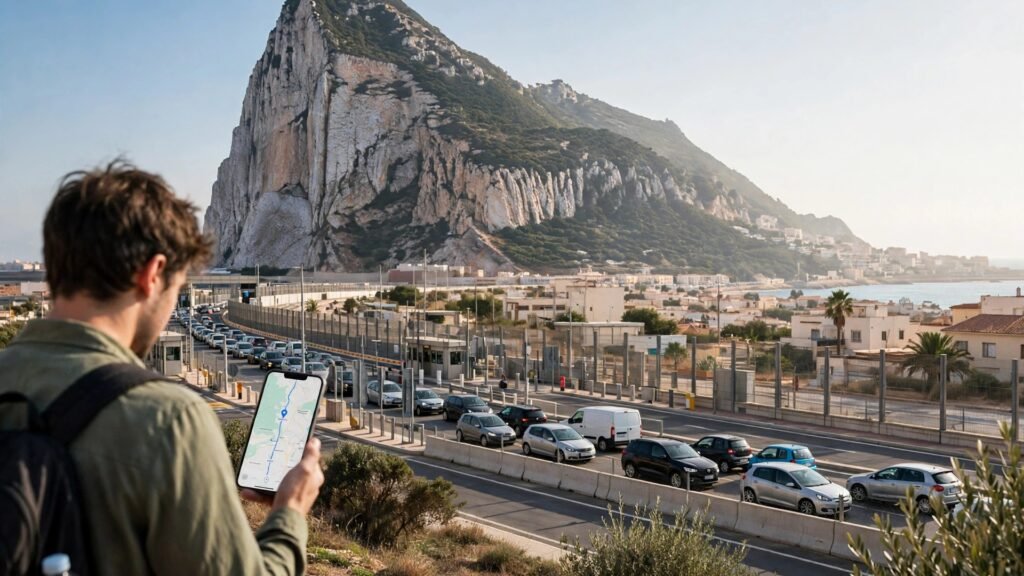
Gibraltar is one of the smallest territories in Europe, and one of the most crossed. Its only land border, with Spain, sits at the foot of the Rock, and daily life flows across it in both directions — for work, school, shopping, family visits and weekends away. In a place where a normal day can involve two countries, the smartphone has quietly become the most important everyday tool. It is the map, the message thread, the wallet and the timetable, all carried in one pocket.
This is why Gibraltarians rely on their phones so much when the border is involved. It is not about loving technology for its own sake. It is about living in a place where plans change quickly, where queues form and clear, and where the practical details of the day — which side of the border you are on, what currency you need, which network you are using — matter more than they do in a bigger country with more room to spare.
Key Takeaways
- Gibraltar’s border with Spain is crossed every day for work, school, shopping and family, so plans change fast and people need live information.
- Phones handle the practical side of that crossing: maps, border queues, messages and payments in one place.
- Living between two systems, with pounds and euros and with UK and Spanish networks close together, makes one pocket-sized tool the simplest way to stay organised.
A Tiny Territory With a Very Busy Border
Gibraltar’s size shapes everything about how people live there. Homes, offices, schools and shops sit close together, and the neighbouring Spanish town of La Línea de la Concepción is, for many residents, part of the same everyday map. Crossing the frontier is not a rare event or a holiday ritual. For many people it is simply part of the week, and sometimes part of the day.
That closeness is also why the border itself matters so much. Checks, queues and opening patterns can change the shape of a morning. A traveller who knows what is happening at the crossing before leaving home can choose when to go, which route to take and what to carry. A traveller who does not know is stuck guessing. The phone closes that gap, turning a wait at the fence into something people can plan around rather than simply endure.
The Phone Is the Travel Tool
Before a crossing, the phone answers the questions that matter most: how long is the queue, is traffic building up, and what is the simplest way through? Maps and live traffic updates help drivers and pedestrians alike, while messages let families and colleagues coordinate meeting points and arrival times. When a plan changes, a short message can rearrange it in seconds, without anyone having to drive to the border just to find out.
Once across, the phone keeps working. It holds tickets, bookings and directions, and it keeps people in touch with home while they are on the other side. For a community that treats the border as a normal part of life rather than a barrier, that constant connection is what makes the crossing feel routine instead of stressful.
In Gibraltar, the phone is not a luxury for the journey — it is the journey’s paperwork, map, wallet and meeting point, all in one pocket.
Two Currencies, Two Networks, One Pocket
Daily life in Gibraltar also means living between two systems. The pound sterling is the local currency, while euros are part of everyday spending just across the border in Spain. Phones make that switch easier, with banking apps, card payments and currency tools that let people pay on either side without carrying two wallets full of notes and coins. People across the border in Spain have their own phone-first habits too, and many pay friends and shops with Bizum instead of cash or cards, which shows how normal phone payments have become in the region.
Networks tell a similar story. Gibraltar and Spain sit side by side, and mobile coverage, roaming rules and signal strength can change from one side of a border to the other, just as roaming networks differ in Cyprus for travellers moving between zones. Gibraltarians learn to watch their connection, choose the right settings and keep an eye on data use, because a phone that worked perfectly at home can behave differently a short walk away. Knowing how the phone handles that switch is part of border life.
Work, School and Family Across the Line
For many households, the border is also a family and work boundary. Some people live on one side and work on the other. Children may have friends and activities in both places. Relatives may live a short drive away but in another country. Phones hold all of this together: work chats, school messages, family groups and shared calendars that do not stop at a fence.
Banking fits the same pattern. Like many people in Britain, who increasingly bank on their phones with app-based banks such as Monzo and Starling instead of high-street banks, Gibraltarians use their phones to check balances, move money and pay bills without visiting a branch. When life already crosses a border every day, a bank that lives in your pocket simply fits better than one that waits behind a counter.
- The border crossing shapes daily routines, so live maps and messages matter more than fixed timetables.
- Phones bridge two currencies, with pounds at home and euros just across the border in Spain.
- Mobile banking and card payments mean fewer trips to a branch and less cash to carry.
- Family, school and work chats keep people connected across the frontier all day long.
What to Watch Next
The phone’s role in Gibraltar’s border life is likely to keep growing, because the reasons behind it are not going away. The border will stay busy, daily routines will keep crossing it, and the practical details of travel, money and messages will still need sorting in real time. What changes is the tool itself: faster connections, simpler payments and smarter travel updates will keep making the crossing smoother.
For Gibraltarians, the question is no longer whether the phone matters at the border. It is how much of daily life the phone will quietly carry next, as one small territory keeps living across two countries with a single device in hand.