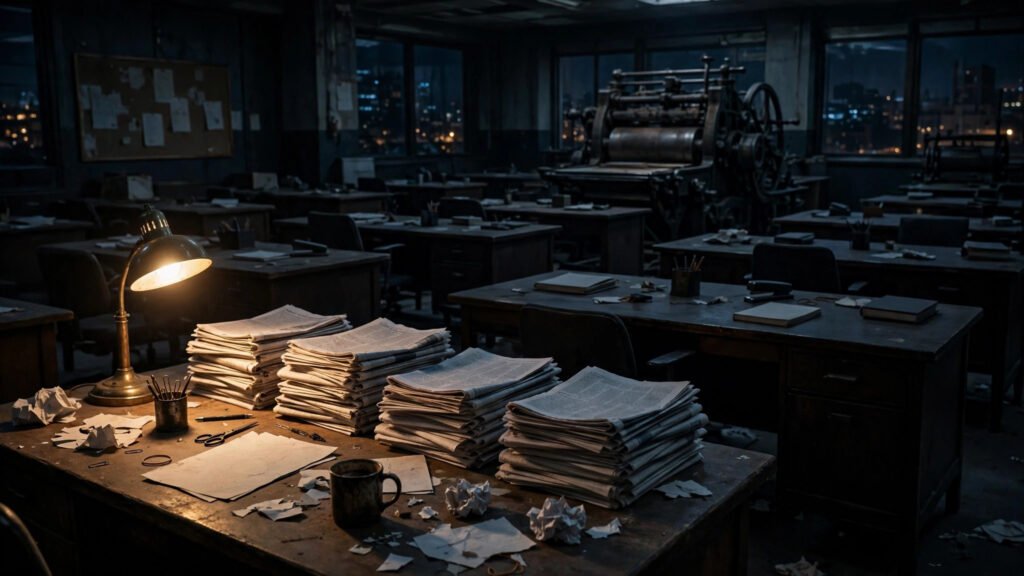
Russia’s independent newspaper Novaya Gazeta has announced it will shut down on November 9, ending more than three decades of investigative reporting that survived assassinations, raids, and a mounting state crackdown. In a statement titled “We were killed,” the editorial board said the Russian authorities and security services had forced the paper to cease operations.
Editor-in-chief Sergei Sokolov said in a video statement that the paper would switch off its servers and leave the Moscow offices it has occupied for 30 years. “On November 9, we will turn off the lights in our home, where we have lived for 30 years. We will shut down the servers and leave,” he said. The announcement, made on Friday, October 30, marks the end of one of the last independent news outlets still operating inside Russia.
Key Takeaways
- Novaya Gazeta announced on October 30 that it will shut down on November 9, blaming pressure from the Russian authorities and security services.
- The paper lost its Moscow offices, its reader-payment system, and its media licence in a coordinated campaign over recent weeks.
- Six of its journalists have been murdered over the years, and the paper was designated a “foreign agent” in September 2026.
A Paper Built on Investigative Reporting
Founded in the early 1990s with support from former Soviet leader Mikhail Gorbachev, Novaya Gazeta built its reputation on investigations into corruption, political repression, and Russia’s wars. Its co-founder Dmitry Muratov shared the 2021 Nobel Peace Prize for his defence of freedom of expression. The paper’s reporting came at a heavy cost: six of its journalists and staff members were murdered, including investigative reporter Anna Politkovskaya, who was shot dead in 2006.
The pressure intensified sharply after Russia’s full-scale invasion of Ukraine in 2022. Lawmakers criminalised the spread of what the state calls “fake” news discrediting the military, and the paper’s media licence was revoked in March 2022, forcing it to stop printing. Many of its journalists fled into exile, and exiled staff later founded the separate outlet Novaya Gazeta Europe, which continues to operate from outside Russia.
On November 9, we will turn off the lights in our home, where we have lived for 30 years.
The Final Weeks of Pressure
The final campaign against the paper unfolded over recent weeks. In September 2026, the courts added Novaya Gazeta to the “foreign agent” list; Muratov himself had already been designated, and around 100 journalists and contributors associated with the paper were later added as individuals affiliated with a foreign agent. On October 15, Sokolov was detained by police, his Moscow home was searched, and he was questioned for several hours by the Investigative Committee.
On the same day the paper received an eviction notice for its historic headquarters on Potapovsky Lane in central Moscow, the authorities disabled the donation system that had allowed readers to support it financially for five years. Banks that had processed reader payments also stopped handling them, cutting off the paper’s main source of income. Muratov said the sequence showed a deliberate campaign: first an employee was jailed, then the paper was declared a foreign agent, then its staff were listed, then it was evicted and stripped of its means of existence.
- Founded in the early 1990s, Novaya Gazeta became one of Russia’s best-known independent newspapers.
- Co-founder Dmitry Muratov shared the 2021 Nobel Peace Prize for defending freedom of expression.
- Its licence was revoked in March 2022 after Russia’s invasion of Ukraine; it kept publishing in limited formats.
- The September 2026 “foreign agent” designation, the October eviction, and the loss of reader payments ended its run.
Reaction From Around the World
The United Nations High Commissioner for Human Rights, Volker Turk, said he was deeply concerned and saddened by the closure, describing it as another devastating blow for the remaining independent media in Russia. The Norwegian Nobel Committee said it was deeply concerned by the forced closure. Reporters Without Borders had earlier denounced the detention of Sokolov as a new escalation in what it called the authorities’ relentless campaign against the outlet.
The closure leaves Russia’s independent media landscape thinner than at any point in decades. With more than 30 journalists from various outlets currently in prison in Russia, according to reporting on the closure, few independent voices remain inside the country. The war in Ukraine continues to shape that landscape: the same week brought renewed fighting, including Ukrainian strikes on Russian refineries, while diplomatic pressure over detained journalists continues elsewhere, as seen in Japan’s demand that Russia free a detained journalist.
What to Watch Next
On November 9, Novaya Gazeta’s Moscow servers go dark and its staff leave the offices they have occupied for 30 years. What remains open is whether its exiled journalists, through Novaya Gazeta Europe, can keep the paper’s reporting alive from abroad, and whether international pressure over press freedom changes anything for the journalists still working — or imprisoned — inside Russia. The paper’s own verdict on its fate was stark: the newspaper, as it existed in Moscow, no longer exists.