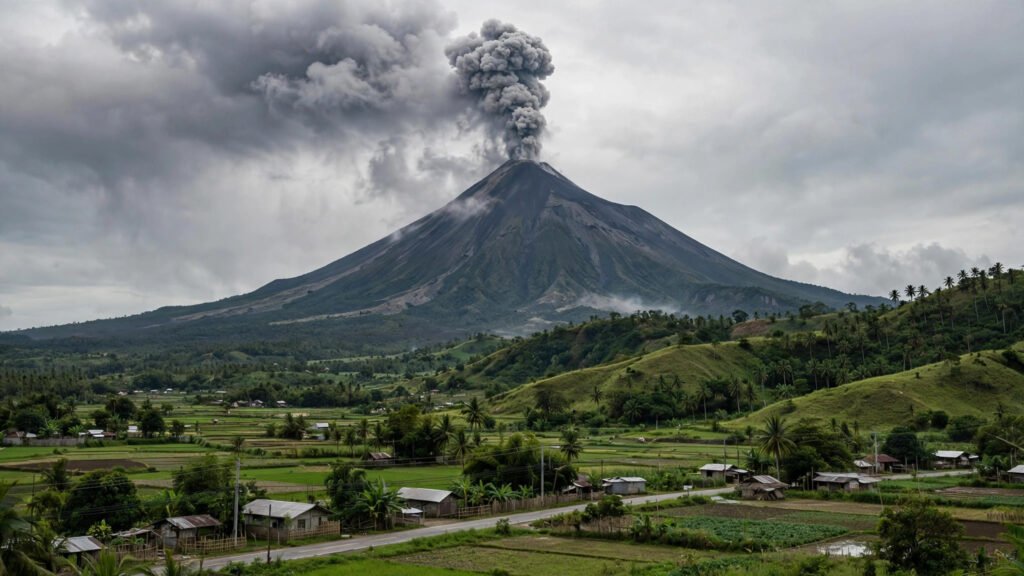
More than 2,000 people have been evacuated from their homes in the Philippines after Mayon Volcano erupted, sending ash into the air and prompting authorities to raise its alert status to Level 3. The volcano continued to show signs of heightened activity on Saturday, October 31, a day after the eruption, with a fresh ash emission recorded in the early morning.
A total of 746 families, or 2,041 individuals, had been evacuated across Albay province as of 5 p.m. on Friday, according to the Albay Public Safety and Emergency Management Office (APSEMO). The evacuees came from Tabaco City, Camalig town and Barangay Baligang in Ligao City, all in areas affected by the eruption.
Key Takeaways
- Mayon Volcano’s moderately explosive eruption on Friday forced 746 families, or 2,041 people, to evacuate in Albay province.
- The Philippine Institute of Volcanology and Seismology raised Mayon to Alert Level 3, warning of an increased tendency towards a hazardous eruption.
- Ash emissions continued on Saturday morning, and entry into the six-kilometre Permanent Danger Zone remains prohibited.
A Six-Minute Explosive Eruption
The eruption began at 11:53 a.m. on Friday, October 30, and lasted six minutes, the Philippine Institute of Volcanology and Seismology (PHIVOLCS) reported. It was described as moderately explosive, and it initially generated a grayish plume that rose approximately 3,000 meters above the crater and drifted west-southwest.
Following the eruption, PHIVOLCS raised Mayon’s status from Alert Level 2 to Alert Level 3, which indicates intensified unrest and magmatic unrest, meaning an increased tendency towards a hazardous eruption. It is the second time this year that Mayon has been placed under Alert Level 3, after its alert status was raised in January.
In its 24-hour monitoring bulletin, PHIVOLCS reported one moderately explosive eruption lasting six minutes, along with 15 volcanic earthquakes and 30 rockfall events. Volcanic plumes during the monitoring period rose 100 to 3,000 meters above the crater and drifted west-northwest and west-southwest.
- Eruption started at 11:53 a.m. on Friday, October 30, and lasted six minutes
- Ash plume rose about 3,000 meters above the crater, drifting west-southwest
- 746 families, or 2,041 people, evacuated in Tabaco City, Camalig and Ligao City
- Alert Level 3 in place, with entry into the six-kilometre Permanent Danger Zone banned
- Fresh ash emission recorded at 5:17 a.m. on Saturday, October 31
More Than 2,000 People Moved to Safety
Tabaco City implemented a mandatory evacuation for its residents after Mayon erupted, and evacuations were also carried out in Camalig and Barangay Baligang in Ligao City, according to APSEMO’s monitoring report. The provincial disaster operation centre of APSEMO was placed under Red Alert to ensure continuous monitoring and coordination with affected local governments and response clusters.
Field personnel of the Department of Social Welfare and Development (DSWD) in the Bicol region have started distributing boxes of ready-to-eat food to residents displaced by the eruption. Its regional field office handed out ready-to-eat food boxes to 123 families from Barangay Anoling, who are staying at the Tagaytay Elementary School in Camalig. The DSWD said it was targeting food aid for evacuees in the barangays of Anoling, Sua and Quirangay, all in Camalig town and located within Mayon’s six-kilometre permanent danger zone.
As of 4 p.m., a total of 417,886 family food packs were on standby for distribution, along with 28,366 non-food items and 14,137 ready-to-eat food packs. The scale of the stockpile shows how seriously authorities are treating the possibility of a longer displacement.
Alert Level 3 prevails over Mayon and entry into the 6-km Permanent Danger Zone should be prohibited.
Ashfall Fears and the Health Response
The Provincial Health Office of Albay raised its alert status to Code Blue following the eruption, up from Code White, to ensure the province’s readiness for potential volcanic activity and to address the impact of the eruption. In a memorandum issued on October 30, Provincial Health Officer-in-Charge Dr. Karl Hegel Ante ordered the change.
The health office also distributed 22,000 surgical masks to health facilities, following concerns about the greater risks posed by ashfall to the respiratory system. Residents have been urged to take safety precautions, including wearing face masks, staying vigilant about Mayon’s status, and evacuating the danger zone. PHIVOLCS has also said aircraft should not be allowed to fly close to the volcano.
On Saturday morning, Mayon spewed ash from its summit crater again. The ash emission was recorded at 5:17 a.m. through the volcano’s IP cameras at the Mayon Volcano Ligao Station and the Mayon Volcano Observatory in Ligñon Hill, and the plume rose 200 meters above the summit crater before drifting west-southwest. The Philippines has faced powerful natural events before, including the offshore Mindanao earthquake earlier this week, and the experience of communities living around volcanoes shows how long disruption can last once an eruption begins.
What to Watch Next
What happens next depends on Mayon’s activity in the coming days. Watch for whether PHIVOLCS keeps Alert Level 3 in place or raises it further, whether ash emissions continue from the summit crater, whether the evacuation count grows beyond the 746 families already moved, and whether entry into the six-kilometre Permanent Danger Zone stays prohibited as monitoring continues.