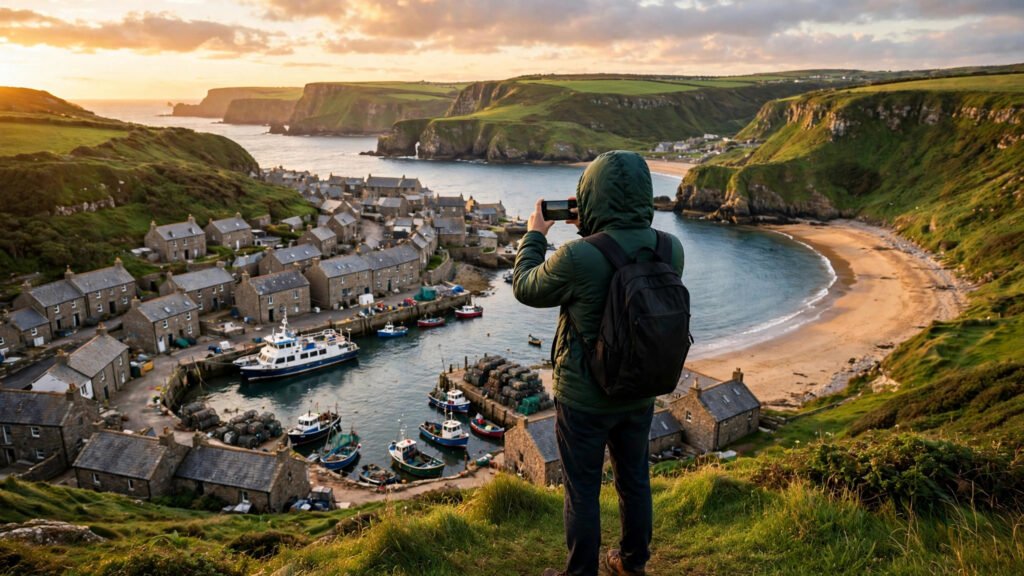
Jersey is small enough to drive across in well under an hour, yet its daily life stretches in several directions at once: towards the United Kingdom, towards France, and out to sea. That unusual position is a big part of why the phone has become such a central tool for people who live there. It is not just a device for chatting and scrolling. For many Jersey residents, it is how they bank, book travel, run a business, check the weather before a boat trip, and keep in touch with family who live off the island.
Life on a small island rewards planning. A missed ferry, a closed road, or a sudden change in the weather can reshape the whole day. The phone brings those moving parts together in one place, and that is why it feels less like a luxury here and more like a piece of everyday infrastructure.
Key Takeaways
- Jersey’s position between the United Kingdom and France makes travel, banking and communication more complicated than on the mainland, and phones help residents manage all three.
- On a small island, a phone quietly organises the day: ferry bookings, bus times, work messages, weather checks and family contact all sit in one place.
- For island businesses, especially in tourism and hospitality, the phone is often the shop window, the booking desk and the payment terminal rolled into one.
An Island Between Two Neighbours
Jersey is the largest of the Channel Islands, sitting in the English Channel closer to the French coast than to the English south coast. It is a Crown Dependency, which means it is not part of the United Kingdom, even though it has close ties to it. That in-between status shapes ordinary life in practical ways. People travel to both the UK and France, they deal with visitors from both places, and many have family, work or business links on both sides of the Channel.
A phone helps bridge those distances. Messages, video calls and emails cost little thought compared with the effort of arranging a crossing, and a single device can hold travel documents, tickets and contact details for people in more than one country. For residents with relatives abroad, the phone is often the main way of staying close, whether that means a quick message in the morning or a longer call in the evening.
The same logic applies to work. Islanders may work for a local employer, run their own business, or work remotely for a company elsewhere. A phone keeps those arrangements flexible, letting someone answer a client, join a meeting or send a document without being tied to a desk. On an island where the working day can involve a ferry, a farm, a hotel or a home office, that flexibility matters.
Travel Comes First on a Phone
Travel is one of the clearest reasons phones matter so much in Jersey. Leaving the island usually means a ferry or a flight, and both need booking, checking in and keeping an eye on timetables. Ferries can be affected by weather and sea conditions, so being able to check an update before setting out saves a wasted trip to the harbour. Flights, too, are easier to manage when boarding passes and schedule changes live on the phone rather than on a printout left at home.
Once on the island, the phone helps with the smaller journeys as well. Bus times, road closures and parking can all be checked before leaving the house, which makes a difference on an island where many people rely on a mix of driving, buses, cycling and walking. Visitors benefit in the same way: a phone with maps and transport information makes it far easier to explore an island that rewards wandering, from coastal paths to small parish villages.
For people who live in Jersey, travel is not only about holidays. It is about hospital appointments, university terms, business trips and family visits, all of which may involve a crossing. When a journey depends on a boat or a plane, the phone becomes the place where the whole trip is held together.
On an island where the working day can involve a ferry, a farm, a hotel or a home office, that flexibility matters.
Banking, Shopping and Running a Business
Banking is another area where the phone has quietly taken over. Islanders, like people everywhere, increasingly check balances, move money and pay bills from an app rather than visiting a branch. That shift is especially useful in a small community where branches may be fewer and opening hours may not suit everyone. For people who work irregular hours in hospitality, farming or tourism, being able to bank at any hour is a practical advantage.
Shopping follows the same pattern. Ordering goods from the UK or further afield is a normal part of island life, and phones make it easy to compare options, place orders and track deliveries. Small local businesses also lean heavily on their phones. A guesthouse, a café or a tour operator can take bookings, answer questions and share photos of what they offer, all without a large marketing budget. In that sense, the phone is often the smallest shop window an island business has, and one of the most important.
Payments are part of this story too. Contactless and mobile payments are convenient for residents and visitors alike, whether at a market stall, a café or a hotel reception. They also suit an island that welcomes many visitors each year, since a phone can hold different cards and payment options for different trips and currencies of thought, if not of account.
Weather, Sea and the Outdoors
Jersey’s coastline is one of its greatest draws, and it is also one of the reasons phones are checked so often. Tides, wind and rain shape what is possible on any given day, from a swim or a coastal walk to a fishing trip or a boat outing. A quick weather check before heading out is a habit for many residents, and for people who work on or near the sea, it is closer to a necessity.
The phone also supports the island’s outdoor way of life in softer ways: finding a walking route, photographing a sunset over the bay, or sharing news of a local event. Parish life, sports fixtures and community gatherings often spread by message and social media first, which suits a close-knit island where word of mouth has always travelled fast and now travels faster.
This pattern is familiar across other small islands, where a phone often has to do the work of several different tools at once. Residents of the Isle of Man run much of their island life through their phones for similar reasons, and people in the Faroe Islands rely on phones across scattered North Atlantic islands. In Saint Lucia, meanwhile, phones have become central to tourism work, showing how island economies lean on the same device in different ways.
- Ferries and flights make the phone the natural home for tickets, timetables and travel updates.
- Mobile banking and payments suit irregular working hours and a small branch network.
- Small tourism and hospitality businesses use phones as a booking desk and shop window.
- Weather and tide checks turn the phone into a daily planning tool for coastal life.
- Messages and calls keep islanders close to family in the UK, France and beyond.
Why the Phone Fits Island Life So Well
Put together, the picture is simple. Jersey is small, but its connections are wide. A resident may bank online in the morning, book a ferry at lunchtime, answer a work message from another country in the afternoon, and video-call family in the evening. None of that requires a large device or a complicated setup. It requires a phone, a connection, and the habit of keeping life organised in one place.
That is also why the phone feels so woven into island identity. It is not a symbol of being always online for its own sake. It is a response to geography: a small island, a stretch of sea in every direction, and neighbours on both sides of the Channel. When distance is part of everyday life, the tool that shrinks distance becomes part of everyday life too.
What to Watch Next
What happens next in Jersey will likely follow the same pattern: phones becoming more useful rather than more showy. Better connections, simpler booking and payment options, and tools that help small businesses reach visitors could all make island life a little smoother. The ferry timetable and the weather will still shape the day, and the sea will still set the limits. But for Jersey residents, the phone will probably remain the first place they turn when they need to plan, pay, travel or simply stay in touch.