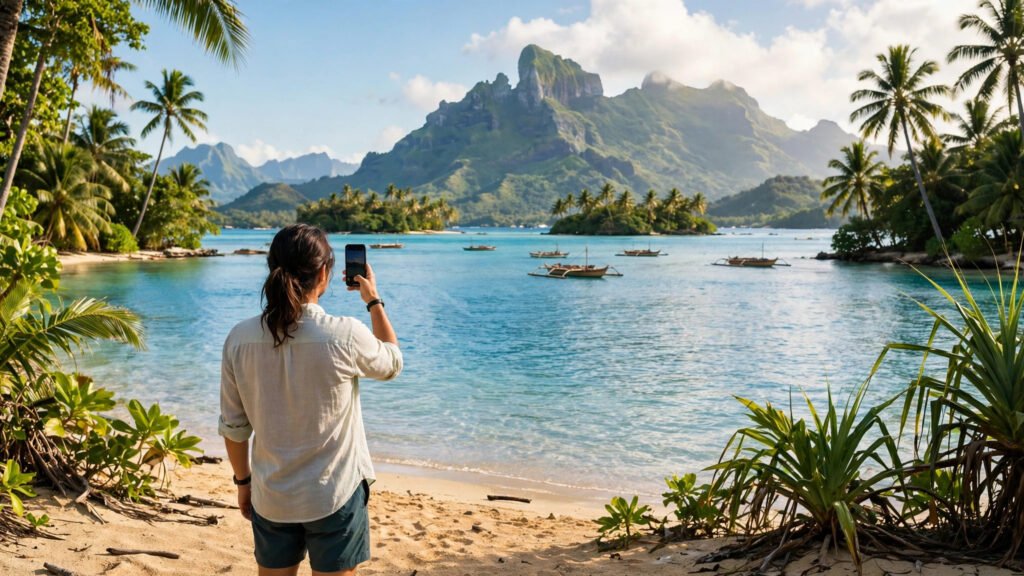
French Polynesia is not one place you can walk across. It is a wide scattering of islands and atolls across a vast stretch of the Pacific Ocean, where the next island may be a short boat ride away or a journey that needs careful planning. For the people who live there, distance is a normal part of daily life, and so is the tool that helps them cross it: the phone in their pocket.
That is why, in French Polynesia, a phone is rarely just a phone. It is a timetable, a family link, a work tool, a weather check and a travel planner, all in one. When home, work, school, the market and the ferry are separated by water, the ability to check, message, book and confirm before setting out makes the whole day run more smoothly.
Key Takeaways
- French Polynesia’s islands are spread across a vast ocean, so everyday life often depends on planning around boats, flights and sea conditions.
- Phones help residents check travel times, stay in touch with family on other islands, and arrange work, school and services without a wasted trip.
- For visitors too, a quick phone check before travelling between islands can turn a complicated journey into a calm, well-timed one.
Why Distance Changes Everyday Life in French Polynesia
On a single island, daily life can feel close and familiar: the shop, the school and the harbour may all sit within a short drive. In French Polynesia, that picture is often wider. Family members may live on different islands, a specialist appointment may be on another island, and a job, a market or a school event may require a crossing. Distance, in other words, is not an exception — it is the shape of the place.
This is where the phone earns its place. A message can confirm that a relative has arrived safely. A call can settle a work question without a day of travel. A booking check can show whether a crossing is still planned, or whether plans need to change. None of this removes the ocean, but it does remove much of the guesswork that used to come with it.
For many residents, the habit is practical rather than flashy. The phone is checked in the morning, before a journey, and again when plans shift. It is not about being online all the time; it is about having the right piece of information at the right moment, especially when the next step involves water.
Ferries, Flights and the Art of Island Travel
Travel between islands is where phone planning matters most. A ferry crossing depends on timetables, harbour conditions and the weather, and a flight between islands needs the same kind of advance checking. A traveller who looks at the day’s options before leaving home can choose the crossing that fits, allow enough time for the journey, and avoid arriving at a harbour only to find the day’s plan has changed.
The same thinking applies to shorter trips. A boat ride to a neighbouring island for shopping, a family visit or a day’s work still benefits from a quick check: when does the boat leave, where does it depart from, and what happens if the return is later than planned? On islands where the sea sets the rhythm, those small checks add up to a much calmer day.
Visitors notice this quickly. A holiday that moves between islands — for example, time on Tahiti followed by a quieter island — works best when each leg is checked in advance. The phone becomes a travel companion, holding bookings, maps, contact details and weather information in one place, so the journey itself can be enjoyed rather than worried over.
Family, Work and Staying Connected Across the Water
Perhaps the most important role of the phone in French Polynesia is the simplest one: keeping people close. Families spread across different islands use messages, voice notes, photos and video calls to share everyday news, celebrate occasions and check in on each other. A birthday, a school achievement or a simple “arrived safely” message travels across the ocean in seconds, even when a visit would take far longer to arrange.
Work follows a similar pattern. Small businesses, guesthouses, fishing crews, market sellers and tour guides all use their phones to take bookings, answer questions, share photos of the day’s catch or rooms, and arrange pick-ups. For a business on a smaller island, the phone is often the shopfront as well: it is how customers find it, ask about it and confirm a visit.
School and services fit into the same picture. Lessons, homework, appointments and community news can all be shared by phone, reducing the need for repeated trips. That does not replace face-to-face life — island communities remain close and personal — but it does mean that distance no longer has to mean silence.
In French Polynesia, the phone does not shrink the ocean — it helps people live well across it.
In French Polynesia, the phone does not shrink the ocean — it helps people live well across it. That sentence captures the whole habit: the water is still there, the distances are still real, but the daily work of crossing them, planning around them and staying connected through them has become far easier.
Weather, Sea Conditions and Safer Planning
The ocean also brings a practical reason to check a phone before going out. Wind, waves and rain can change how a crossing feels, and a day that looks calm from the shore can be rougher further out. Checking the weather and sea conditions before a boat trip is a sensible habit, especially for fishermen, boat owners and anyone travelling with children or luggage.
This kind of check is not about fear; it is about preparation. Knowing what to expect helps people choose the right time to travel, pack properly, and decide whether a trip is best taken today or left for a calmer day. In a place where so much travel happens by water, that preparation is simply part of good seamanship and good planning.
Local knowledge still matters, of course. People who have lived with the sea for years read the sky, the wind and the water with experience no screen can replace. The phone adds to that knowledge rather than replacing it, giving a forecast and a timetable to set alongside what the eye can already see.
- Island distances make travel planning essential, and phones hold timetables, bookings and contact details in one place.
- Family messages, photos and calls keep people connected across islands, even when a visit takes time to arrange.
- Small businesses use phones for bookings, questions and pick-ups, turning the phone into a shopfront for island work.
- Weather and sea-condition checks help travellers choose the right time for a crossing and prepare properly.
- Visitors who check island travel in advance enjoy smoother journeys between Tahiti and quieter neighbouring islands.
Why Islanders in Other Places Do the Same
French Polynesia is not alone in this. Other island communities have built similar phone habits around distance, water and travel. In Palau, Palauans rely on their phones across islands, tourism and daily life, balancing work and family across scattered islands. In Tuvalu, Tuvaluans rely on their phones for rising seas and island life, where the sea shapes everyday decisions. And in Micronesia, Micronesians rely on their phones across scattered islands, using them to bridge long gaps between communities.
What links these places is not the technology itself but the geography. When water separates home from work, school and family, a phone becomes the easiest way to stay organised and stay close. French Polynesia’s version of that habit simply stretches across an especially wide ocean, where planning well matters even more.
What to Watch Next
For anyone visiting French Polynesia, or thinking about island life there, the habit to copy is a simple one: check travel, weather and bookings on your phone before setting out, and check again if plans change. Ferry and flight legs, family visits, work bookings and sea conditions all run more smoothly when they are planned around the water. The ocean will always set the distances — but a quick phone check means the day can be planned across them, rather than interrupted by them.