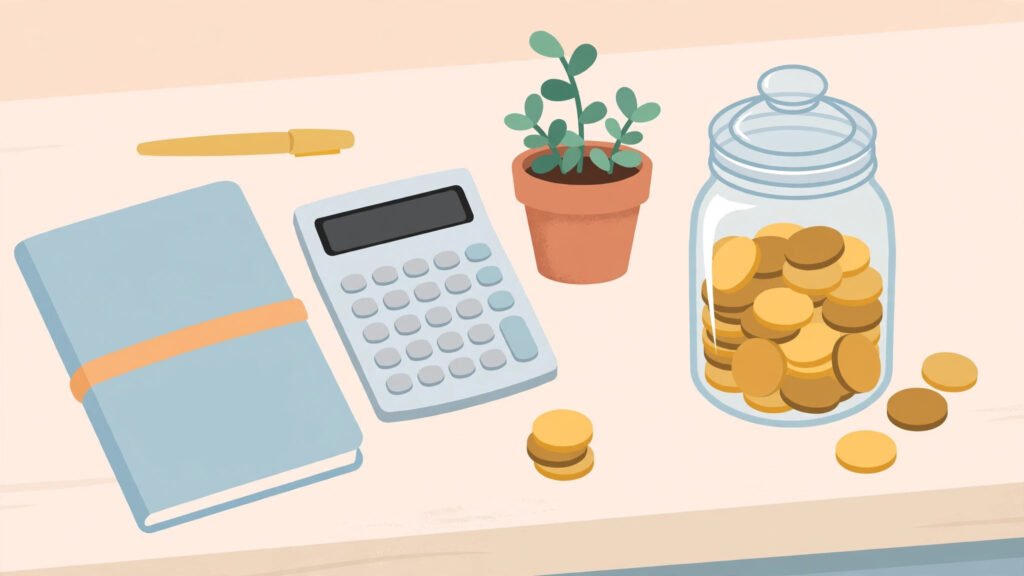
Learning how to handle a pay rise is less about willpower and more about timing. A higher salary can feel like a fresh start, but if new spending arrives before a plan does, the extra money often disappears into everyday costs and leaves little behind. The good news is that a small pause, and a few simple decisions made early, can turn a pay rise into lasting breathing room.
A pay rise feels best when it quietly makes your life more secure, not when it disappears into a bigger monthly bill. That shift does not require a complicated budget or a perfect plan. It only requires deciding, before the first larger paycheque arrives, what the extra money is actually for.
Key Takeaways
- Pause before upgrading your lifestyle, so new spending does not absorb the whole rise at once.
- Give the extra money a clear job first, such as saving, a sinking fund, or paying down a balance.
- Review the change after one month and adjust, rather than locking in new costs you cannot easily undo.
How to Handle a Pay Rise Without Rushing Into New Spending
When a pay rise is announced, it is tempting to celebrate with a bigger flat, a newer phone, or a subscription you have wanted for a while. None of those choices is wrong on its own. The problem is speed. Fixed monthly costs are easy to add and hard to remove, so a decision made in the excitement of the first week can quietly follow you for a year or more.
A short waiting period helps. Give yourself one full pay cycle to live on your old budget while the new amount lands in your account. During that month, notice what you actually miss, if anything, and what still feels comfortable. You may find that the life you already have works well, and that the extra money can do more useful work elsewhere.
If you do want to enjoy part of the rise, build that enjoyment into the plan on purpose. A small, fixed treat is very different from a string of open-ended upgrades. Choosing one pleasure deliberately keeps the celebration real without letting it swallow the whole increase.
Give the Extra Money a Job First
Money without a job tends to get spent by default. Before the first larger payment arrives, write down where the difference will go. A simple split is often enough: part toward savings, part toward a goal you already care about, and part toward everyday enjoyment. The exact split matters less than the fact that the decision is made in advance, when you are calm rather than tempted.
Many people start with a safety net. If you do not yet have one, building a small emergency fund can be a sensible first use for extra income, because it turns an unexpected bill from a crisis into an inconvenience. If you already have that cushion, a sinking fund for irregular costs can smooth out the bills that arrive only once or twice a year, such as annual renewals or seasonal expenses.
- Decide the split before the first larger paycheque arrives.
- Send the saving portion automatically, so it moves before spending can claim it.
- Keep one small, planned treat so the plan feels rewarding, not punishing.
- Revisit the split after a month, once you know how the new amount really feels.
A framework can make the split easier to keep. The 50-30-20 budget rule is one simple way to think about needs, wants, and saving, and it can be adjusted to fit your own situation rather than followed rigidly. The point is not perfection. It is having a default answer ready when the money arrives, so you do not have to decide from scratch every month.
Watch Out for Lifestyle Creep
Lifestyle creep is the quiet process by which spending rises to meet income. It rarely happens in one dramatic purchase. More often it arrives as slightly nicer groceries, a few more takeaways, a higher phone plan, and a subscription here and there. Each step feels small, but together they can absorb a pay rise completely.
A pay rise feels best when it quietly makes your life more secure, not when it disappears into a bigger monthly bill.
The best defence is a regular look at your fixed costs. Once a month, scan your bank statement for recurring charges and ask whether each one still earns its place. You do not need to cut everything you enjoy. You only need to notice the costs you forgot about, because those are the ones that grow without ever being chosen.
It also helps to compare your life now with your life before the rise. If your rent, transport, and food costs have all crept upward at the same time, that is a signal to pause, not a reason to feel guilty. Awareness alone often slows the creep enough for your savings to catch up.
A Simple First-Month Plan
A practical first month might look like this. In week one, leave your spending as it was and let the new amount settle. In week two, write down the monthly difference and choose a split for it. In week three, set up any automatic transfer for the saving portion, so it happens without a monthly decision. In week four, review how the month felt and adjust the split if something feels too tight or too loose.
Keep the plan visible. A note on your phone, a line in your notebook, or a simple spreadsheet entry can all work. The tool matters far less than the habit of checking in. If a goal changes, change the plan openly rather than abandoning it quietly. A plan that adapts is one you are far more likely to keep.
Finally, be patient with yourself. A pay rise is a chance to build steadier habits, not a test you pass or fail in a single month. Small, repeated choices, such as saving part of the increase and reviewing fixed costs now and then, tend to matter more over time than any single dramatic decision.
What to Watch Next
The main lesson is simple: pause before upgrading, give the extra money a job first, and watch for lifestyle creep before it absorbs the whole rise. A short waiting period, a clear split, and a monthly review can turn a pay rise into lasting security rather than a busier budget. Start with the first month, keep the plan visible, and adjust it as your life changes.