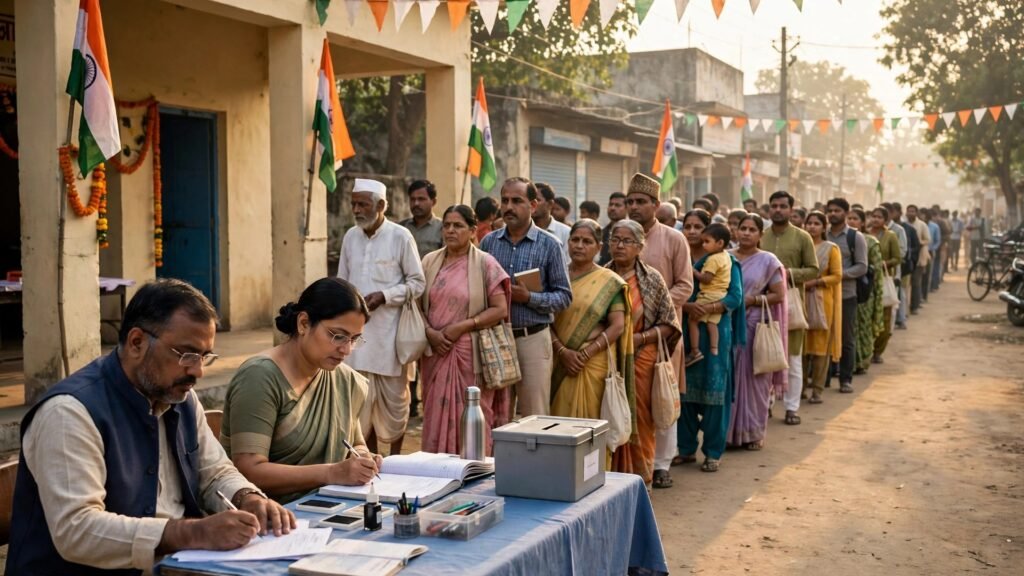
Polling is underway across Andhra Pradesh on Sunday, November 1, 2026, as voters in 92 urban local bodies choose the mayors, chairpersons and ward members who will run their towns and cities for the next term. State Election Commission officials confirmed that voting began at 7 a.m. at 11,378 polling centres, with polling scheduled to conclude at 5 p.m.
Nearly 99.35 lakh voters are taking part, deciding the fate of 10,262 candidates. The elections cover 13 Municipal Corporations and 79 Municipalities and Nagar Panchayats, making this one of the largest single-day civic exercises in the state in recent years. For nearly 10 million voters, this is the election closest to home.
Key Takeaways
- Polling is underway on November 1 for 92 urban local bodies in Andhra Pradesh: 13 Municipal Corporations and 79 Municipalities and Nagar Panchayats.
- Nearly 99.35 lakh voters are choosing from 10,262 candidates at 11,378 polling centres, with voting from 7 a.m. to 5 p.m.
- Counting is scheduled for November 3, and the contest is seen as a mid-term test for Chief Minister N. Chandrababu Naidu’s ruling NDA coalition.
The Scale of the Vote
The sheer scale of the exercise is what sets it apart. A total of 153 candidates are contesting for mayor posts in the 13 municipal corporations, while 367 candidates are in the fray for chairperson posts in 70 municipalities. Ward-level contests fill out the rest of the ballot, with thousands of candidates seeking seats that decide everyday issues such as water supply, roads, sanitation and local taxes.
Not every seat was contested. Elections for chairpersons in 17 Municipalities and Nagar Panchayats were unanimous, and in eight specific bodies both the chairpersons and ward members were elected unopposed, with the ruling National Democratic Alliance (NDA) securing those positions. Those unopposed results were settled before polling day, leaving the contested seats to be decided by Sunday’s vote.
For nearly 10 million voters, this is the election closest to home.
A Direct Contest Between NDA and YSRCP
The election is a direct contest between the ruling NDA, comprising the Telugu Desam Party (TDP), the Jana Sena Party (JSP) and the Bharatiya Janata Party (BJP), and the opposition YSR Congress Party (YSRCP). The NDA swept the 2024 Assembly elections in the state, and these civic polls are widely seen as a crucial mid-term test for Chief Minister N. Chandrababu Naidu’s coalition, measuring whether that support holds at the level of towns and cities.
Mayoral candidates and senior leaders were among the early voters on Sunday, casting their ballots and urging citizens to take part. In Vijayawada, National Democratic Alliance mayoral candidate Vangaveeti Radhakrishna voted and appealed for widespread participation, while Vijayawada Member of Parliament Kesineni Sivanath, known as Chinni, cast his vote at Loyola College. In Visakhapatnam, YSRCP mayoral candidate Varudu Kalyani cast her ballot at AU English Medium School. Their early turnout set the tone for a day in which parties on both sides framed participation itself as the message.
Peaceful Polling in North Andhra After Cyclone Arnab
In the north of the state, polling began peacefully under clear skies, a relief for officials and voters alike after Cyclone Arnab struck the Andhra coast days earlier. The storm had badly affected districts in the region, and relief work followed in its wake, so the return of settled weather was welcomed as polling opened.
Vizianagaram, known as the Fort City, illustrates the local picture. A total of 229 polling stations were set up across 62 divisions, with 1,649 officials and staff monitoring the process. As many as 2.23 lakh voters were set to elect a new mayor from seven contesting candidates, alongside 169 corporator candidates across the 62 divisions. Voters formed long queues in the morning, and district officials said they were hopeful of a strong turnout now that the weather had cleared.
- 92 urban local bodies voting: 13 Municipal Corporations and 79 Municipalities and Nagar Panchayats.
- 11,378 polling centres, with voting from 7 a.m. to 5 p.m. on November 1.
- Nearly 99.35 lakh voters and 10,262 candidates in the fray.
- 153 candidates contesting mayor posts; 367 contesting chairperson posts in 70 municipalities.
- Chairpersons in 17 bodies elected unanimously before polling day.
- Counting scheduled for November 3.
Why These Elections Matter
Urban local body elections rarely draw the same attention as Assembly or national polls, but they decide who controls the institutions closest to daily life. Municipal corporations and municipalities run water supply, waste management, street lighting, local roads and building permissions, and their councils shape how state and central schemes reach neighbourhoods. A mayor or chairperson can matter more to a resident’s week than a distant legislator, which is why parties treat civic polls as a genuine test of their ground organisation.
That is also why Sunday’s vote is being read beyond the towns themselves. The Andhra polls come on the same day as a large opposition rally in Delhi over alleged electoral-roll irregularities, covered in our report on the INDIA bloc’s Ramlila Maidan rally, a reminder that election politics is dominating the national conversation this weekend. In Andhra Pradesh itself, however, the question is narrower and more practical: which alliance do town and city voters trust to run their local bodies.
What to Watch Next
What to watch next is what the article has already set out: the final turnout figures once polling closes at 5 p.m., whether the peaceful start holds through the day in all 92 bodies, and the counting on November 3, when the results will show whether the ruling NDA coalition has held its ground in towns and cities or whether the YSRCP has made gains at the civic level. Until the votes are counted, the scale of the exercise is the story: nearly 10 million voters, more than 11,000 polling centres, and local governments that will shape daily life in Andhra Pradesh’s towns and cities for years to come.