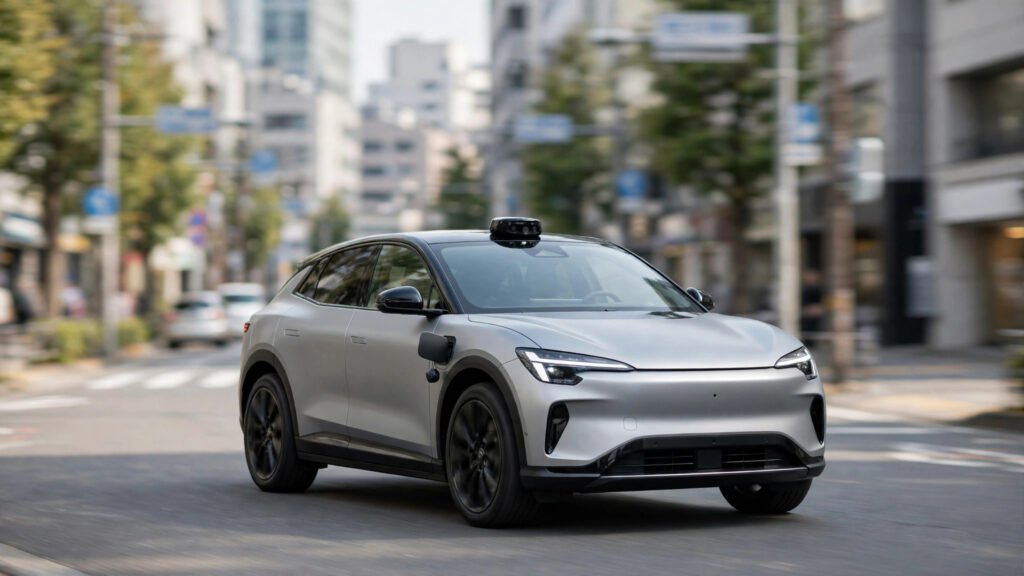
Toyota and Waymo have taken their self-driving partnership from an exploration agreement to a factory-built vehicle programme. Announced on October 30, 2026, the next phase will see Toyota build a custom version of its bZ4X electric SUV with Waymo’s autonomous driving hardware fitted on the production line, with testing in Japan due to begin in 2027 and deployment in the United Kingdom and other markets served by Waymo planned for the following years.
The announcement matters because it changes how a robotaxi is made. Until now, most self-driving fleets have been created by taking a finished car and adding sensors and computers afterwards. Toyota and Waymo are instead designing the vehicle for driverless ride-hailing from the factory floor, a step both companies present as a move toward safer streets and greater freedom of movement.
Key Takeaways
- Toyota and Waymo will begin testing and validating an autonomous bZ4X fleet in Japan in 2027.
- Toyota will build the vehicles at its Takaoka plant, fitting Waymo’s driving hardware on the same production line.
- Deployment in the UK and other Waymo-served markets is planned for later years, with no UK launch date or city announced yet.
What the Companies Announced
The plan builds on a preliminary agreement the two companies signed in April 2025. Under the new phase, Toyota will manufacture the 2027 bZ4X vehicles at its Takaoka plant in Toyota City, Aichi Prefecture, Japan. The entire process will take place under one roof, from assembling the base vehicle to integrating Waymo’s autonomous vehicle hardware, according to Toyota’s announcement.
The vehicles are described as Level 4 autonomous vehicles, meaning the system is designed to drive itself within defined conditions without a human driver needing to take over. The customised bZ4X models will include automatic doors, a detail aimed at ride-hailing passengers getting in and out without assistance. Toyota says the programme is intended to pave the way for Japan’s first domestically manufactured fully autonomous ride-hailing service, although the first step is testing and validation rather than a commercial launch.
Neither company has said how large the first fleet will be or which Japanese cities it will operate in, and reports of the announcement describe the first fleet as small. That restraint is part of the plan: the 2027 programme is a test-and-validate phase, designed to prove the factory-built vehicle on Japanese roads before it is deployed more widely.
Why Factory-Built Matters
Building the driving system into the car at the factory, rather than bolting it on later, changes the engineering and the economics of a robotaxi fleet. Sensors, computers and wiring can be placed where they are designed to go, with power and cooling planned from the start, instead of adapted around a finished vehicle. For a fleet operator, that should mean more consistent vehicles, simpler maintenance and a clearer path to producing larger numbers if the service expands.
It also changes the relationship between the carmaker and the technology company. Toyota is not simply supplying cars for someone else to convert; it is integrating Waymo’s artificial intelligence driving system into its own manufacturing process. Waymo, in turn, gains a dedicated supply of vehicles built for ride-hailing, rather than adapting models designed first for private owners. As technology investment faces closer scrutiny, a factory partnership of this kind is also a signal that both companies are committing to a longer, production-based path rather than a short pilot.
Toyota will build the vehicles at its Takaoka plant, and the whole process, from assembling the base vehicle to fitting Waymo’s driving hardware, will happen under one roof.
Japan First, Then the UK
Japan comes first because it is where the cars will be built and because it is a right-hand-drive market, like the UK. Waymo has said it will start with right-hand-drive markets in Japan and the UK, with no other countries or timelines shared yet. The UK deployment is described only as planned for subsequent years, after the Japanese testing programme.
Waymo is already testing Jaguar I-Pace vehicles in London, and it has said it plans to launch a robotaxi service there once it receives the necessary permits. That existing London testing is separate from the bZ4X fleet, and the Toyota announcement does not name a British city, set a UK service date or announce any UK passenger-service approval. The UK part of the story, for now, is a stated intention, not a launch.
Japan’s own context matters too. The country has been testing autonomous vehicles for years, and Japan’s growing use of AI-driven machines extends beyond cars into areas such as insurance and robotics. A domestically manufactured robotaxi, built in a Japanese plant, fits that wider push to keep advanced manufacturing at home while new services are developed.
- The partnership was first agreed in principle in April 2025; the factory-built phase was announced on October 30, 2026.
- Test and validation operations in Japan are due to begin in 2027.
- The vehicle is a customised 2027 Toyota bZ4X electric SUV with automatic doors.
- Production and hardware integration both happen at Toyota’s Takaoka plant in Aichi Prefecture.
- The vehicles are described as Level 4 autonomous vehicles.
- UK deployment is planned for later years, with no date, city or service approval announced.
What Is Not Announced Yet
Several important details remain open. The companies have not announced the size of the first fleet, the Japanese cities where testing will take place, a date for any commercial passenger service in Japan, or any pricing. They have also not announced a UK operating area or linked the future UK deployment to a particular pilot programme.
One related idea also remains exploratory only: the possibility of Waymo’s driving technology appearing in privately owned Toyota vehicles. That has been discussed as something the companies are exploring, but no product or timetable has been announced, and it is not part of the 2027 fleet plan. Readers should therefore treat the announcement as a manufacturing and testing commitment, not as a promise that driverless Toyotas will soon be on sale or carrying passengers in the UK.
What to Watch Next
What to watch next is whether the Japanese test and validation programme begins on schedule in 2027, which cities it covers, and how large the first fleet proves to be. The other questions are whether the UK deployment follows in the years after that, as planned, whether Waymo secures the permits it needs for a London service, and whether the factory-built approach makes it easier to scale a robotaxi fleet beyond a small test group. Until those steps happen, the Toyota-Waymo fleet remains a plan taking shape on a production line in Aichi Prefecture, with its first real test still ahead of it on Japanese roads.