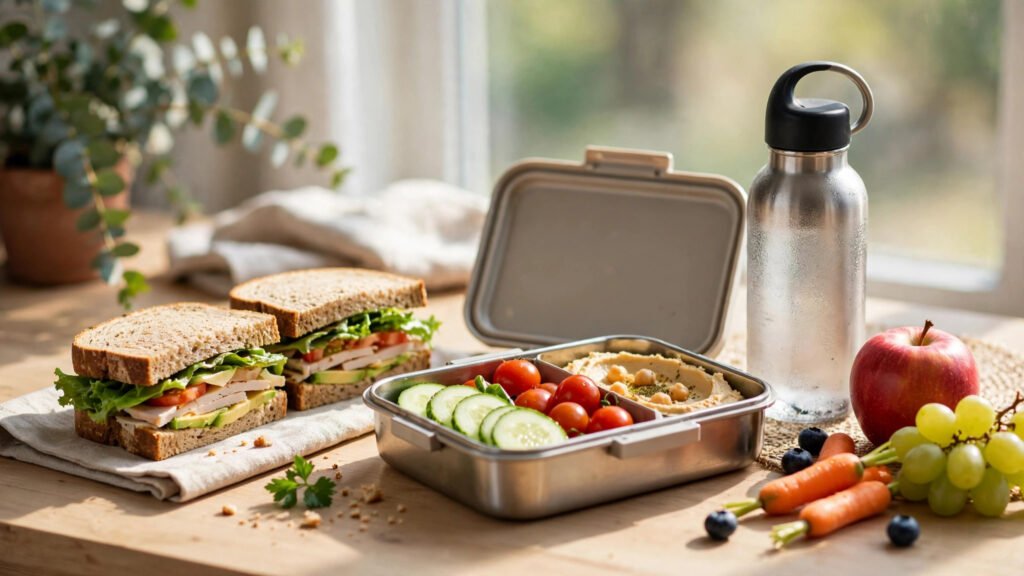
Packing your own lunch is one of the simplest ways to eat better during the working week, and it does not require hours of Sunday cooking. Learning how to pack a healthy lunch for work is mostly about having a few reliable combinations ready, so you can put a lunch together in five minutes instead of reaching for the nearest takeaway.
The trick is to stop thinking of a packed lunch as a cooking project. A good work lunch is just a balanced mix of foods you already have at home, packed the night before or in the morning while the kettle boils. Once the habit is in place, it saves money, saves the midday decision, and makes the healthy choice the easy one.
Key Takeaways
- A healthy work lunch is a simple combination of foods you already have, not a cooking project.
- Packing the night before removes the morning rush and the takeaway temptation.
- One protein, one vegetable, one filling base, and one snack is enough structure for any lunchbox.
How to Pack a Healthy Lunch for Work: The Simple Formula
A useful way to build a lunch without overthinking it is the one-plus-one-plus-one rule: one protein, one vegetable or salad item, one filling base, and one small snack. The protein could be eggs, beans, lentils, cheese, leftover chicken, or tinned fish. The base could be bread, rice, pasta, or a wrap. Add whatever vegetables you have — cucumber, carrots, tomatoes, or a handful of salad leaves — and finish with fruit, yoghurt, or a small handful of nuts.
This formula works because it is flexible. You do not need a special recipe for every day of the week. Change one part and the lunch feels different: swap rice for bread, swap beans for eggs, swap carrots for cucumber. Variety comes from small swaps, not from a long list of recipes you will never cook.
A good work lunch is just a balanced mix of foods you already have at home, packed the night before or in the morning while the kettle boils.
Pack the Night Before
The single habit that makes packed lunches stick is packing them the evening before. Mornings are rushed, and a lunch that still needs deciding at 8 a.m. usually loses to the shop around the corner. When you pack at night, the decision is already made, and the lunchbox is simply waiting in the fridge.
Leftovers are your best friend here. Cook a little extra at dinner — an extra portion of rice, an extra chicken breast, a few extra roasted vegetables — and tomorrow’s lunch is half done before you start. Keep one reusable container and one small pot for dressings or dips, so packing becomes a two-minute job rather than a hunt through the cupboards.
No-Cook Combos That Actually Fill You Up
Not every packed lunch needs cooking. A wrap with beans, cheese, and salad; a sandwich with egg and cucumber; a pot of yoghurt with fruit and oats; or a simple pasta salad made from last night’s leftovers all count as real lunches. The test of a good lunch is not how impressive it looks, but whether it keeps you full until the end of the workday without a mid-afternoon crash.
If you often feel hungry an hour after lunch, the usual reason is a missing protein or a missing filling base, not a lack of willpower. Adding an egg, some beans, or a thicker slice of bread usually fixes it. For a simple guide to building balanced meals in general, see how to build a balanced plate.
- Use the simple formula: protein, vegetables, a filling base, and one snack.
- Pack the night before so the morning decision is already made.
- Cook a little extra at dinner and let leftovers become tomorrow’s lunch.
- Add protein and a filling base so the lunch keeps you full all afternoon.
Keep Costs and Waste Down
Packed lunches are usually cheaper than buying lunch every day, but only if the ingredients actually get used. Buy versatile basics that work in several lunches — eggs, bread, rice, tinned beans, and one or two vegetables you like — rather than a different special ingredient for each day. Use up what is already in the fridge before buying more, and let Friday’s lunch be a clear-out of the week’s leftovers.
A reusable bottle for water also helps. A drink with lunch is part of the routine, and carrying your own bottle avoids both the cost and the waste of a shop-bought drink every day. Small savings like this add up across a working month without any extra effort.
Eating Well Around Shifts and Busy Days
On long or irregular days, a packed lunch matters even more, because the canteen may be closed and the only nearby options may be vending machines. Packing something filling for those days is a kindness to your future self, not a chore. The same simple formula works for shift workers and office workers alike, as explained in how to eat healthy on night shifts.
It also helps to eat lunch mindfully when you can — sitting away from the desk for a few minutes rather than eating while answering emails. Eating at a slower pace makes it easier to notice when you are full, a point covered in mindful eating for beginners. This article is general information only, not medical or dietary advice, and anyone with a health condition or specific dietary needs should check with a healthcare professional.
What to Watch Next
Packing a healthy lunch for work comes down to a simple formula, a night-before habit, and ingredients you already have. Choose one protein, one vegetable, one filling base, and one snack, pack it the evening before, and let leftovers do half the work. Start with just two packed lunches a week, and build from there — the habit that survives a busy week is the one that lasts.