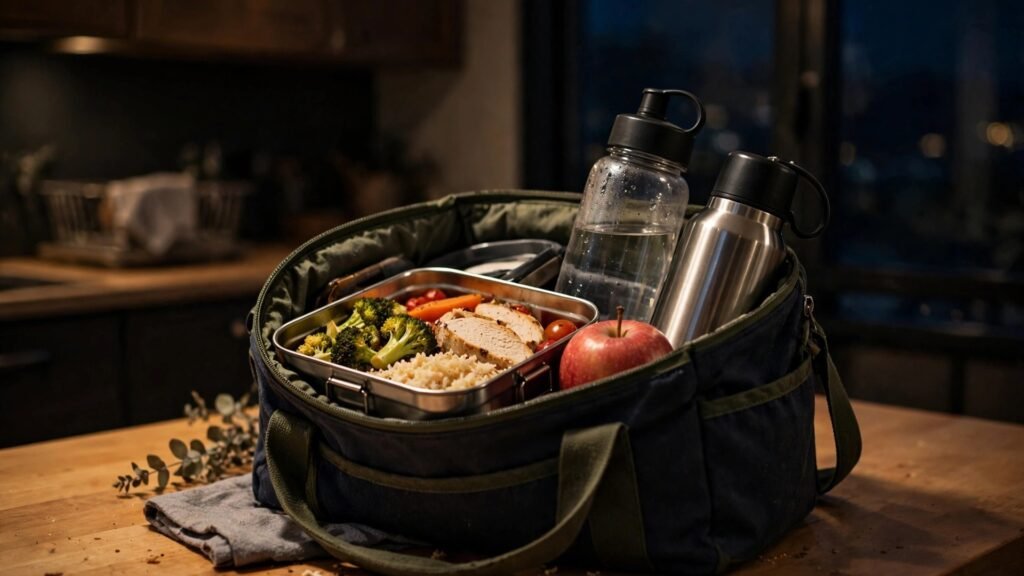
Working nights changes when you eat, and that timing change is often what makes healthy eating feel harder. If you want to eat healthy on night shifts, the goal is not a perfect diet. It is a simple plan you can repeat on every shift: a real meal before work, steady food during the night, and a light meal before sleep.
Key Takeaways
- Eat your main meal before your shift, so you are not starting the night already hungry.
- Pack food from home when you can, because night-time options are often limited to vending machines and fast food.
- Keep your last meal light and finish eating well before bed, so sleep comes more easily.
Why Eating on Night Shifts Feels So Different
On a day shift, meals usually follow a familiar rhythm: breakfast, lunch, dinner. On nights, that rhythm flips. You may wake up in the afternoon, eat once, then work through the hours when most kitchens are closed and your body expects rest. Hunger can arrive at odd times, and tiredness can make the quickest option feel like the only option.
That is why planning matters more than willpower. When food is already decided and packed, you do not have to make a good choice at 3 a.m. while tired. A plan also helps you avoid the common trap of grazing all night on snacks and then going home too full to sleep well.
Start With a Real Meal Before Your Shift
Think of your pre-shift meal as your main meal of the day. Eat it a couple of hours before work, and build it around foods that keep you full: a protein source, some vegetables or salad, and a filling carbohydrate such as rice, bread, potatoes, or oats. This is not about a strict formula. It is about leaving home satisfied, so the first hours of your shift are not spent hunting for food.
If you wake up late and feel short on time, keep this meal simple. A sandwich with a filling, a bowl of soup with bread, or leftovers from the day before all work. The point is a proper plate of food, not a snack eaten while getting ready. For ideas that work on busy mornings, see these healthy 10-minute breakfast ideas for busy mornings, many of which adapt well to an afternoon wake-up.
Pack Food for the Middle of the Night
The middle of the shift is where most night workers get caught out. Canteens may be closed, shops may be shut, and the vending machine becomes the default. Packing a bag the day before changes that completely.
A useful night-shift bag has three parts. First, a main item for your mid-shift meal, such as a wrap, a pasta box, or a rice bowl. Second, a couple of smaller snacks for the quiet hours, such as fruit, yoghurt, nuts, or crackers. Third, a drink you actually enjoy, whether that is water, tea, or a flavoured drink without too much sugar.
Keep portions moderate. A very heavy meal in the middle of the night can leave you feeling sluggish, while no meal at all can leave you hungry and distracted. A balanced mid-shift meal, eaten sitting down during a break when possible, is usually the most comfortable middle ground.
When food is already decided and packed, you do not have to make a good choice at 3 a.m. while tired.
Handle Caffeine and Sugar With a Cut-Off Time
Caffeine and sugar are the two habits most likely to follow you home and disturb your sleep. That does not mean giving them up entirely. It means giving them a cut-off time. Many night workers find it helps to stop caffeine in the last few hours of the shift, so it has time to wear off before bed.
The same idea works for sugary snacks and drinks. A sweet snack can feel like quick energy at 4 a.m., but it often leads to a dip soon after. Saving sweet foods for earlier in the shift, and choosing steadier snacks later, tends to leave you feeling more even through the night. If afternoons and evenings are also a struggle, these tips to beat the afternoon energy slump cover the same steady-energy idea for daytime hours.
Keep Your Last Meal Light Before Sleep
What you eat after your shift matters for sleep. A large, heavy meal right before bed can leave you feeling uncomfortable when you lie down. A lighter meal, eaten an hour or two before sleep, is usually a better finish to the night.
Good post-shift options are small and easy to digest: toast, cereal, soup, yoghurt with fruit, or a small sandwich. Eat it calmly, away from bright screens if you can, and give yourself a short wind-down gap before bed. Pairing this habit with a steady bedtime routine helps even more, as explained in this guide on how to sleep better with a simple night routine.
A Simple Night-Shift Eating Pattern to Try
- Before your shift: a full, satisfying main meal.
- During your shift: one mid-shift meal plus one or two small snacks from home.
- Last few hours: stop caffeine and keep snacks light.
- After your shift: a small, light meal, then wind down before sleep.
- On days off: return to regular mealtimes, without trying to fix everything in one day.
What About Days Off?
Days off can undo a good week if you try to eat on a day-shift schedule and a night-shift schedule at the same time. A simpler approach is to keep mealtimes fairly regular on days off too, and to accept that the first day off may feel messy. Eat when you are hungry, keep meals balanced, and avoid using days off as a reason to skip meals entirely and then overeat later.
If you share meals with family, plan one shared meal on days off that everyone can enjoy. That keeps food social and normal, instead of something you only think about at work. Over time, the routine becomes less about rules and more about habit.
What to Watch Next
Eating healthy on night shifts comes down to timing more than perfection: a real meal before work, packed food for the night, a cut-off for caffeine and sugar, and a light meal before sleep. Start with one change, such as packing your mid-shift meal, and build from there. Small, repeatable habits are what make night-shift eating sustainable, shift after shift.