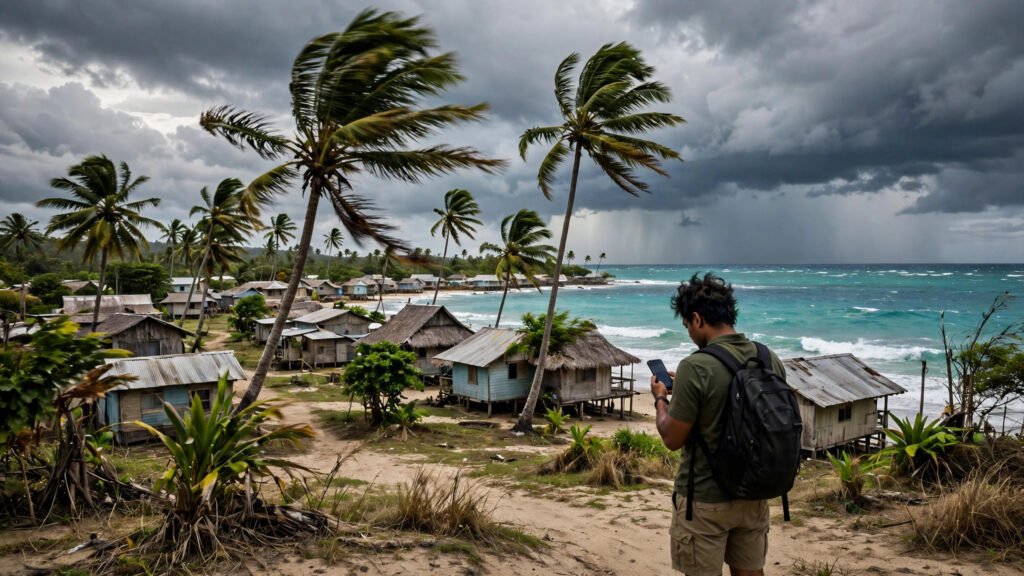
When a cyclone warning is issued in Fiji, the first thing many people reach for is not a television remote or a radio dial. It is the phone in their pocket. That small habit makes sense once you understand Fiji’s geography: an island nation spread across a wide stretch of ocean, where families often live on different islands, boats link towns that have no road between them, and a storm can change direction while people are still deciding what to do.
A phone brings the warning, the map, the family group chat and the latest advice together in one place. It can be checked at work, in the market, on a bus or at home, without waiting for a scheduled bulletin. In a fast-moving weather situation, that speed is the whole point.
Key Takeaways
- The phone is the fastest way for many Fijians to receive a cyclone warning, wherever they are.
- One device covers official warnings, storm updates, family check-ins and travel plans.
- When power and signal are at risk, preparation before the storm matters as much as the phone itself.
Why the Phone Comes First
Official warnings are the starting point. Weather authorities issue alerts as a storm develops, and those alerts are shared quickly through news apps, messaging groups and social feeds. A single alert on a phone can reach a whole family within seconds, and family members can forward it to relatives on another island just as fast.
The phone also answers the questions a warning raises. Where is the storm heading? Which areas are being told to prepare? Are ferries still running? Are schools or workplaces closing? Instead of waiting for the next broadcast, people can look for updates as often as they need them, and share what they find with the people around them.
That habit matters even more in island communities. In Fiji, as in other island nations, island life runs on phones across ocean distances, because the sea sits between neighbours, workplaces and family homes. A warning that arrives on a phone crosses that water instantly.
In a fast-moving weather situation, the phone is not just a source of news — it is the link between a warning and the decision that follows it.
What People Actually Check
The first check is usually the warning itself: what level of alert is in place, and which areas it covers. The second is the storm’s path and timing, so people can judge whether they have hours or days to prepare. The third is practical: whether travel is still safe, whether shops and services are open, and whether relatives in another town or on another island are safe.
Family check-ins are a big part of the picture. A short message can confirm that an elderly relative has heard the warning, that children are home from school, or that a family member working in another town is staying somewhere safe. Group chats let one message reassure many people at once, which matters when phone lines are busy and time is short.
- Warnings arrive faster on a phone than through a scheduled broadcast.
- Storm track updates help families judge how much time they have to prepare.
- One message in a family group can reassure relatives on several islands at once.
- Travel and service updates help people avoid unnecessary journeys in bad weather.
Why an Island Nation Leans on Phones
Fiji’s shape explains the habit. Communities are scattered across islands, and daily life already depends on boats, flights and phone calls to bridge the gaps. When a cyclone threatens, that dependence sharpens: a ferry timetable, a road closure or a change in the storm’s track can alter plans for a whole village, and the phone is where those changes are announced and discussed.
Phones also carry the everyday tools that become emergency tools in a storm. A torch app lights a dark room during a power cut. A saved contact list reaches neighbours and local services without searching for numbers. Photos and messages document damage for later, when repairs and help are being arranged. After the storm passes, phones become a lifeline after cyclones and floods, as people check on relatives, share news about open roads and services, and begin the slow work of recovery.
Similar patterns appear wherever storms shape daily life. In Puerto Rico, for example, phones are relied on through power outages in hurricane season, because the device that carries the warning is often the same one that carries light, news and contact with family when the grid fails.
When the Signal Itself Is at Risk
The phone-first habit has one clear weakness: the network itself can fail. Strong winds can damage towers, power cuts can drain batteries, and a flooded road can cut off a charging point. That is why experienced households treat the phone as part of a wider plan rather than the whole plan.
Charging devices before the storm arrives, keeping a power bank ready, saving important numbers offline and listening to radio updates when the signal drops are all part of the same routine. The phone works best when it is charged, protected from water and used alongside other sources of information, not instead of them.
There is also a discipline to checking. Rumours spread as fast as warnings on social media, and an old screenshot or an unverified forward can cause panic or false calm. Comparing what is shared in a group chat with an official warning, and waiting for confirmation before passing a message on, keeps the phone useful instead of confusing.
What to Watch Next
The next time a cyclone warning is issued, the pattern is likely to repeat: phones lighting up with alerts, families checking in across islands, and travel plans changing as updates arrive. The habit itself is simple, but it rests on preparation done early — charged batteries, saved contacts and a willingness to check official warnings before rumours.
For Fijians, the phone is the fastest link between a warning and a decision. Used carefully, and backed up by radio and neighbours when the signal fails, it helps island communities face a storm together, even when the sea sits between them.