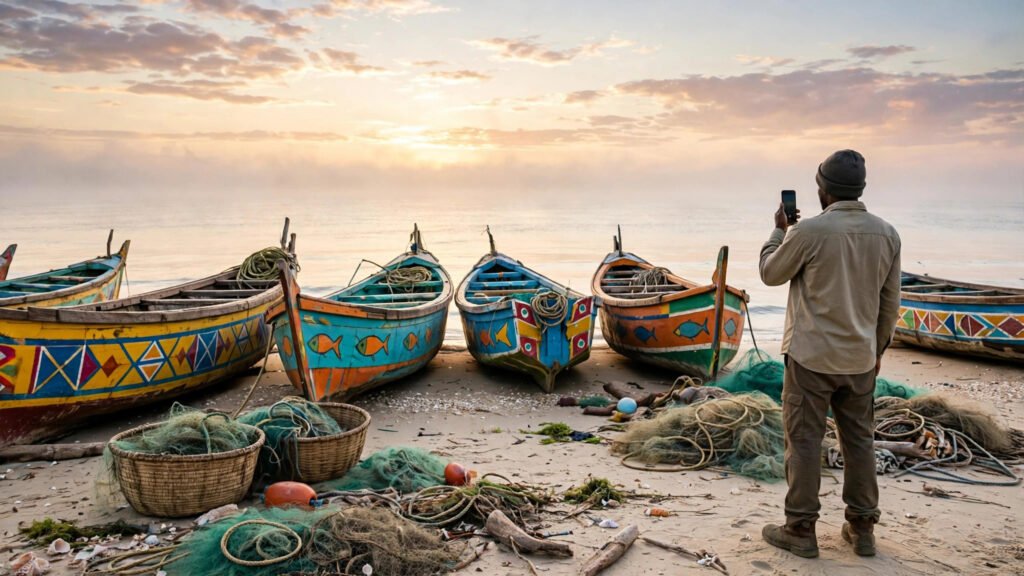
Before the sun is fully up along Senegal’s Atlantic coast, the beach is already busy. Brightly painted wooden pirogues are pushed toward the water, nets are checked, and baskets are stacked for the catch. In the middle of all that preparation, one small habit has become just as routine as checking the boat: checking the phone.
For many Senegalese fishermen, the phone is not a distraction from the work. It is part of the work. It helps answer the most important question of the day before a single boat leaves the shore: is it safe, and is it worth going out today?
Key Takeaways
- A quick phone check can warn a fisherman about rough seas, strong wind, and changing weather before launch.
- Phones help fishermen coordinate with their crew, buyers, and family while they are away from shore.
- The same device that checks the forecast also helps plan where to land, sell, and store the day’s catch.
Why the Sea Decides the Day
Fishing in Senegal is deeply tied to the Atlantic. The sea can look calm from the beach and still turn rough further out, and conditions can change during a long day on the water. That is why the decision to go out is rarely made on a glance at the horizon alone.
A phone brings together weather forecasts, wind information, and sea conditions in one place. A fisherman can compare what he sees with what the forecast suggests, talk it over with his crew, and decide whether to launch, wait, or change plans. On a good day, that check takes only a few minutes. On a bad day, it can be the difference between a wasted trip and a dangerous one.
This is not unique to Senegal. People who live and work close to the sea in many places now lean on their phones in a similar way, as shown in our guide to how island communities rely on phones across a divided island. The setting changes, but the logic is the same: when nature sets the schedule, information matters.
Weather, Wind and Waves
Wind is one of the first things a fisherman checks. Strong wind can make a small wooden boat hard to handle, push waves higher, and make the return to shore much more difficult. A forecast that points to rising wind later in the day may mean an earlier start, a shorter trip, or no trip at all.
Waves and swell matter too. A beach that looks easy to launch from in the morning can become harder to land on by the afternoon. By checking the forecast in advance, a crew can think about the whole trip, not just the launch: how long they plan to stay out, how far they plan to go, and what the sea might be like when they come back.
Rain and storms add another layer. A sudden squall can reduce visibility and make navigation harder, so knowing that rough weather is expected helps a crew prepare, carry the right gear, and stay closer to shore if needed.
A phone brings together weather forecasts, wind information, and sea conditions in one place.
Where the Fish and the Buyers Are
Checking the phone is not only about safety. It is also about the business of fishing. A fisherman may message other boats, ask where fish have been found recently, or confirm which landing site buyers are heading to that day.
That coordination saves time and fuel. Instead of returning to a beach where no buyer is waiting, a crew can head toward a market where their catch is wanted. Instead of guessing, they can plan the landing around the buyers, the transport, and the storage available that day.
Phones also help with the daily rhythm of island and coastal life more broadly, from travel to trade, as our look at how island communities run travel, tourism, and daily life on their phones shows. In Senegal, that rhythm is set by tides, markets, and the sea.
Staying in Touch Far From Shore
Once a boat is out, the phone becomes a link back to land. A crew can stay in contact with family, let someone know if plans change, or call for help if something goes wrong. That connection matters most precisely because fishing takes people away from help, sometimes for many hours at a time.
It also matters for the people waiting on the beach. Family members and buyers want to know when a boat is expected back, whether the catch was good, and whether extra hands or transport will be needed at landing. A short message can organise all of that before the boat even reaches the shore.
- Weather and wind checks come first, before the boat is launched.
- Messages coordinate the crew, the landing site, and the buyers.
- A charged phone is a safety tool, not just a convenience.
- Planning the return matters as much as planning the departure.
A Phone Is Also a Business Tool
For a small-scale fisherman, the phone carries the whole working day: the forecast, the crew chat, the buyer, and the family at home. It helps turn a catch into income by connecting the boat to the market while the fish are still fresh.
That is also why battery care matters at sea. There is no charger on a pirogue, so fishermen learn to save power, dim the screen, and keep the phone protected from water and sun. Our guide on how to make your phone battery last longer covers the same simple habits that help a phone survive a long day away from a plug socket.
None of this replaces experience. Older fishermen still read the sky, the wind on their face, and the movement of the water. The phone adds to that knowledge; it does not replace it. The best decisions come from both together: what the sea looks like, what the crew knows, and what the forecast says.
What to Watch Next
As phone coverage and forecasting tools keep improving along the coast, the morning phone check is likely to become even more detailed, with better local forecasts and easier ways for crews and buyers to coordinate. What will not change is the reason behind it: the sea decides the day, and a fisherman who checks before launching is giving himself the best chance of a safe trip and a good catch.