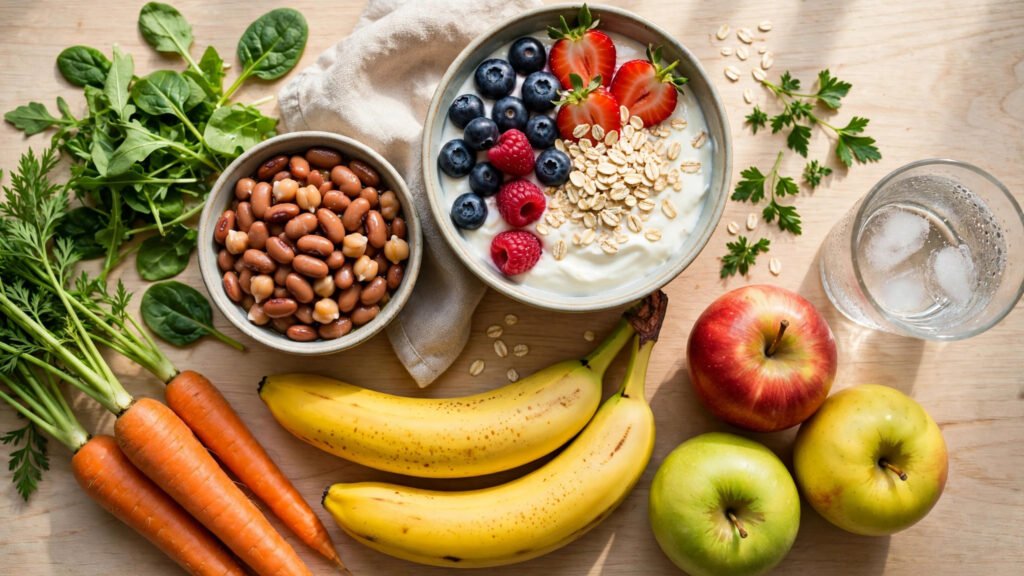
Learning how to improve gut health does not require a special diet, expensive powders, or a complete overhaul of the way you eat. For most people, gut health improves through small, steady choices: more fibre from everyday foods, a little variety on the plate, and a few habits that support digestion day after day. This guide explains those choices in plain terms, using foods you can already find in an ordinary grocery shop.
Your gut is home to a large community of microbes that help break down food. That community responds to what you feed it. A varied diet built on plant foods, whole grains, and fermented foods tends to support a more diverse microbial community than a diet built mostly on highly processed food. You do not need to eat perfectly to see the benefit. Adding one or two gut-friendly foods to meals you already enjoy is a realistic place to start.
Key Takeaways
- Fibre from beans, oats, vegetables, and fruit is the simplest everyday step toward better gut health.
- Fermented foods such as yogurt and kefir add variety to the gut, a few times a week is enough.
- Water, regular meals, movement, and sleep support digestion just as much as any single food.
How to Improve Gut Health: Start With Fibre
Fibre is the part of plant food that your body does not fully digest, and it is one of the most useful tools for gut health. Fibre adds bulk, keeps things moving, and feeds the microbes in your gut. Good everyday sources include oats, beans, lentils, chickpeas, wholemeal bread, vegetables, and fruit with the skin on. You do not need to count grams. A practical goal is to include a fibre-rich food at most meals: oats or wholemeal toast at breakfast, beans or lentils in a lunch bowl, and vegetables with dinner.
If your current diet is low in fibre, build up gradually rather than changing everything at once. A sudden jump in fibre can leave you feeling bloated, which puts many people off. Add one new fibre-rich food at a time, give your body a few days to adjust, and drink water alongside it. Over a few weeks, these small additions add up to a noticeably different way of eating, without any dramatic diet rules.
Reading labels helps here. When you are choosing bread, cereals, or tinned beans, our guide on how to read food labels shows what to look for, including fibre content and added sugar, so you can pick the better option without guessing.
Add Fermented Foods a Few Times a Week
Fermented foods are foods made with the help of live microbes, and they are an easy way to add variety to your diet. Plain yogurt, kefir, and other cultured dairy products are the most accessible examples. A spoonful of plain yogurt with oats and berries at breakfast, or a small glass of kefir a few times a week, is enough to make them part of your routine. Choose plain versions when you can, since flavoured yogurts often carry a lot of added sugar.
Other fermented foods include sauerkraut, kimchi, and miso. These can be strong in flavour, so start with small amounts as a side dish rather than a main course. There is no need to eat fermented foods every day, and no single fermented food is essential. Variety matters more than any one product, so pick the ones you actually enjoy and will keep eating.
Build Meals Around Plants, Not Around Rules
A gut-friendly plate does not follow a strict formula. A simple pattern works well: half the plate vegetables or salad, a quarter whole grains or starchy food such as potatoes or rice, and a quarter protein such as beans, lentils, eggs, fish, or meat. Fruit makes an easy snack or dessert. This pattern naturally raises fibre and variety without requiring you to track anything.
Planning helps more than willpower. If lunch is usually a rushed sandwich, try preparing something the night before. Our guide on how to pack a healthy lunch for work has practical ideas for lunches that travel well and include vegetables, whole grains, and protein. Cooking a larger batch of beans, lentils, or whole grains once or twice a week also makes gut-friendly meals much easier on busy days.
Highly processed foods are not forbidden, but they crowd out fibre when they dominate the diet. If most of your meals come from packets with long ingredient lists, try swapping one meal a day for something built from whole ingredients. That single swap often changes the whole balance of the day.
Variety matters more than any one product, so pick the ones you actually enjoy and will keep eating.
Drink Water and Move a Little Each Day
Water works together with fibre. Fibre absorbs water as it moves through the gut, so drinking too little can make a high-fibre diet feel uncomfortable. Keep a glass or bottle nearby and sip through the day rather than trying to drink a large amount all at once. Our guide on how to drink more water every day has simple tricks for building the habit if plain water feels boring.
Gentle movement also supports digestion. A short walk after a meal, a few stretches during the workday, or any activity you enjoy helps keep things moving. You do not need intense exercise for this benefit. Regular, moderate movement is enough, and it pairs well with the other habits in this guide.
Daily Habits That Support Digestion
How you eat matters as well as what you eat. Eating at roughly regular times, chewing food well, and giving yourself time for a meal instead of eating in a rush all help digestion feel easier. Large, hurried meals eaten late at night are a common cause of discomfort, even when the food itself is healthy.
Sleep and stress play a role too. Poor sleep and ongoing stress can change appetite and digestion, which is why a gut-friendly routine is really a whole-day routine: regular meals, enough water, some movement, and a steady sleep pattern. None of these habits needs to be perfect. Small, consistent improvements beat a strict plan that lasts only a week.
One honest note: this article is general information only, not medical advice. If you have ongoing digestive problems, unexplained weight loss, blood in your stool, or symptoms that keep coming back, talk to a doctor rather than trying to fix them with diet alone. Food can support gut health, but it cannot diagnose or treat a medical condition.
- Add one fibre-rich food to most meals, such as oats, beans, lentils, or vegetables.
- Include a fermented food such as plain yogurt or kefir a few times a week.
- Build plates around plants, whole grains, and a protein source you enjoy.
- Drink water through the day and move a little after meals.
- Keep meals regular, eat slowly, and get steady sleep.
What to Watch Next
Improving gut health comes down to fibre from everyday foods, a little fermented food each week, water, movement, and regular, unhurried meals. Start with one change, such as oats at breakfast or beans in your lunch, and add the next habit only when the first one feels easy. Over time, these small choices build a diet that supports your gut without strict rules or expensive products, and that is exactly what makes them last.