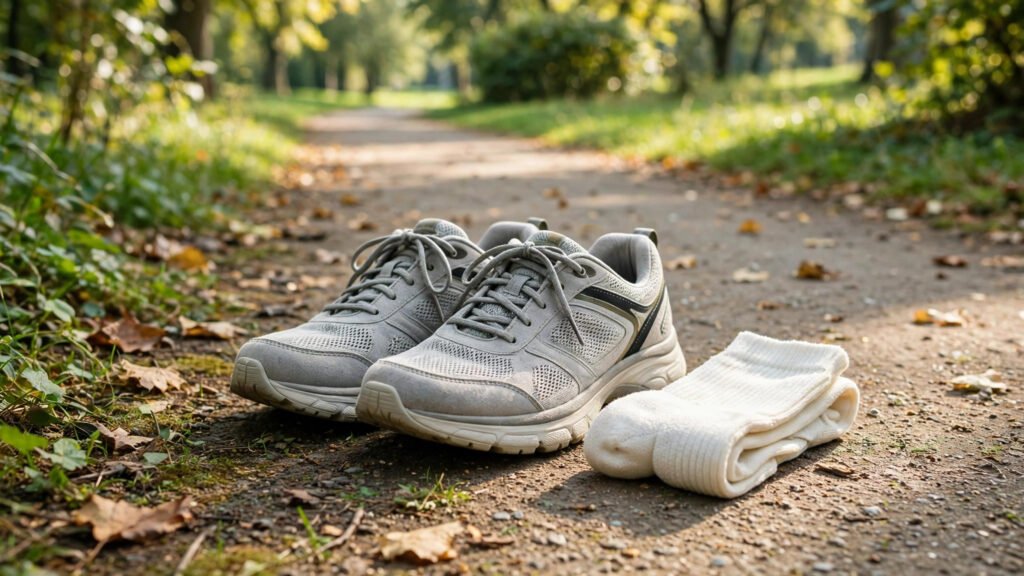
Walking is one of the simplest ways to stay active, but when you walk a lot, your feet carry the whole habit. Learning how to look after your feet makes the difference between a walk you enjoy and one you cut short because your feet ache. Foot care does not need special equipment or a complicated routine — it mostly comes down to shoes that fit, socks that work, and a few minutes of attention after you get home.
Key Takeaways
- Shoes that fit well and suit your walking surface matter more than any single gadget or extra product.
- Clean, well-fitting socks and dry feet help prevent rubbing and blisters on longer walks.
- A short post-walk routine of checking, washing, and resting your feet keeps small problems small.
Most foot trouble on walks builds up slowly. A shoe that pinches slightly on a short stroll can rub badly over a longer distance, and damp socks can turn a pleasant walk into an uncomfortable one. Paying attention early, rather than pushing through discomfort, is the simplest habit a regular walker can build.
Start With Shoes That Actually Fit
Good walking shoes should feel comfortable from the first few steps, with enough room for your toes to move and a heel that stays in place without slipping. If a shoe needs a long breaking-in period, it is probably not the right fit for regular walking. Try shoes on with the socks you normally walk in, and walk around the shop for a few minutes before deciding.
Different surfaces ask different things of a shoe. A smooth pavement walk, a muddy park path, and a hilly trail do not all suit the same pair, so choose shoes that match where you actually walk most often. If you are building up to walk more every day, increase your distance gradually rather than doubling it in one week — your feet need time to get used to the extra work, just like the rest of your body does.
Choose Socks Like They Matter — Because They Do
Socks are often treated as an afterthought, but they sit directly against your skin for the whole walk. Look for socks that fit snugly without bunching up inside the shoe, and avoid thick seams across the toes, which are a common cause of rubbing. On longer walks, socks that manage moisture better than plain cotton tend to stay more comfortable.
Change your socks if they become damp, whether from sweat or from rain, and let your feet air for a few minutes when you get home. If you regularly walk long distances, keeping a spare pair in your bag is a small habit that can save a walk. Damp skin softens and rubs more easily, so keeping feet dry is one of the easiest ways to avoid blisters.
- Fit shoes with room for your toes, laced snugly rather than tightly.
- Change damp socks promptly and let your feet air after a walk.
- Build up walking distance gradually instead of jumping to long walks.
- Rest your feet between walks and let shoes air out before wearing them again.
How to Look After Your Feet Day by Day
A daily foot-care routine does not need to take long. Wash your feet with warm water, dry them well — especially between the toes — and take a quick look for any redness, rubbing, or small blisters. Catching a sore spot early means you can adjust your shoes or socks before it becomes a real problem on the next walk.
Keep toenails trimmed straight across and not too short, and moisturise dry skin on your feet if it feels rough, avoiding heavy cream between the toes where moisture can linger. Let your shoes air out between walks, and if you walk every day, rotating between two pairs gives each pair time to dry fully. In colder months, staying active in winter still depends on the same basics: warm, dry socks and shoes that keep their grip on wet or slippery paths.
Foot care does not need special equipment or a complicated routine — it mostly comes down to shoes that fit, socks that work, and a few minutes of attention after you get home.
Ease In, Rest, and Recover
Rest is part of foot care, not a break from it. If your feet feel tired after a longer walk than usual, give them a day of shorter walks and a chance to recover. A few gentle stretches after a walk can help ease stiffness, and the simple moves in a guide to stretch at your desk work just as well after walking as they do after sitting, because they focus on the same lower legs and feet.
Pay attention to soreness that keeps coming back in the same spot, or any pain that does not settle with rest. That is a sign to change something — usually shoes, socks, or distance — and, if it persists, to get advice from a healthcare professional rather than simply walking through it. Regular walking should leave you feeling better, not worn down, and looking after your feet is what keeps it that way.
What to Watch Next
Looking after your feet when you walk a lot comes down to shoes that fit, socks that work, and a few minutes of attention after you get home. Build distance gradually, keep feet clean and dry, rest when they feel tired, and adjust your shoes or socks at the first sign of rubbing. With those simple habits, everyday walking stays comfortable — and comfortable walking is walking you will actually keep doing.