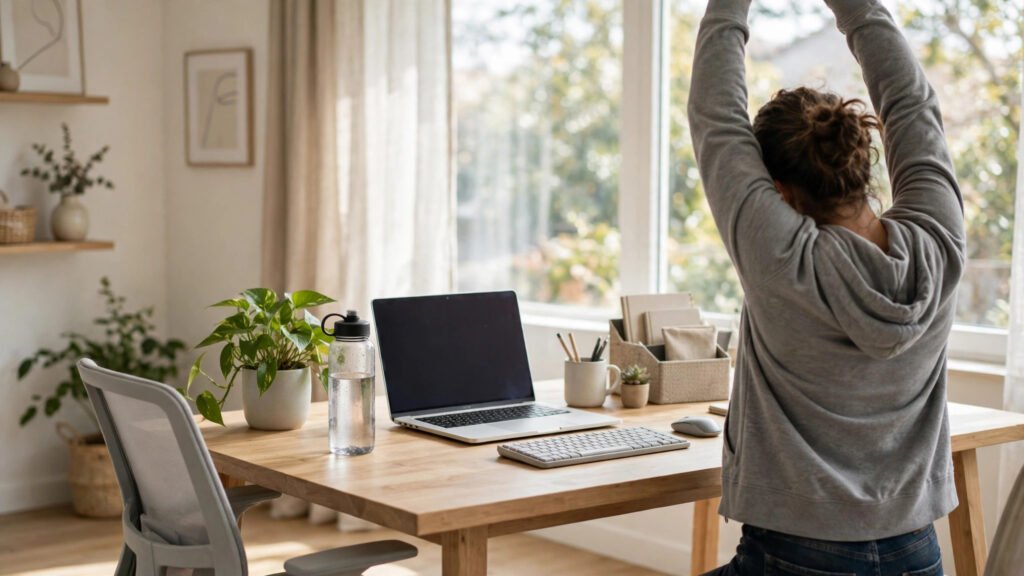
If you sit at a desk for most of the day, you already know the feeling: a stiff neck by late morning, tight shoulders by lunch, and a lower back that complains every time you stand up. Learning how to stretch at your desk can change that pattern without a gym membership, special equipment, or even leaving your chair. A few short, gentle moves spread through the workday can help you feel looser, more awake, and more comfortable while you work.
The idea is simple. Sitting still for hours keeps the same muscles in the same position for too long. Short stretches break that pattern, get you moving a little, and give your body a reset. You do not need a full workout. Two minutes, a few times a day, is a realistic place to start.
Key Takeaways
- Short, gentle desk stretches through the day can ease the stiffness that builds up from sitting still.
- You can stretch your neck, shoulders, back, hips, wrists, and eyes without leaving your chair.
- Linking stretches to habits you already have, like a coffee break, makes the routine easy to keep.
How to Stretch at Your Desk: Start With Your Neck and Shoulders
Your neck and shoulders usually tighten first, because they carry the weight of looking at a screen all day. Start here, and move slowly. Sit tall, with both feet flat on the floor, and let your shoulders drop away from your ears.
For a gentle neck stretch, slowly tilt your right ear toward your right shoulder until you feel a light stretch on the left side of your neck. Hold it for about fifteen seconds, breathing normally, then return to the middle and repeat on the other side. Next, slowly turn your head to look over your right shoulder, hold briefly, and then look over your left shoulder. Keep every movement slow and comfortable, and never force a stretch into pain.
Shoulder rolls are another easy win. Roll both shoulders forward in slow circles five times, then roll them backward five times. Finish with a shoulder shrug: lift both shoulders up toward your ears, hold for a few seconds, and let them drop completely. That drop alone often feels like a small release after a long stretch of typing.
- Neck tilts: ear toward shoulder, fifteen seconds each side, slow and gentle.
- Head turns: look over each shoulder without rushing the movement.
- Shoulder rolls: five forward, five backward, then a shrug and a full drop.
- Chest opener: sit tall, squeeze your shoulder blades lightly together, and breathe.
Seated Stretches for Your Back and Hips
Your lower back and hips spend the whole day folded into a chair, so they deserve attention too. A seated spinal twist is a good starting point. Sit tall, place your right hand on the outside of your left knee, and gently turn your upper body to the left. Hold for about fifteen seconds, return to facing forward, and repeat on the other side. Keep the twist easy rather than deep.
For your hips, try a seated figure-four stretch. Place your right ankle on your left knee, keeping your foot flexed, and sit tall. You should feel a gentle stretch in the outer hip. Hold for fifteen to twenty seconds, then switch sides. If this feels awkward, simply placing the ankle there and sitting tall is enough — there is no need to lean forward.
It also helps to change position regularly. Standing up for a glass of water, walking to another room, or simply sitting in a slightly different posture all count as movement. If you already have a morning stretch routine, think of desk stretches as its smaller daytime version: same idea, shorter moves, fitted around work.
Two minutes, a few times a day, is a realistic place to start.
Wrists, Hands, and Eyes Deserve a Break Too
Typing and mouse work keep your hands busy in a very small range of movement, so give your wrists a turn. Hold one arm out in front of you with the palm facing up, and use the other hand to gently pull the fingers back toward you until you feel a light stretch in the forearm. Hold for about fifteen seconds, then switch hands. Follow this with a few slow wrist circles in each direction, and open and close your hands a few times to shake out the tension.
Your eyes work just as hard as your hands. Every twenty minutes or so, look away from your screen at something farther away for about twenty seconds. Blink a few times on purpose, since people tend to blink less while staring at screens. This tiny habit will not fix every eye-strain problem, but it gives your eyes a regular rest during a long screen day.
Pairing stretches with something you already do makes them stick. Stretch while your coffee brews, while a file downloads, or right after you finish a call. And if you want more movement outside work hours, a home workout without equipment is a natural next step that needs no gear either.
Build a Two-Minute Desk Stretch Habit
The best desk stretch routine is the one you will actually do, so keep it short and simple. Pick three or four moves from this guide — for example, neck tilts, shoulder rolls, a seated twist, and wrist stretches — and do them together as one short set. Repeat that set two or three times during the workday, such as mid-morning, after lunch, and mid-afternoon.
Set a gentle reminder if it helps. A phone alarm, a calendar note, or a sticky note on your monitor can all work. The goal is not perfection. Some days you will stretch three times, other days once, and both are better than none. If a stretch ever hurts, skip it, and if stiffness or pain keeps coming back, consider speaking to a health professional for advice suited to your situation.
Small comfort habits add up over a workday. A healthy lunch packed for work keeps your energy steadier, water at your desk keeps you sipping through the day, and short stretches keep your body from locking into one position. None of these takes much time, and together they make sitting at a desk feel noticeably easier.
What to Watch Next
Desk stretches work best as a small, regular habit rather than a one-time fix. Start with the neck, shoulders, back, hips, wrists, and eyes, keep every move slow and gentle, and repeat a short set a few times a day. Linked to habits you already have, two minutes of stretching can become a normal part of your workday — and a much more comfortable one.