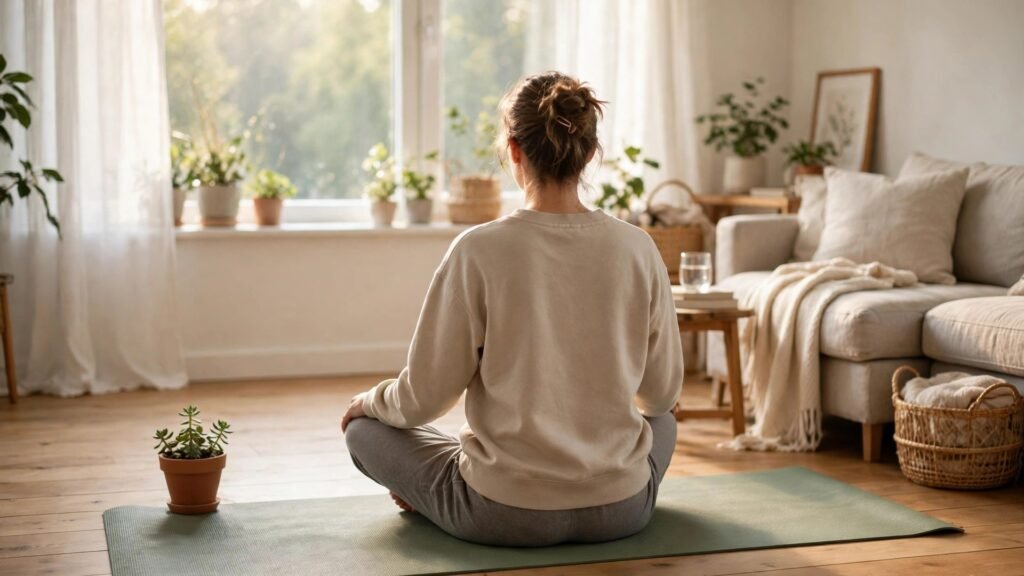
Starting beginner yoga at home is one of the easiest ways to become more flexible without joining a class or buying equipment. All you need is a small clear space, a mat or a soft rug, and fifteen quiet minutes. Yoga for beginners is not about touching your toes on the first day or holding complicated poses. It is about moving slowly, breathing steadily, and giving stiff muscles a little more room each week.
Key Takeaways
- Beginner yoga at home needs only a small space, a mat or rug, and about fifteen minutes.
- A short routine of gentle poses, done regularly, builds flexibility gradually and safely.
- Slow breathing matters as much as the poses: it helps muscles relax and stretch further.
What Beginner Yoga at Home Actually Looks Like
A beginner routine is much simpler than the photos in magazines suggest. It is a short sequence of gentle poses linked by slow breathing, with plenty of rest in between. You move into each pose only as far as feels comfortable, hold it for a few breaths, and then move on. There is no competition, no score, and no need to match anyone else’s range of movement.
Flexibility improves through repetition, not force. A muscle that is gently stretched for thirty seconds, several times a week, gradually learns to relax a little further. Forcing a stretch, on the other hand, makes the body tense up and can leave you sore the next day. The rule for beginner yoga at home is simple: a mild stretch is enough, and sharp pain is always a sign to back off.
Set Up a Small Space That Invites Practice
You do not need a dedicated yoga room. A corner of a living room or bedroom works fine, as long as you can stretch your arms out without hitting furniture. Roll out a mat, or use a folded blanket on a rug if you do not have one. Wear clothes you can move in, and keep a cushion nearby for sitting poses or for supporting your knees.
It also helps to practise at a regular time. Many people find a short morning session works well, because it loosens up the stiffness of the night. If mornings are rushed, an evening session can be just as good, and it can help you unwind before bed. Picking one regular slot makes the habit stick, much like a morning stretch routine that becomes part of the day rather than another chore.
A Simple 15-Minute Beginner Yoga Routine
Start standing tall, feet hip-width apart, and take three slow breaths. Then try this gentle sequence, holding each pose for about five slow breaths before moving on. Move at your own pace and rest in a comfortable seated position whenever you need to.
Begin with a gentle warm-up: roll your shoulders slowly, turn your head from side to side, and sway gently from side to side. Then move into a standing forward fold, bending your knees as much as you need so your hands can hang towards the floor. Next, try a low lunge on each side, keeping your hands on the floor or on a chair for balance. Follow with a seated forward fold, legs stretched out in front of you, reaching only as far as comfortable. Finish with a gentle seated twist on each side and a minute lying flat on your back, breathing slowly.
This sequence covers the areas that tend to stiffen most: the neck, shoulders, hips, hamstrings, and back. It pairs well with other gentle movement habits, such as a home workout without equipment, because both build strength and mobility using only your own body weight.
A muscle that is gently stretched for thirty seconds, several times a week, gradually learns to relax a little further.
Breathing: The Part Beginners Often Skip
Breathing slowly through the nose, in and out, is what turns stretching into yoga. When you breathe out slowly, your muscles naturally relax a little, which is why a pose often feels easier on the third breath than on the first. Try to keep your breathing steady even when a pose feels challenging. If you catch yourself holding your breath, that is a sign to ease off slightly.
A simple pattern works well: breathe in for a count of four, breathe out for a count of four, and let the movement follow the breath. There is no need for advanced breathing techniques at this stage. Steady, unforced breathing is enough, and it also helps calm a busy mind, which is one reason many people practise in the evening.
Common Beginner Mistakes to Avoid
The most common mistake is trying to do too much too soon. Long sessions, advanced poses, and daily hour-long practice sound impressive, but they usually lead to soreness and skipped days. A short routine done three or four times a week beats an ambitious routine abandoned after a week. Start small, and add a few minutes only when the current routine feels easy.
Another mistake is comparing yourself with videos or photos. Flexibility varies a lot from person to person, and it changes with age, past injuries, and how much you sit during the day. Someone who sits at a desk all day will naturally feel tighter than someone who moves all day, which is why short breaks matter too — a movement break routine for sitting all day can make your yoga practice feel easier within a couple of weeks.
- You need only a small space, a mat or rug, and fifteen minutes to start.
- Hold each gentle pose for about five slow breaths and never force a stretch.
- Practise three or four times a week; short and regular beats long and rare.
- Breathe slowly through the nose and let the exhale help muscles relax.
- Rest whenever you need to, and back off from any sharp pain.
What to Watch Next
Beginner yoga at home is a gentle habit, not a test. Set up a small space, follow a short routine of easy poses, breathe slowly, and practise a few times a week. Flexibility builds gradually, and the routine itself becomes easier and more enjoyable as the weeks pass. Keep the sessions short, keep the stretches gentle, and let consistency do the work.