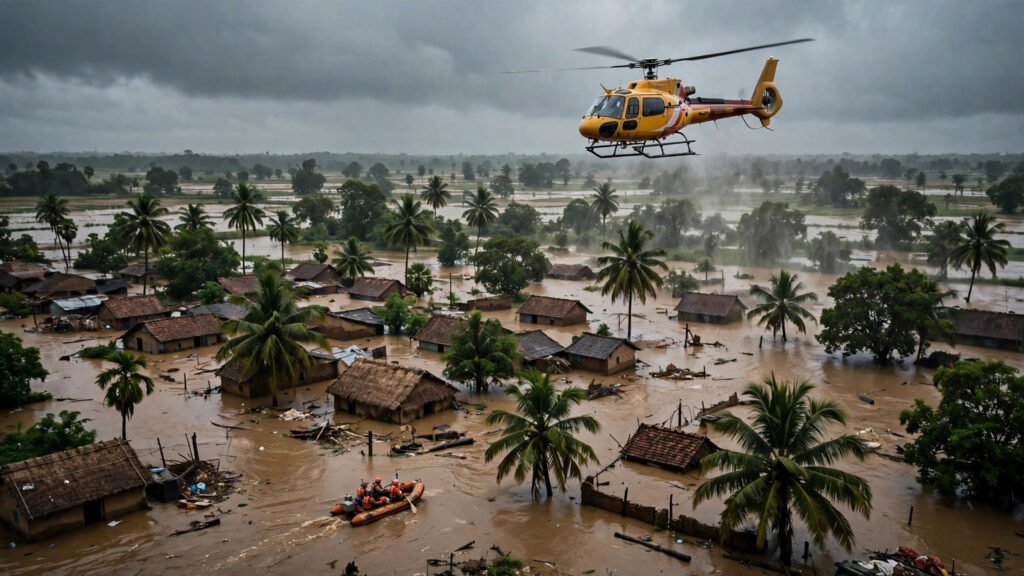
At least three people, including a nine-month-old baby, died in a landslide in Odisha on Friday, October 30, 2026, as heavy rainfall from Cyclone Arnab inundated hundreds of villages in the state’s south and forced rescue teams into an air-and-boat operation to reach communities cut off by floodwater. The deaths came as the storm’s remnants, which had already weakened over central India, left their heaviest damage not on the coast but inland, where swollen rivers spilled into towns and villages across Ganjam, Gajapati and Kandhamal districts.
Chief Minister Mohan Charan Majhi announced an ex gratia payment of Rs 4 lakh each for the next of kin of those killed, officials said. President Droupadi Murmu, who had been scheduled to begin a three-day visit to Odisha on November 3, cancelled the tour in view of the situation, according to reports on Friday.
Key Takeaways
- At least three people, including a nine-month-old baby, died in a landslide in Odisha on Friday, October 30, 2026, as Cyclone Arnab’s rains caused extensive flooding in the state’s southern districts.
- More than 1,000 villages were affected in Ganjam and Gajapati districts, with around 59,000 people evacuated across nine districts and more than 23,000 people staying in relief camps.
- Four Indian Navy and Coast Guard helicopters airdropped food packets at 21 locations in Ganjam, while rescue boats carried cooked food to marooned areas, and the state sanctioned an additional Rs 20 crore for Ganjam relief.
A Landslide Death Toll Amid Widespread Flooding
The landslide deaths were reported in a state where the cyclone, initially expected to hit Andhra Pradesh harder and spare Odisha relatively, instead left what the chief minister described as a trail of destruction in Ganjam, Gajapati and Kandhamal. Government figures cited on Friday put the scale of the flooding at more than 1,000 villages: 299 villages across 22 blocks in Ganjam and 711 villages in seven blocks of Gajapati, with heavy rainfall also affecting Kandhamal.
The rainfall was exceptionally heavy. Patrapur recorded 546 mm and Sorada 503 mm in the 24 hours ending at 8.30 a.m. on Thursday, according to official figures. In Ganjam, the overflowing Rushikulya river caused extensive damage, inundating several villages, damaging bridges and washing away roads, the Water Resources Department’s Engineer-in-Chief Dilip K Rout said. Sorada, Aska, Bhanjanagar and Purushottampur were among the worst-affected places, with floodwaters entering residential areas. The crisis followed days of rain that had already left villages marooned and roads and rail links disrupted, as Cyclone Arnab weakened but floods spread across more than 1,000 Odisha villages.
The human toll in the worst-hit districts was laid out by Disaster Management Minister Suresh Pujari, who said around 50,000 people had been severely affected by the floods in Ganjam, followed by 30,000 in Gajapati and 12,000 in Kandhamal. More than 23,000 people were staying in relief camps, but officials said the number of people stranded in inundated areas was considerably higher.
Helicopters, Boats and 313 Rescue Teams
With roads washed away and a national highway damaged, aerial rescue became the only way to reach many communities. The state government intensified rescue and relief operations on Friday, deploying four helicopters of the Indian Navy and the Indian Coast Guard to airdrop food packets in flood-hit Ganjam district. Special Relief Commissioner Rajesh P Patil said food packets were airdropped at 21 identified locations in Ganjam, and National Disaster Response Force (NDRF) and Odisha Disaster Rapid Action Force (ODRAF) personnel transported cooked food by boat to people stranded in marooned areas despite adverse weather and strong water currents.
One Coast Guard operation underlined how close the water came to essential services: an ALH Mk-III helicopter winched six people, including two children, from a flooded public health centre at Jagmohan in Dharakote. Earlier in the week, the Coast Guard had begun airlifting stranded people from flood- and landslide-hit Ganjam, and the state had deployed 313 rescue teams in total, comprising nine NDRF teams, 60 ODRAF teams and 244 fire services teams, with more than 100 of them engaged in Ganjam and Gajapati alone. Around 59,028 people were evacuated to safety across nine districts, including 11,882 from Ganjam.
The scale of the air operation reflected a situation that had already forced difficult choices earlier in the week, when villages were left marooned and air evacuations were planned for cut-off communities. With low cloud cover and difficult weather hampering efforts to airlift more than 2,000 people stranded in cut-off villages, boats and airdrops became the backbone of the relief effort.
With roads washed away and a national highway damaged, aerial rescue became the only way to reach many communities.
- At least 3 people dead in a Friday landslide, including a nine-month-old baby; Rs 4 lakh ex gratia announced for each family
- More than 1,000 villages affected in Ganjam and Gajapati; around 59,000 people evacuated across nine districts
- Four Navy and Coast Guard helicopters airdropped food at 21 locations in Ganjam; boats carried cooked food to marooned areas
- 313 rescue teams deployed, including 9 NDRF, 60 ODRAF and 244 fire services teams
- Patrapur recorded 546 mm and Sorada 503 mm of rain in 24 hours; Rushikulya river overflowed in Ganjam
Chief Minister’s Aerial Survey and Rs 20 Crore Relief
Chief Minister Majhi and Revenue and Disaster Management Minister Pujari conducted an aerial survey of Ganjam and Gajapati on Friday to assess the extent of flooding before landing at Rangeilunda to review rescue, relief and rehabilitation operations. Following the survey, the state government sanctioned an additional Rs 20 crore for Ganjam district to facilitate relief and rescue operations.
Officials said a central team will visit Odisha on November 2 to assess the damage caused by the floods. Ganjam Collector V Keerthi Vasan said rescue and relief operations had been intensified and relief materials distributed among affected people since Thursday. The chief minister had earlier spoken with Union Home Minister Amit Shah and briefed him on the cyclone’s impact, the situation in affected districts, and the state’s relief and restoration efforts.
The flooding in Odisha is part of a wider pattern of extreme weather across South Asia this week, where rivers and sudden water surges have put whole communities at risk, as seen in the glacial lake outburst flood that put districts in Assam and West Bengal on alert. In Odisha, the immediate priority, officials said, remains reaching people cut off by floodwaters while conditions continue to hamper rescue efforts.
What to Watch Next
What to watch next is whether rescue teams can reach the villages still cut off in Ganjam and Gajapati as water levels recede, what the central team reports after its November 2 visit, how the additional Rs 20 crore for Ganjam is spent on relief and restoration, and whether a separate low-pressure area over the South Andaman Sea intensifies into a depression over the southeast Bay of Bengal around October 31, as the India Meteorological Department has said it could.